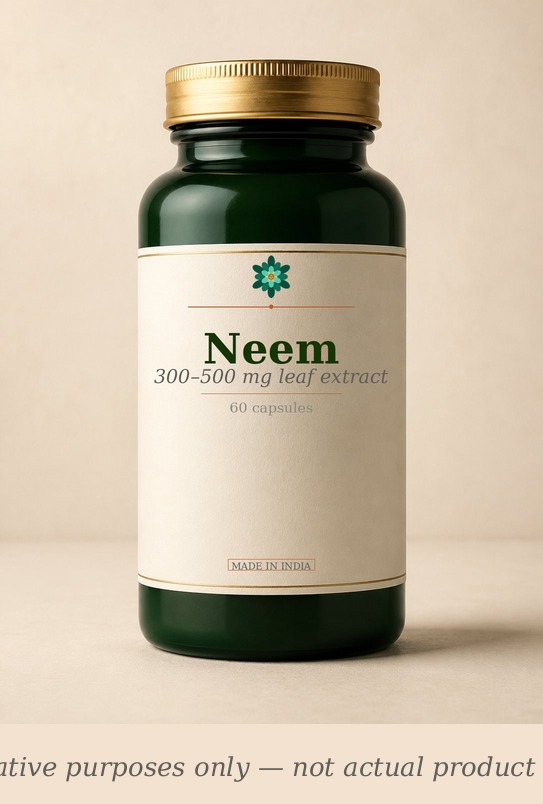
SacredBod's longer take on Neem — context the structured blocks above don't capture.
Neem is arguably the most versatile botanical in the Ayurvedic pharmacopeia. Every part of the Azadirachta indica tree — leaf, bark, seed, flower, and root — has documented traditional uses spanning skin disorders, fever, infections, and dental hygiene. In rural India, neem twigs remain a common toothbrush. In modern commerce, neem appears as capsules, oils, toothpastes, and skin creams, often marketed with broad antimicrobial and “blood purifying” claims.
The scientific basis for these claims is substantial in preclinical models but uneven in humans. Neem leaf contains more than 140 bioactive compounds, with azadirachtin, nimbin, and nimbidin among the most studied. A 2005 review in Current Medicinal Chemistry catalogued an impressive array of pharmacological properties: immunomodulatory, anti-inflammatory, antihyperglycemic, antiulcer, antimalarial, antifungal, antibacterial, antiviral, antioxidant, antimutagenic, and anticarcinogenic. A 2004 study demonstrated chemopreventive potential in mice, showing that neem leaf extract significantly reduced tumor burden and incidence in both benzo(a)pyrene-induced forestomach and DMBA-induced skin papilloma models. The mechanism appeared to involve induction of Phase II detoxification enzymes and enhancement of hepatic antioxidant status.
The dental evidence is particularly interesting because it translates traditional practice into modern clinical metrics. A 2020 randomized trial compared 2.5% neem gel to 0.2% chlorhexidine gel in 60 school teachers over 90 days. Both groups showed significant reductions in plaque index, gingival index, and Streptococcus mutans counts, with no statistically significant difference between neem and chlorhexidine. No side effects were reported in the neem group. This supports neem as a viable herbal adjunct for oral hygiene, though chlorhexidine’s substantivity gives it an edge in sustained antiplaque action.
The internal-use picture is more cautionary. High-dose or prolonged neem leaf consumption has been associated with hepatotoxicity in case reports and animal studies. The same bitter compounds that confer antimicrobial activity can stress the liver when consumed in large quantities over time. This creates an important risk-benefit calculus: neem’s dental and topical applications carry minimal risk, while chronic high-dose capsule use requires caution, cycling, and liver enzyme monitoring. Pregnancy, breastfeeding, and pediatric use are contraindicated.
For consumers, neem is best used strategically: as a dental gel or mouthwash for oral health, as a topical oil for skin concerns, and as a short-term internal supplement only at conservative doses with breaks between cycles. The traditional wisdom of “neem for everything” needs modern qualification — it is a powerful botanical, not a harmless daily tonic.