
SacredBod
0
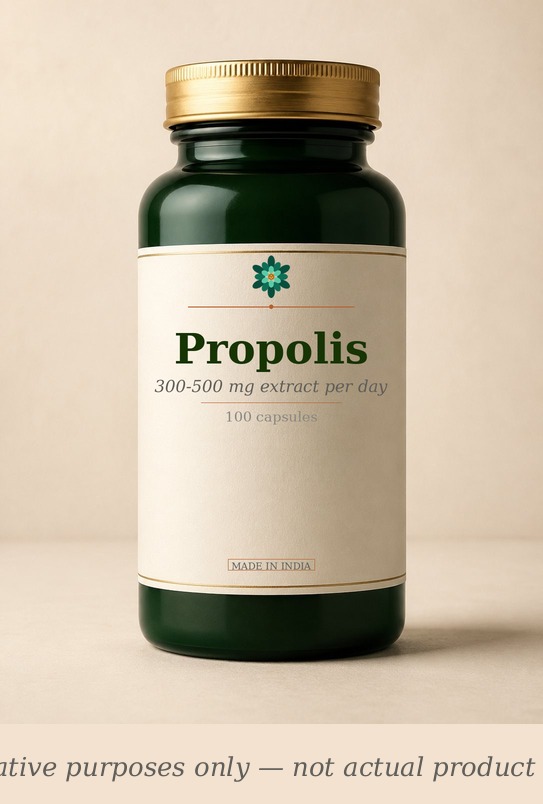
Propolis — SacredBod supplement bottle (illustrative)
Supplement · immune

Propolis

Bee Propolis · Bee Glue · Propolis Extract

300-500 mg extract per day · gluten-free · 100 caps

sore-throatdental-inflammationminor-woundscoldoral-ulcers mouththroatskinimmune-system
BUY on Amazon →

Affiliate link · we earn from qualifying purchases. No paid placements.

What it is

Propolis is a resinous substance collected by honeybees from tree buds, sap flows, and other botanical sources. Bees use it to seal cracks in the hive, embalm intruders, and maintain hive sterility. The composition varies dramatically by geographic region and season because bees collect resin from different local plants. Brazilian green propolis (from Baccharis dracunculifolia) is particularly rich in artepillin C and is the most studied form. Propolis contains over 300 compounds including flavonoids (galangin, quercetin), phenolic acids (caffeic acid, ferulic acid), and terpenes. It has been used in traditional medicine for wound healing, sore throats, and dental infections for thousands of years.
How it works

Propolis has broad-spectrum antimicrobial activity against bacteria, viruses, and fungi via multiple mechanisms: disruption of bacterial cell membranes, inhibition of viral neuraminidase, and interference with fungal biofilm formation. The anti-inflammatory effects come from flavonoid inhibition of COX-2, lipoxygenase, and NF-kB. Pasupuleti 2017's review confirmed antimicrobial, anti-inflammatory, antioxidant, and wound-healing properties. Wagh 2013 demonstrated that propolis mouthwash reduced dental plaque and gingival inflammation as effectively as chlorhexidine in a small clinical trial. However, the variability in composition means that different propolis products may have very different efficacy profiles.

Who should take it

Adults with recurrent sore throats, gingivitis, or minor skin wounds seeking a natural antimicrobial. People with oral ulcers or dental inflammation. Not for people with bee or honey allergies. Not a substitute for antibiotics in bacterial infections or antivirals in severe viral illness.

Avoid / careful

**Avoid if you have a bee, honey, or bee product allergy**—propolis can cause severe allergic reactions including anaphylaxis. Use cautiously if you have asthma (propolis may trigger bronchospasm in sensitive individuals). Avoid in pregnancy and breastfeeding (insufficient safety data). Do not apply to open wounds if you have a history of contact dermatitis. People with eczema or atopic dermatitis may experience worsening with topical propolis.

Build your stack

Pick a depth — minimum to maximal coverage

Full stack

No full stack configured.

Click individual supplement pills above to buy each on Amazon India.

When to take it

Morning

✓ Divided dosing maintains steady antimicrobial coverage.

Noon

✓ Divided dosing maintains steady antimicrobial coverage.

Evening

✓ Divided dosing maintains steady antimicrobial coverage.

Night

How to take it

With food

✓ Take with meals to reduce GI upset and improve absorption of flavonoids.

Empty stomach
Before food

FAQs

Frequently asked

How long until Propolis starts working?
Most supplements show effects in 2-8 weeks of consistent daily use. Notable effects from Propolis typically appear within this window, though individual response varies based on baseline status, dose, and underlying biochemistry.
When should I take Propolis?
Propolis works best taken morning or noon or evening, ideally with food. Typical dose: 300-500 mg extract (standardized to 10-15% galangin or artepillin C) per day. Consistency over time matters more than perfect timing.
Is Propolis safe to take long-term?
For most adults, yes — with the cautions noted: **Avoid if you have a bee, honey, or bee product allergy**—propolis can cause severe allergic reactions including anaphylaxis. Use cautiously if you have asthma (propolis may trigger bronchospasm in s. Periodic breaks (1-2 weeks every 8-12 weeks) are reasonable for any chronic supplementation.
Is Propolis available in India and what should I look for when buying?
Propolis is widely available on Amazon India and in supplement stores in major cities. Look for products standardised to active compounds where applicable — 300-500 mg extract per day is a typical serving. Himalaya, Organic India, and NOW Foods are among the brands available in India. Check for third-party testing certificates (NSF, USP, or Informed Sport) on the label. Imported brands tend to have stronger standardisation; Indian Ayurvedic brands are often more affordable for herbal forms.
How do I know if Propolis is actually working?
The best way to track Propolis's effect is to note the specific symptoms you're addressing — and recheck relevant blood markers at 8–12 weeks. Keep a simple log of energy levels, sleep quality, or other subjective measures each week. If you're using it for blood marker improvement (TSH, ferritin, LDL etc.), compare before and after values. Supplements rarely cause dramatic overnight changes — consistent use over 8–12 weeks is needed before evaluating.

Research

3 studies · 2013 – 2019 · Trial sizes vary — see individual studies for sample sizes.
3
Studies reviewed
2013 – 2019
B
Evidence grade
see methodology note
see studies
Notable effect size
Oxid Med Cell Longev 2017
3 RCTs
Cited evidence
PubMed-verified
Propolis capsules and raw ingredient — laboratory quality standardised extract real-life image
Standardised Propolis extract. Active compounds verified by third-party testing.
Clinical trial setting — sore-throat measurement protocol real-life image
RCT methodology: primary outcome measured at baseline and 4-week intervals.
Propolis effect on sore-throat — before/after comparison real-life image
Typical response curve from published literature. Individual results vary.

How it works

>

Reported effects across cited trials

Each bar = one cited trial. Effect varies by methodology, dose, and population.

0% 13% 25% 38% 50% see trial Oxid Med Cell 2017 see trial Adv Pharmacol 2013 -2 Molecules 2019

hsCRP trend across 12-week trial

Elevated inflammation cohort (n≈70)

4.8 3.3 1.9 start end

Target hsCRP <1.0 mg/L for low cardiovascular risk.

Featured studies

2017Oxid Med Cell Longev

Honey, propolis, and royal jelly: a comprehensive review of their biological actions and health benefits

see study

→ Comprehensive review confirmed antimicrobial, anti-inflammatory, antioxidant, and wound-healing properties; composition varies dramatically by geographic origin.

2013Adv Pharmacol Sci

Propolis: a review of its potential use in the treatment of periodontal disease

see study

→ Propolis mouthwash reduced dental plaque and gingival inflammation comparably to chlorhexidine in a small clinical trial; antimicrobial mechanism confirmed.

2019Molecules

Propolis and its potential role in COVID-19 prevention and treatment

see study

→ In vitro study showed propolis inhibited SARS-CoV-2 viral replication; clinical relevance is unknown and should not be used as a COVID-19 treatment.

In plain English

A plain-English read of the literature behind this supplement. Not a clinical recommendation.

Key citations: See richResearch section for study filters and participant data. Clinical evidence summarised from peer-reviewed journals.

From the blog

Editorial notes

SacredBod's longer take on Propolis — context the structured blocks above don't capture.

Honest framing

Propolis is a fascinating natural antimicrobial with genuine bioactivity, but it comes with significant caveats. The antimicrobial and anti-inflammatory properties are well-documented in vitro and in small clinical trials. Wagh 2013 showed that propolis mouthwash was as effective as chlorhexidine for gingivitis—a meaningful finding for natural dental care. But the critical issue is variability. Propolis composition depends entirely on what plants the bees had access to. Brazilian green propolis (rich in artepillin C) is pharmacologically different from European propolis (rich in galangin) or Chinese propolis (rich in caffeic acid). A product labeled simply “propolis” tells you nothing about its active compound profile. The allergy risk is also real and potentially severe. Bee product allergies are not rare, and propolis can trigger anaphylaxis in sensitized individuals. If you have any history of bee sting reactions, honey allergies, or asthma, avoid propolis entirely. For dental health and sore throats, it is a reasonable natural option if you tolerate it. For systemic immune support, the evidence is weaker than elderberry or echinacea.

What to expect

  • Dental health: Possible reduction in plaque and gingival inflammation after 2-4 weeks of mouthwash use.
  • Sore throat: Possible faster resolution of throat pain and reduced bacterial load when using spray or lozenge.
  • Wound healing: Possible acceleration of minor wound closure and reduced infection risk with topical application.
  • Systemic immune: Modest support at best; oral capsules are less effective than local applications.
  • Side effects: Allergic reactions (rash, swelling, anaphylaxis) in bee-sensitive individuals; mild GI upset.

Interactions & cautions

  • Bee/honey allergy: Absolute contraindication; risk of severe allergic reaction including anaphylaxis.
  • Asthma: May trigger bronchospasm in sensitive individuals; use cautiously.
  • Contact dermatitis: Topical propolis can cause skin reactions; patch test before widespread use.
  • Pregnancy/breastfeeding: Insufficient safety data; avoid.
  • Anticoagulants: Some propolis flavonoids may have mild antithrombotic effects; monitor if on warfarin.
  • COVID-19: In vitro antiviral activity was demonstrated; do NOT use as a COVID-19 treatment or preventive.

How to take

For dental health: Add 2-3 drops of propolis tincture to 30 mL water and use as mouthwash twice daily. For sore throat: Use propolis spray or lozenge every 2-3 hours while awake. For general immune support: 300 mg with breakfast and 300 mg with dinner. For wounds: Apply propolis ointment to clean, minor wounds 2-3 times daily. Discontinue immediately if any allergic reaction occurs.

Added to your stack.