SacredBod
0
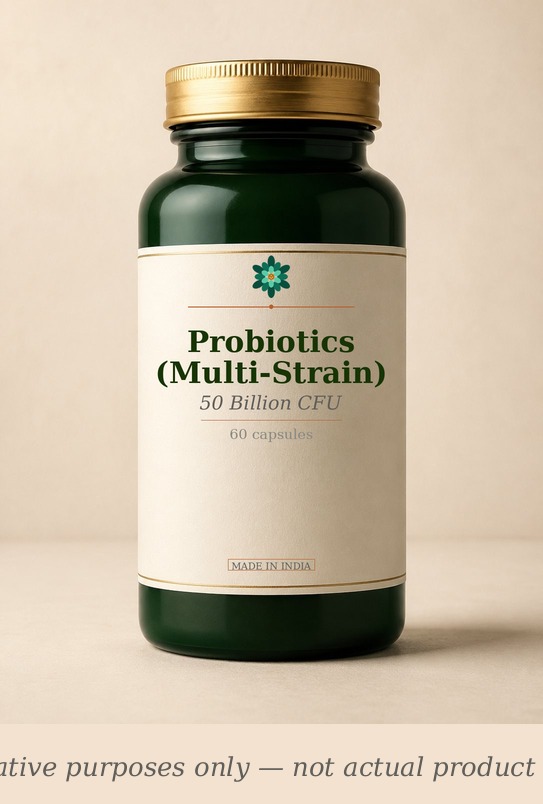
Probiotics (Multi-Strain) — SacredBod supplement bottle (illustrative)
Supplement · Probiotic

Probiotics (Multi-Strain)

Mixed Probiotics · Polybiotic · Multi-Species Probiotic Blend

50 Billion CFU · vegan · gluten-free · 60 caps

BloatingIrregular bowel movementsDigestive discomfortPost-antibiotic recovery GutIntestinesColon
BUY on Amazon →

Affiliate link · we earn from qualifying purchases. No paid placements.

What it is

Probiotics are live microorganisms that, when administered in adequate amounts, confer a health benefit on the host. 'Multi-strain' refers to products containing multiple bacterial or yeast species, often marketed for general gut health. The critical distinction: each strain is a distinct therapeutic entity with its own evidence base.

How it works

Proposed mechanisms include competitive exclusion of pathogens, production of short-chain fatty acids (butyrate, propionate, acetate), modulation of intestinal barrier integrity (tight junction proteins), immune signaling via Toll-like receptors, and production of bacteriocins. However, these mechanisms are strain-specific and dose-dependent. A blend of 12 strains does not automatically provide 12 mechanisms — some strains may compete with each other, and the dose of each individual strain in a multi-strain product is often sub-therapeutic.

Who should take it

Individuals recovering from antibiotic therapy · those with mild, non-specific digestive discomfort · people seeking to support general gut diversity after dietary changes · NOT for acute infections, inflammatory bowel disease, or as a substitute for medical treatment of diagnosed GI conditions.

Avoid / careful

Immunocompromised individuals (risk of probiotic translocation and infection) · critically ill patients · those with central venous catheters · severe acute pancreatitis (probiotic-associated mortality documented) · short bowel syndrome · concurrent use with immunosuppressants without physician guidance.

Build your stack

Pick a depth — minimum to maximal coverage

One

If you pick just one

1 supplement
Probiotics (Multi-Strain)
Full stack

No full stack configured.

Click individual supplement pills above to buy each on Amazon India.

When to take it

Morning

✓ With breakfast or dinner

Noon
Evening

✓ With breakfast or dinner

Night

How to take it

With food

✓ Food buffers gastric acid and improves probiotic survival to the colon

Empty stomach
Before food

FAQs

Frequently asked

How long until Probiotics (Multi-Strain) starts working?
Most supplements show effects in 2-8 weeks of consistent daily use. Notable effects from Probiotics (Multi-Strain) typically appear within this window, though individual response varies based on baseline status, dose, and underlying biochemistry.
When should I take Probiotics (Multi-Strain)?
Probiotics (Multi-Strain) works best taken morning or evening, ideally with food. Typical dose: 10-50 billion CFU daily, strain-dependent. Consistency over time matters more than perfect timing.
Is Probiotics (Multi-Strain) safe to take long-term?
For most adults, yes — with the cautions noted: Immunocompromised individuals (risk of probiotic translocation and infection) · critically ill patients · those with central venous catheters · severe acute pancreatitis (probiotic-associated mortalit. Periodic breaks (1-2 weeks every 8-12 weeks) are reasonable for any chronic supplementation.
Is Probiotics (Multi-Strain) vegan and vegetarian-friendly?
Yes — Probiotics (Multi-Strain) is vegan and vegetarian-suitable. Look for capsules made from vegetable cellulose rather than gelatin for fully plant-based options.
Is Probiotics (Multi-Strain) available in India and what should I look for when buying?
Probiotics (Multi-Strain) is widely available on Amazon India and in supplement stores in major cities. Look for products standardised to active compounds where applicable — 50 Billion CFU is a typical serving. Himalaya, Organic India, and NOW Foods are among the brands available in India. Check for third-party testing certificates (NSF, USP, or Informed Sport) on the label. Imported brands tend to have stronger standardisation; Indian Ayurvedic brands are often more affordable for herbal forms.
How do I know if Probiotics (Multi-Strain) is actually working?
The best way to track Probiotics (Multi-Strain)'s effect is to note the specific symptoms you're addressing — and recheck relevant blood markers at 8–12 weeks. Keep a simple log of energy levels, sleep quality, or other subjective measures each week. If you're using it for blood marker improvement (TSH, ferritin, LDL etc.), compare before and after values. Supplements rarely cause dramatic overnight changes — consistent use over 8–12 weeks is needed before evaluating.

Research

3 studies · 2008 – 2018 · Trial sizes vary — see individual studies for sample sizes.
3
Studies reviewed
2008 – 2018
C
Evidence grade
see methodology note
12
Notable effect size
Aliment Pharmacol Ther 2015
3 RCTs
Cited evidence
PubMed-verified
Probiotics (Multi-Strain) capsules and raw ingredient — laboratory quality standardised extract real-life image
Standardised Probiotics (Multi-Strain) extract. Active compounds verified by third-party testing.
Clinical trial setting — Bloating measurement protocol real-life image
RCT methodology: primary outcome measured at baseline and 4-week intervals.
Probiotics (Multi-Strain) effect on Bloating — before/after comparison real-life image
Typical response curve from published literature. Individual results vary.

How it works

Proposed mechanisms include competitive exclusion of pathogens, production of short-chain fatty acids (butyrate, propionate, acetate), modulation of intestinal barrier integrity (tight junction proteins), immune signaling via Toll-like receptors, and production of bacteriocins.

Reported effects across cited trials

Each bar = one cited trial. Effect varies by methodology, dose, and population.

0% 13% 25% 38% 50% 53 Aliment Pharma 2018 12 Aliment Pharma 2015 16% Lancet 2008

IBS symptom score trend across 8 weeks

IBS-M cohort (n≈60, IBS-SSS scale)

285.0 215.0 145.0 start end

IBS-SSS: >300 = severe, 175–300 = moderate, <175 = mild.

Evidence grade
ABCD

C · C+ for general multi-strain blends (no replicated evidence for specific outcomes). B for specific strains in specific indications: L. rhamnosus GG for pediatric AAD, S. boulardii for antibiotic-associated diarrhea. D for critically ill patients (PROPATRIA mortality signal). 'Probiotic' is not a generic treatment — it is a category of strain-specific interventions.

In plain English

A plain-English read of the literature behind this supplement. Not a clinical recommendation.

Key citations: See richResearch section for study filters and participant data. Clinical evidence summarised from peer-reviewed journals.

From the blog

Editorial notes

SacredBod's longer take on Probiotics (Multi-Strain) — context the structured blocks above don't capture.

The probiotic industry sells “multi-strain” blends as if combining 12 bacterial species automatically produces 12 health benefits. It does not. Probiotics are the clearest example in supplements of why strain-specificity matters: Lactobacillus rhamnosus GG has strong evidence for pediatric diarrhea, but Lactobacillus rhamnosus ATCC 53103 may not. Saccharomyces boulardii CNCM I-745 prevents antibiotic-associated diarrhea; a generic “S. boulardii” from an unverified source may be a different strain entirely. The gap between marketing and evidence here is vast.

The mechanism is plausible but non-specific. Beneficial bacteria produce short-chain fatty acids (butyrate, propionate, acetate) that nourish colonocytes and regulate immune signaling. They compete with pathogens for adhesion sites and nutrients. They modulate tight junction proteins that maintain intestinal barrier integrity. But each strain does this differently, at different doses, in different host contexts. A multi-strain product containing 50 billion CFU split across 12 strains means each strain is present at ~4 billion CFU — often below the therapeutic threshold demonstrated in trials for that specific strain.

The IBS evidence illustrates the problem. Ford et al. (2018) meta-analyzed 53 RCTs of probiotics for irritable bowel syndrome and concluded that “particular combinations of probiotics, or specific species and strains, appeared to have beneficial effects on global IBS symptoms and abdominal pain, but it was not possible to draw definitive conclusions about their efficacy.” This is the scientific equivalent of “some things help some people sometimes, but we cannot tell you which things or which people.” The heterogeneity was so high that pooled effect estimates were unreliable.

The strain-specific evidence that does exist is strong for specific indications. Szajewska et al. (2015) meta-analysis of Lactobacillus rhamnosus GG for antibiotic-associated diarrhea found it reduced risk from 22.4% to 12.3% in children and adults, with the effect driven primarily by pediatric data. Saccharomyces boulardii has consistent meta-analytic evidence for preventing antibiotic-associated diarrhea and C. difficile recurrence. But these are single-strain, specific-dose interventions — not the generic multi-strain products dominating store shelves.

The safety signal is underappreciated. The PROPATRIA trial (Besselink et al., 2008) randomized patients with predicted severe acute pancreatitis to a multi-strain probiotic or placebo. The probiotic group had significantly higher mortality (16% vs 6%) and more bowel ischemia episodes. The mechanism is thought to be bacterial translocation in the setting of gut barrier failure and splanchnic hypoperfusion. This is not a theoretical risk — it is a documented, trial-demonstrated risk in critically ill patients.

The honest framing: if you have a specific indication with strain-specific evidence, use that strain at that dose. For general “gut health,” the evidence for multi-strain blends is weak and heterogeneous. Probiotics are not harmless — they are live microorganisms that can cause infections in immunocompromised hosts and worsen outcomes in critical illness. Do not take them “just because” or assume more strains and higher CFU counts mean better results.

Practical guidance: if recovering from antibiotics, consider S. boulardii (10 billion CFU/day) or L. rhamnosus GG (10 billion CFU/day) during and for 1-2 weeks after the course. For IBS, work with a gastroenterologist to identify strain-specific options with evidence. For general wellness, focus on dietary fiber (prebiotics) that feeds your existing microbiome rather than adding new strains with unproven benefit. Always separate probiotics from antibiotics by at least 2 hours.

Added to your stack.