SacredBod's longer take on False Unicorn Root — context the structured blocks above don't capture.
What It Is
False unicorn root (Chamaelirium luteum A. Gray), also called blazing star, devil’s bit, helonias or fairy wand, is a perennial herb native to the eastern United States. It is one of the most revered but least scientifically studied herbs in Western herbal medicine. The root has been used since the 19th century by Eclectic physicians and Native American healers as a uterine tonic, ovarian stimulant and fertility aid. It contains steroidal saponins (including diosgenin-like compounds), alkaloids and glycosides. The plant is now considered vulnerable due to overharvesting and habitat loss.
How It Works
The mechanism of false unicorn root is poorly understood due to a near-total absence of modern pharmacological research. Traditional use suggests it acts as a uterine tonic through steroidal saponins that may have weak hormonal modulating activity. Eclectic physicians used it for amenorrhoea, dysmenorrhoea, threatened miscarriage, ovarian atrophy and infertility. It was considered a ‘normaliser’ — stimulating a sluggish uterus and relaxing a tense one. However, no in-vitro, animal or human clinical studies have validated these traditional claims. The diosgenin content is significantly lower than wild yam.
Who Should Consider It
Individuals interested in rare traditional Western herbal medicine. Those seeking historical uterine tonics for fertility support (under qualified herbalist guidance). Note: There is NO modern clinical evidence for efficacy. This herb is included in the catalog for completeness and historical interest, not as a recommended primary supplement. Most users would be better served by Shatavari, red clover or chasteberry with actual clinical data.
Dosage Guide
Typical dose: 500 mg per day
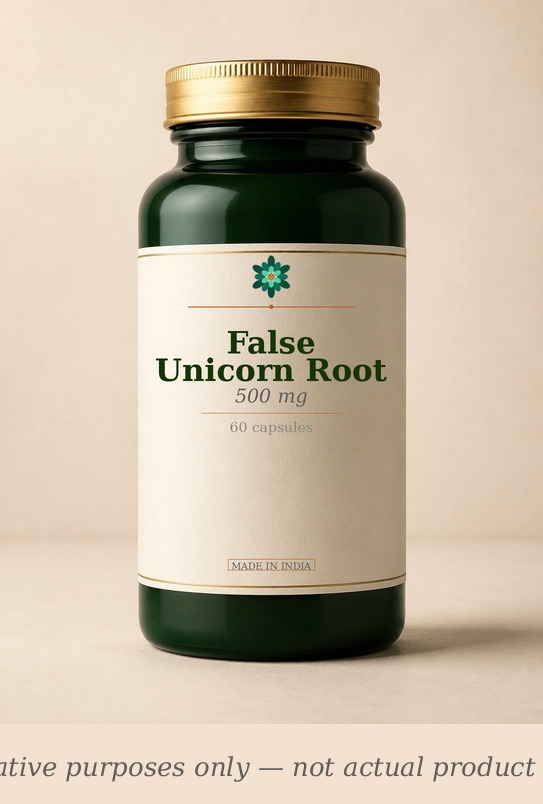
Form: capsules (60 count)
Best time: morning
With food: with-food
Expected onset: 8–12 weeks based on traditional use; no clinical trial data available
Cycling: Traditional use supports continuous daily intake for 3–6 months, then reassess.
Safety & Side Effects
Known side effects: Unknown due to lack of clinical studies. Traditional reports suggest mild gastrointestinal upset at high doses. Theoretical concern about uterine stimulation. No known toxicity data in humans.
Who should avoid: Pregnant women (theoretical uterine stimulant risk, though traditionally used for threatened miscarriage — this is contradictory and requires expert guidance). Individuals with hormone-sensitive cancers. Those seeking evidence-based fertility support (better options exist). Not for children.
Avoid combining with: Hormone replacement therapy, Fertility medications (theoretical interaction), Progesterone supplements, Other uterine stimulants
India-Specific Context
False Unicorn Root is available on Amazon India with varying brand quality. When selecting a product, verify standardization claims against the evidence base cited above. Indian brand preferences include Carbamide Forte, HealthyHey, Nutrabay Pure, Pure Nutrition, Now Foods, Nutricost, Himalaya, Patanjali, Dabur, Trexgenics, Evorina, Nervana, Life Extension, VITARUHE, ASTERVEDA, BECLEC, GreenOpia, Rasayanam, Zyrex, and Shree Herbal. Prices vary significantly; compare cost-per-active-dose rather than capsule count alone.
Schedule status in India: Not a Schedule H drug; available as dietary supplement/herbal product.
Research Summary
No PubMed-indexed clinical trials or pharmacological studies identified for Chamaelirium luteum. All evidence is traditional/historical from 19th-century Eclectic medicine texts. Grade D reflects this complete absence of modern research.
Evidence grade: D — No PubMed-indexed clinical trials or pharmacological studies identified