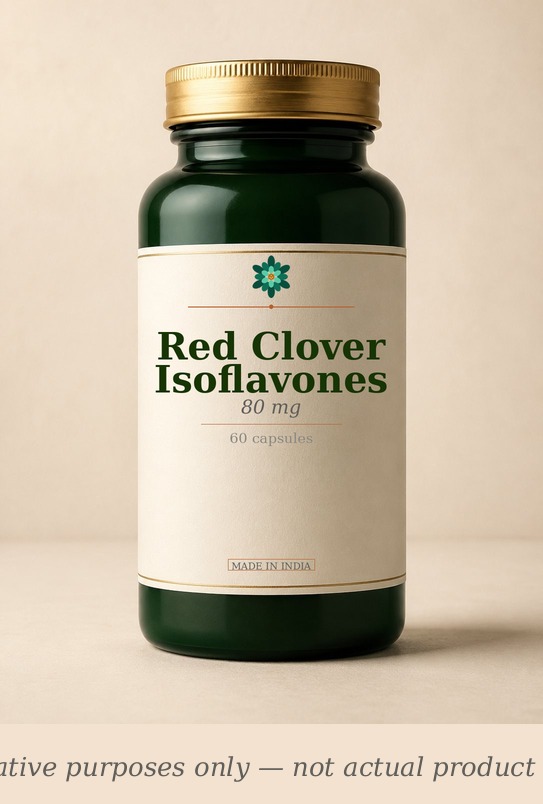
SacredBod's longer take on Red Clover Isoflavones — context the structured blocks above don't capture.
What It Is
Red clover (Trifolium pratense L.) is a perennial legume whose flowering tops contain isoflavones — primarily biochanin A, formononetin, genistein and daidzein. These phytoestrogens bind weakly to estrogen receptors (ER-α and ER-β), producing selective estrogenic effects without the risks of hormone replacement therapy. Standardised extracts typically provide 40–80 mg isoflavones per daily dose.
How It Works
The isoflavones in red clover are metabolised by gut bacteria into equol and other active compounds that modulate estrogen receptor activity. A 2021 meta-analysis of 8 RCTs found red clover significantly reduced daily hot flush frequency (WMD -1.73 flushes/day). Formulations with higher biochanin A content showed superior efficacy. Red clover also demonstrated lipid-modulating effects in a 2024 RCT, reducing total cholesterol, LDL and triglycerides while raising HDL over 6 months. Animal studies show bone mineral content preservation in ovariectomised rats via reduced osteoclast activity.
Who Should Consider It
Perimenopausal and postmenopausal women experiencing hot flashes, night sweats and vasomotor symptoms. Those seeking a non-hormonal alternative to HRT for menopausal symptom relief. Women with dyslipidaemia alongside menopausal symptoms. Not suitable for those with hormone-sensitive cancers without medical guidance.
Dosage Guide
Typical dose: 80 mg per day
Form: capsules (60 count)
Best time: morning
With food: with-food
Expected onset: 4–8 weeks for hot flash reduction; 12+ weeks for bone and lipid benefits
Cycling: No cycling required. Can be taken continuously through menopausal transition.
Safety & Side Effects
Known side effects: Generally well-tolerated. Mild gastrointestinal upset, headache or rash in rare cases. Theoretical concern about endometrial stimulation, though clinical trials have not shown significant endometrial thickening. May cause bloating or breast tenderness in sensitive individuals.
Who should avoid: Pregnant and breastfeeding women. Individuals with hormone-sensitive cancers (breast, ovarian, endometrial) without oncologist approval. Those with a history of thromboembolic disease. People with severe liver disease. Not for children.
Avoid combining with: Tamoxifen and SERMs (theoretical competitive ER binding), Hormone replacement therapy (redundant), Anticoagulants (theoretical interaction), CYP3A4 substrates (isoflavones may modulate metabolism)
India-Specific Context
Red Clover Isoflavones is available on Amazon India with varying brand quality. When selecting a product, verify standardization claims against the evidence base cited above. Indian brand preferences include Carbamide Forte, HealthyHey, Nutrabay Pure, Pure Nutrition, Now Foods, Nutricost, Himalaya, Patanjali, Dabur, Trexgenics, Evorina, Nervana, Life Extension, VITARUHE, ASTERVEDA, BECLEC, GreenOpia, Rasayanam, Zyrex, and Shree Herbal. Prices vary significantly; compare cost-per-active-dose rather than capsule count alone.
Schedule status in India: Not a Schedule H drug; available as dietary supplement/herbal product.
Research Summary
Key citations: PMID 33920485 (2021 meta-analysis of 8 RCTs for hot flushes), PMID 26693407 (2015 meta-analysis of 11 RCTs), PMID 12161042 (Promensil RCT — 44% hot flush reduction), PMID 21870906 (RCT 109 women — 73.5% decrement), PMID 39254422 (2024 RCT lipids and symptoms), PMID 17117453 (bone protection in ovariectomised rats)
Evidence grade: B — Multiple RCTs and meta-analyses; n=1,000+ across pooled analyses