What it is
EGb 761 is the standardised ginkgo biloba leaf extract (24% flavone glycosides, 6% terpene lactones) used in European pharmacopeia for decades.
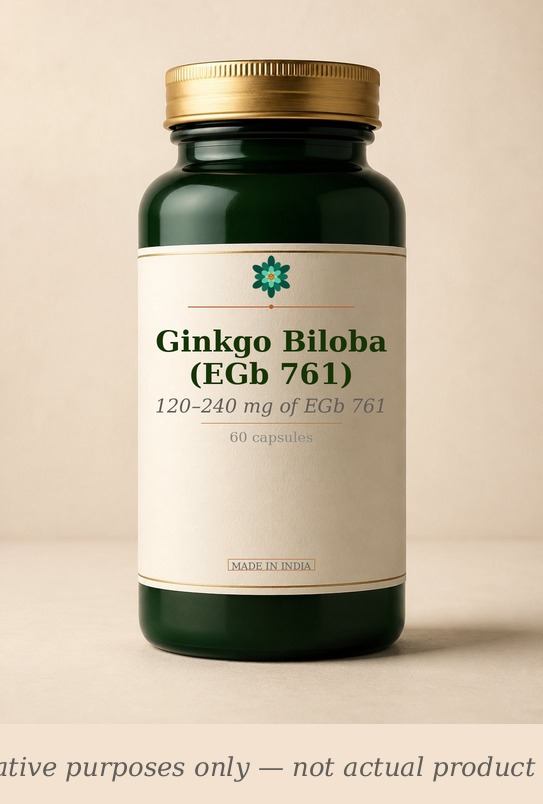
EGb 761, Tebonin
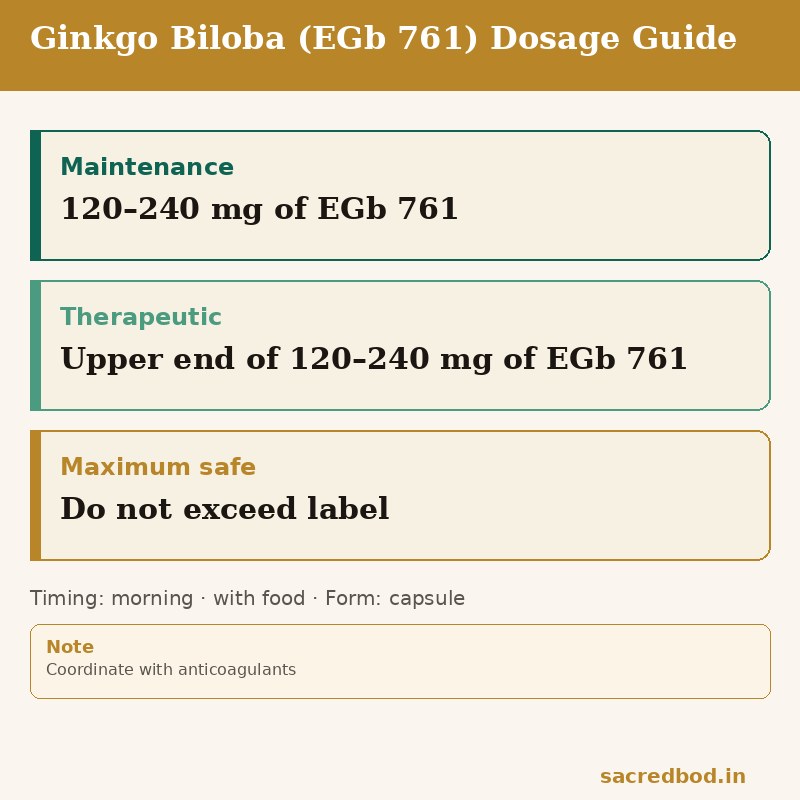
120–240 mg of EGb 761 · vegan · gluten-free · 60 caps
Affiliate link · we earn from qualifying purchases. No paid placements.
EGb 761 is the standardised ginkgo biloba leaf extract (24% flavone glycosides, 6% terpene lactones) used in European pharmacopeia for decades.
Improves cerebral microcirculation, inhibits platelet activating factor, and protects against ischemia-reperfusion injury. Mild MAO-B inhibition contributes to cognitive effects.
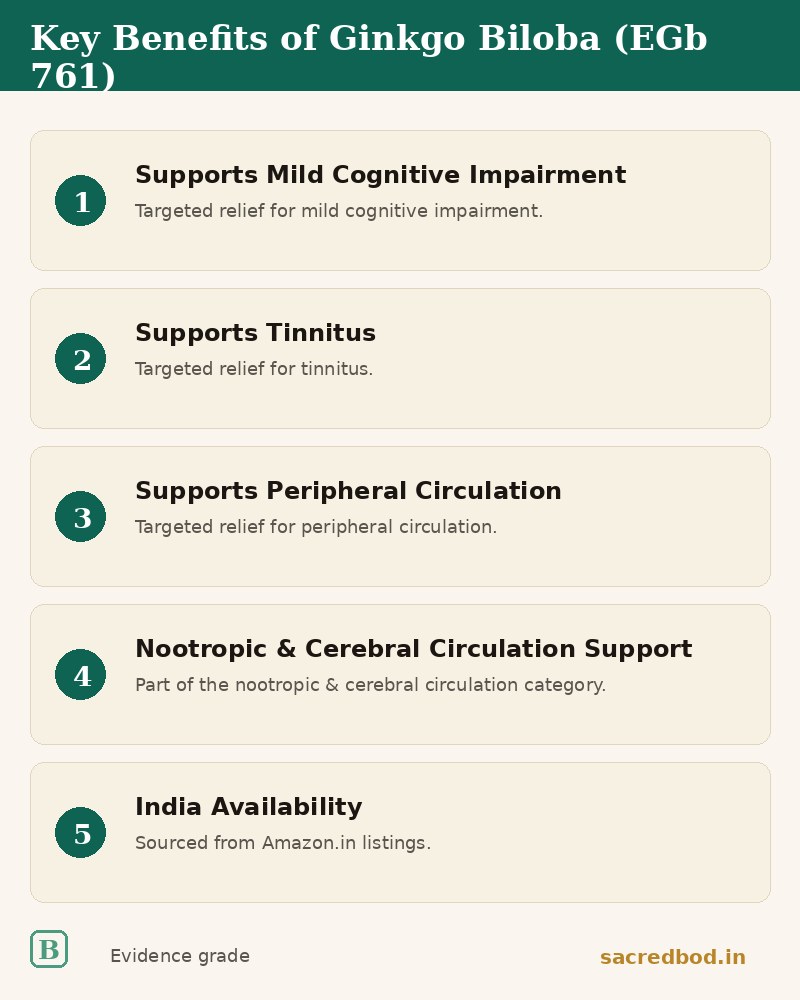
Adults with mild cognitive impairment, tinnitus, peripheral vascular disease, or age-related cognitive maintenance.
Coordinate with anticoagulants. Stop 2 weeks before surgery.
A plain-English read of the literature behind this supplement. Not a clinical recommendation.
GuidAge, GEM, and many other European trials at 240 mg/day show modest cognitive benefits and tinnitus reduction.
SacredBod's longer take on Ginkgo Biloba (EGb 761) — context the structured blocks above don't capture.
Ginkgo Biloba (EGb 761) is a nootropic & cerebral circulation supplement. EGb 761 is the standardised ginkgo biloba leaf extract (24% flavone glycosides, 6% terpene lactones) used in European pharmacopeia for decades.
Improves cerebral microcirculation, inhibits platelet activating factor, and protects against ischemia-reperfusion injury. Mild MAO-B inhibition contributes to cognitive effects.
Adults with mild cognitive impairment, tinnitus, peripheral vascular disease, or age-related cognitive maintenance.
Availability on Amazon India is currently limited or import-only for this form. International brands (iHerb, NOW Foods, Doctor’s Best) ship to India with variable customs handling. Local Ayurvedic equivalents may offer overlapping benefits.
Coordinate with anticoagulants. Stop 2 weeks before surgery.
Peptides are physician-only. Tell us a bit and we'll route you to the right specialist.
Request received.
We'll route this to a clinician familiar with peptide protocols. Expect a reply within about 48 hours.
How's your experience? We read every note.