
SacredBod
0
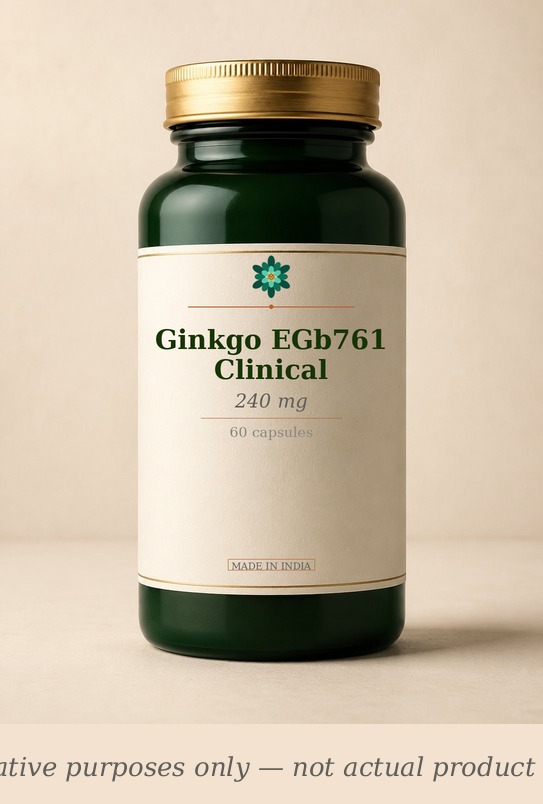
Ginkgo EGb761 Clinical — SacredBod supplement bottle (illustrative)
Supplement · Cognitive Ageing & Neuroprotection

Ginkgo EGb761 Clinical

240 mg · vegan · gluten-free · 60 caps

Memory declineTinnitusVertigoPoor concentrationMental fatigue BrainInner earCardiovascular system
BUY on Amazon →

Affiliate link · we earn from qualifying purchases. No paid placements.

What it is

EGb761 (WS 1570) is a standardised extract of Ginkgo biloba leaves containing 24% flavone glycosides and 6% terpene lactones (ginkgolides A/B/C and bilobalide). It is the most extensively studied botanical extract for dementia and vascular cognitive impairment, with multiple RCTs and meta-analyses supporting its efficacy.

How it works

EGb761 improves cerebral blood flow via vasodilation, reduces platelet-activating factor (PAF) aggregation, scavenges free radicals, and modulates neurotransmitter systems including acetylcholine, noradrenaline, and serotonin. The terpene lactones — particularly bilobalide — also protect against glutamate excitotoxicity.

Who should take it

Older adults with mild cognitive impairment, vascular dementia, or Alzheimer's disease; individuals with tinnitus or vertigo of vascular origin; and those seeking neuroprotection with the strongest botanical evidence base.

Avoid / careful

Individuals with bleeding disorders; those scheduled for surgery (discontinue 2 weeks prior); pregnant or breastfeeding women. Side effects: Mild headache, dizziness, gastrointestinal discomfort, allergic skin reactions. Rare bleeding risk at high doses.

When to take it

Morning
Noon
Evening
Night

How to take it

With food
Empty stomach
Before food

FAQs

Frequently asked

How long before I see results?
Cognitive benefits typically emerge after 4–8 weeks of daily use. For tinnitus and vertigo, 12 weeks or longer may be needed. The landmark dementia trial showed significant neuropsychiatric improvements at 24 weeks with 240mg/day.
Is it safe to take daily long-term?
Yes. EGb761 has been studied for up to 12 months in dementia trials with good safety profiles. The key precaution is bleeding risk — avoid combining with anticoagulants and discontinue before surgery.
Can I take it with blood thinners?
No. Ginkgo inhibits platelet-activating factor (PAF) and can increase bleeding risk when combined with warfarin, aspirin, or clopidogrel. Consult your cardiologist before use.

In plain English

A plain-English read of the literature behind this supplement. Not a clinical recommendation.

Key citations: PMID 22459264 (EGb761 in dementia with neuropsychiatric features — RCT), PMID 22747190 (Systematic review of cognitive-enhancing effects), PMID 3153866 (Bacopa complementary evidence)

Editorial notes

SacredBod's longer take on Ginkgo EGb761 Clinical — context the structured blocks above don't capture.

What Ginkgo EGb761 Is

Ginkgo biloba is one of the oldest living tree species, with fossils dating back 270 million years. While not native to India, its standardised extract EGb761 (also known as WS 1570) has become a cornerstone of integrative dementia care worldwide. The extract is standardised to 24% flavone glycosides (quercetin, kaempferol, isorhamnetin) and 6% terpene lactones (ginkgolides A/B/C and bilobalide). This precise standardisation is what separates clinical-grade EGb761 from generic ginkgo powders.

In India, EGb761 is frequently combined with Brahmi (Bacopa monnieri) in Ayurvedic-inspired formulations — a pairing that makes pharmacological sense given their complementary mechanisms.

How It Works

  1. Cerebrovascular optimisation — EGb761 dilates cerebral blood vessels and improves microcirculation, increasing oxygen and glucose delivery to neurons.
  2. PAF inhibition — Ginkgolides are potent platelet-activating factor antagonists, reducing platelet aggregation and improving blood rheology.
  3. Antioxidant & anti-inflammatory — Flavone glycosides scavenge free radicals and suppress neuroinflammation in the ageing brain.
  4. Neurotransmitter modulation — EGb761 increases acetylcholine turnover, enhances noradrenergic and serotonergic transmission, and protects against glutamate excitotoxicity via bilobalide.

Who Benefits Most

  • Dementia patients — Multiple RCTs show EGb761 240mg/day slows cognitive decline and improves behavioural symptoms in Alzheimer’s and vascular dementia.
  • Mild cognitive impairment (MCI) — Meta-analyses indicate modest but consistent improvements in attention, memory, and executive function.
  • Tinnitus & vertigo sufferers — EGb761 is approved in several European countries for tinnitus of vascular origin due to its inner-ear microcirculatory benefits.
  • Students and professionals — While less studied in healthy young adults, the cerebral circulation benefits may support sustained mental effort.

Dosage Guide

ConditionDoseDuration
Dementia / MCI240 mg/day (standardised EGb761)6–12 months
Tinnitus / Vertigo120–160 mg/day12+ weeks
General cognitive support120 mg/day8+ weeks

Take with food to minimise gastrointestinal discomfort. The 240mg dose used in dementia trials is typically split as 120mg twice daily.

Safety & Interactions

  • Bleeding risk: The most significant concern. Avoid with warfarin, aspirin, clopidogrel, and other anticoagulants. Discontinue 2 weeks before surgery.
  • Seizure threshold: Very high doses may reduce seizure threshold; use caution in epilepsy.
  • Allergies: Ginkgo fruit pulp contains ginkgolic acids that can cause contact dermatitis; standardised extracts remove these.

India-Specific Context

  • Availability: Pure EGb761-standardised standalone capsules are not widely available on Amazon.in. Most products are combination formulas pairing Ginkgo with Brahmi, Ashwagandha, or other herbs. The WE CURE AYURVEDA and Wecureayurveda brands offer Ginkgo+Brahmi combos.
  • Regulatory status: Ginkgo is sold as a dietary supplement in India. It is not a Schedule H drug.
  • Ayurvedic pairing: In Indian integrative medicine, Ginkgo is often prescribed alongside Brahmi in a 1:1 ratio — a combination supported by the fact that bacopa enhances synaptic plasticity while ginkgo improves the delivery of nutrients to those synapses.
  • Cost: Ginkgo-Brahmi combination capsules on Amazon.in range from ₹300–₹600 for 60 capsules. Standalone high-quality EGb761 may need to be imported.
Added to your stack.