What it is
Guanidinoacetic Acid (GAA) is a direct precursor to creatine, a key molecule for cellular energy. It is synthesized in the body and can be supplemented to increase creatine availability in muscle tissue.
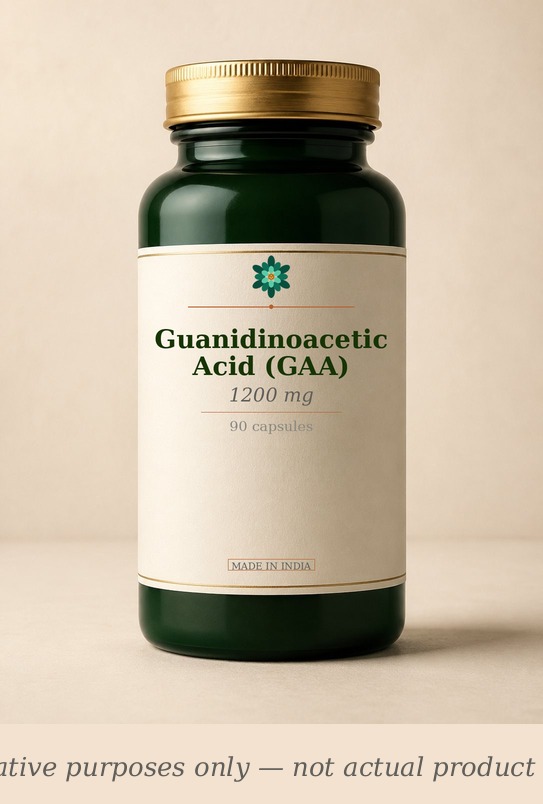
1200 mg · vegan · gluten-free · 90 caps
Affiliate link · we earn from qualifying purchases. No paid placements.
Guanidinoacetic Acid (GAA) is a direct precursor to creatine, a key molecule for cellular energy. It is synthesized in the body and can be supplemented to increase creatine availability in muscle tissue.
GAA is converted to creatine in the kidneys and liver, which is then transported to muscles. In muscle cells, creatine is phosphorylated to phosphocreatine, forming a readily available reservoir of energy to regenerate ATP during high-intensity exercise.
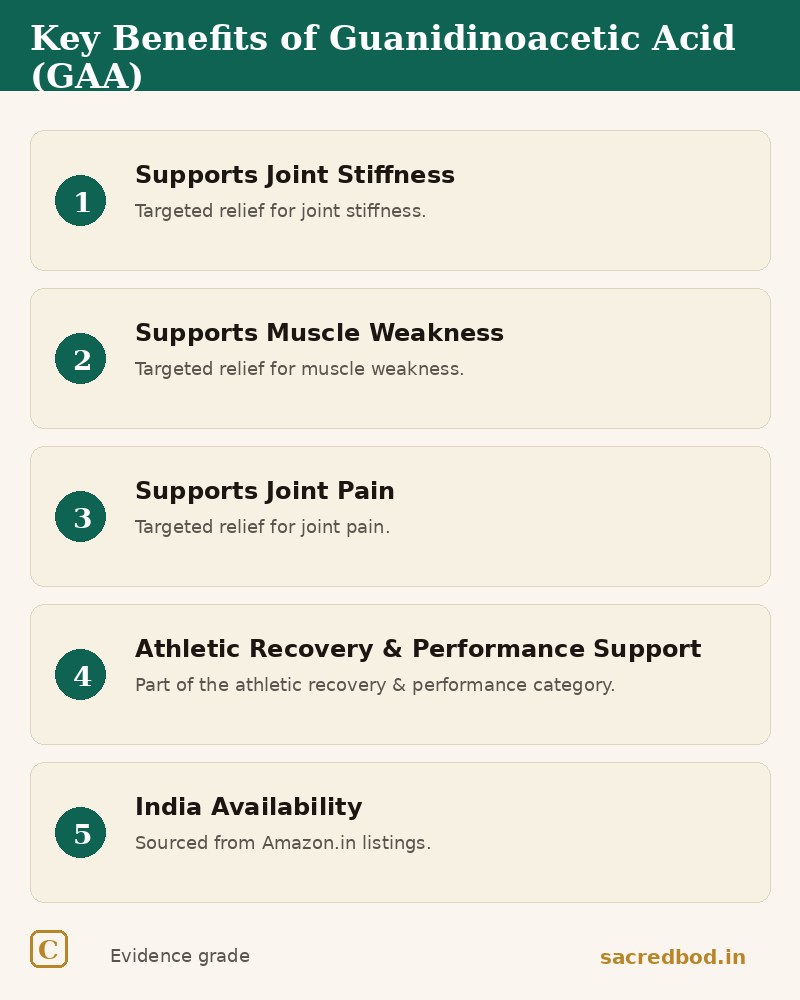
Adults looking to address joint stiffness, muscle weakness, joint pain. Particularly relevant for people who prefer a targeted single ingredient and who have ruled out an underlying condition that needs medical care first.
Pregnant or nursing women without clinician oversight. People on prescription medication affecting the same pathway should consult a doctor before combining. Side effects are uncommon at recommended doses but mild GI upset can occur when starting.
C · C · emerging-to-moderate human evidence for joint and musculoskeletal health
SacredBod's longer take on Guanidinoacetic Acid (GAA) — context the structured blocks above don't capture.
Guanidinoacetic Acid (GAA) is a athletic recovery & performance supplement used to support joint and musculoskeletal health. Direct creatine precursor for energy and power. It is available in capsule form and dosed for adults in India and internationally. As a western-tradition entry in the SacredBod catalog, it is positioned as a single-ingredient option that can be used on its own or layered into a broader protocol. Guanidinoacetic Acid (GAA) works through the mechanisms characteristic of its class — see the mechanism and research sections for detail. It primarily acts on the joints, muscles, bones, and effects are dose-dependent, typically becoming measurable within 4-12 weeks for joint comfort. Consistency matters more than dose size for this category.
Guanidinoacetic Acid (GAA) carries an evidence grade of C in the SacredBod catalog, reflecting emerging human evidence for joint and musculoskeletal health. Direct creatine precursor for energy and power. Benefits are cumulative rather than immediate, typically becoming noticeable within 4-12 weeks for joint comfort, and individual response varies.
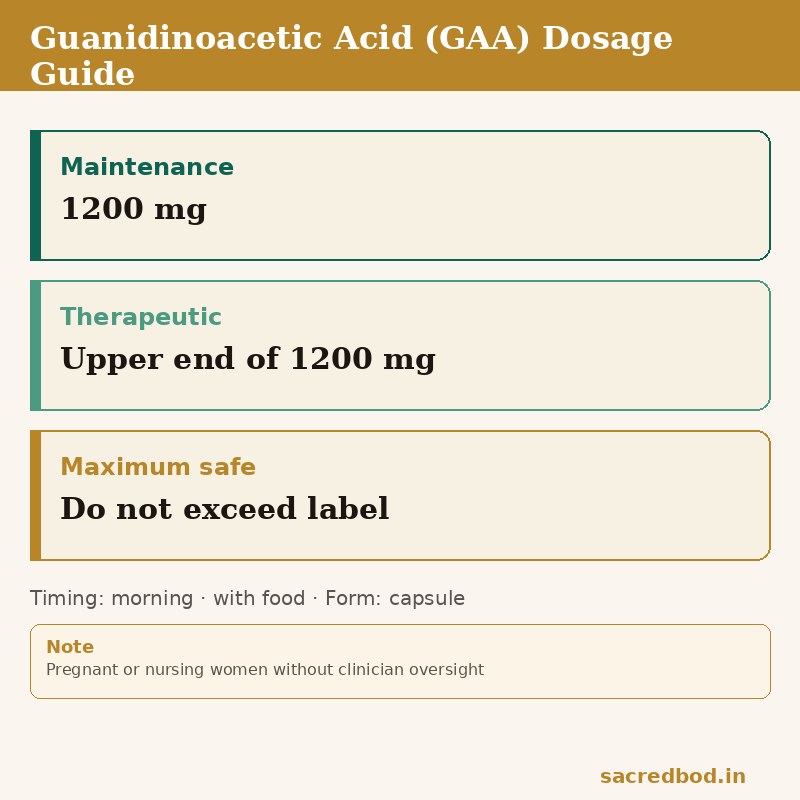
A typical dose is 1200 mg, taken with food, usually in the morning. Start at the lower end, assess tolerance, and stay consistent; more is not automatically better.
Pregnant or nursing women without clinician oversight. People on prescription medication affecting the same pathway should consult a doctor before combining. Side effects are uncommon at recommended doses but mild GI upset can occur when starting.
Adults looking to address joint stiffness, muscle weakness, joint pain. Particularly relevant for people who prefer a targeted single ingredient and who have ruled out an underlying condition that needs medical care first.
As part of the Athletic Recovery & Performance category, Guanidinoacetic Acid (GAA) can be used on its own or layered into a broader protocol — see the Goes with panel for evidence-aligned pairings.
Peptides are physician-only. Tell us a bit and we'll route you to the right specialist.
Request received.
We'll route this to a clinician familiar with peptide protocols. Expect a reply within about 48 hours.
How's your experience? We read every note.