SacredBod
0
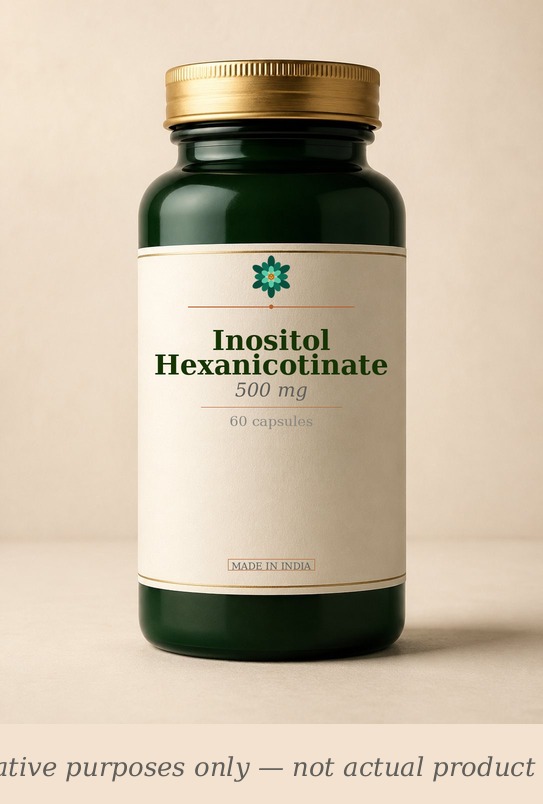
Inositol Hexanicotinate — SacredBod supplement bottle (illustrative)
Supplement · Vitamin

Inositol Hexanicotinate

500 mg · vegan · gluten-free · 60 caps

High triglyceridesLow HDL cholesterolNiacin flush intoleranceDyslipidaemiaMetabolic syndromePoor circulation LiverBlood vesselsSkinPancreas
BUY on Amazon →

Affiliate link · we earn from qualifying purchases. No paid placements.

What it is

Inositol hexanicotinate (IHN), also called inositol hexaniacinate or 'no-flush niacin,' is a chemical compound formed by esterifying six molecules of nicotinic acid (niacin) to one molecule of inositol. It was developed to provide the lipid-modulating benefits of niacin without the uncomfortable vasodilatory 'flush' — a burning, itching sensation caused by prostaglandin release from skin capillaries that makes many people discontinue niacin therapy. Upon ingestion, IHN is slowly hydrolysed in the body to release free nicotinic acid and inositol.

How it works

After oral ingestion, inositol hexanicotinate is slowly hydrolysed by esterases in the bloodstream and tissues, releasing nicotinic acid gradually over 6–10 hours. This slow release avoids the rapid peak plasma concentration that triggers the niacin flush. The released nicotinic acid then activates the GPR109A receptor on adipocytes, inhibiting hormone-sensitive lipase and reducing free fatty acid release to the liver — the mechanism by which niacin lowers triglycerides and raises HDL cholesterol. Inositol itself provides additional benefits for insulin signalling and mood regulation.

Who should take it

Individuals seeking niacin's lipid benefits but unable to tolerate the flush. Those with elevated triglycerides or low HDL wanting a gentler alternative to immediate-release niacin. People who have discontinued prescription niacin due to intolerable flushing. Note: Flush-free does not mean side-effect-free — lipid-modulating efficacy is debated.

Avoid / careful

Pregnant and breastfeeding women. Individuals with liver disease or history of hepatitis. Those with gout (niacin may raise uric acid). People with active peptic ulcers. Diabetics should monitor blood glucose (niacin may increase insulin resistance at high doses). Not for children. Side effects: Generally well-tolerated with minimal flush at standard doses (500–2,000 mg/day). Mild GI upset, headache or dizziness in sensitive individuals. Liver enzyme elevation is rare at moderate doses but possible at very high doses (>3,000 mg/day). Unlike immediate-release niacin, IHN does not typically cause the characteristic skin flush.

When to take it

Morning
Noon
Evening
Night

How to take it

With food
Empty stomach
Before food

FAQs

Frequently asked

How long before I see results?
Lipid marker changes may be detectable within 4–8 weeks at 1–2 g/day. However, evidence for IHN's lipid-modulating efficacy is weaker than for immediate-release niacin. Some studies show minimal lipid changes with IHN. For significant dyslipidaemia, prescription niacin or statins are more reliably effective.
Is it as effective as regular niacin for cholesterol?
This is debated. Some comparative studies suggest IHN produces less dramatic lipid improvements than immediate-release niacin because the slow hydrolysis may not achieve sufficient free nicotinic acid levels. However, the improved tolerability means users are more likely to adhere long-term. For those who cannot tolerate the flush, IHN is a reasonable compromise even if efficacy is modestly reduced.
Will it completely eliminate the flush?
For ~90% of users, yes — IHN produces little to no flush at standard doses. However, a small percentage of very sensitive individuals may still experience mild warmth or tingling. Taking with food and avoiding hot beverages further reduces any residual flush risk.

In plain English

A plain-English read of the literature behind this supplement. Not a clinical recommendation.

Key citations: PMID 15099404 (comparative study of IHN vs niacin), PMID 17982193 (niacin and lipid metabolism review), PMID 11601862 (vitamin B3 forms and cardiovascular outcomes)

Editorial notes

SacredBod's longer take on Inositol Hexanicotinate — context the structured blocks above don't capture.

What It Is

Inositol hexanicotinate (IHN), also called inositol hexaniacinate or ‘no-flush niacin,’ is a chemical compound formed by esterifying six molecules of nicotinic acid (niacin) to one molecule of inositol. It was developed to provide the lipid-modulating benefits of niacin without the uncomfortable vasodilatory ‘flush’ — a burning, itching sensation caused by prostaglandin release from skin capillaries that makes many people discontinue niacin therapy. Upon ingestion, IHN is slowly hydrolysed in the body to release free nicotinic acid and inositol.

How It Works

After oral ingestion, inositol hexanicotinate is slowly hydrolysed by esterases in the bloodstream and tissues, releasing nicotinic acid gradually over 6–10 hours. This slow release avoids the rapid peak plasma concentration that triggers the niacin flush. The released nicotinic acid then activates the GPR109A receptor on adipocytes, inhibiting hormone-sensitive lipase and reducing free fatty acid release to the liver — the mechanism by which niacin lowers triglycerides and raises HDL cholesterol. Inositol itself provides additional benefits for insulin signalling and mood regulation.

Who Should Consider It

Individuals seeking niacin’s lipid benefits but unable to tolerate the flush. Those with elevated triglycerides or low HDL wanting a gentler alternative to immediate-release niacin. People who have discontinued prescription niacin due to intolerable flushing. Note: Flush-free does not mean side-effect-free — lipid-modulating efficacy is debated.

Dosage Guide

Typical dose: 500 mg per day

Form: capsules (60 count)

Best time: morning

With food: with-food

Expected onset: 4–8 weeks for lipid markers; 8–12 weeks for cholesterol benefits

Cycling: No cycling required. Can be taken continuously.

Safety & Side Effects

Known side effects: Generally well-tolerated with minimal flush at standard doses (500–2,000 mg/day). Mild GI upset, headache or dizziness in sensitive individuals. Liver enzyme elevation is rare at moderate doses but possible at very high doses (>3,000 mg/day). Unlike immediate-release niacin, IHN does not typically cause the characteristic skin flush.

Who should avoid: Pregnant and breastfeeding women. Individuals with liver disease or history of hepatitis. Those with gout (niacin may raise uric acid). People with active peptic ulcers. Diabetics should monitor blood glucose (niacin may increase insulin resistance at high doses). Not for children.

Avoid combining with: Immediate-release niacin (redundant), Statin medications (theoretical additive hepatotoxicity — monitor liver enzymes), Anticoagulants (niacin may affect platelet function), Blood pressure medications (niacin may cause orthostatic hypotension), Diabetes medications (may affect glucose control)

India-Specific Context

Inositol Hexanicotinate is available on Amazon India with varying brand quality. When selecting a product, verify standardization claims against the evidence base cited above. Indian brand preferences include Carbamide Forte, HealthyHey, Nutrabay Pure, Pure Nutrition, Now Foods, Nutricost, Himalaya, Patanjali, Dabur, Trexgenics, Evorina, Nervana, Life Extension, VITARUHE, ASTERVEDA, BECLEC, and GreenOpia. Prices vary significantly; compare cost-per-active-dose rather than capsule count alone.

Schedule status in India: Not a Schedule H drug; available as dietary supplement/herbal product.

Research Summary

Key citations: PMID 15099404 (comparative study of IHN vs niacin), PMID 17982193 (niacin and lipid metabolism review), PMID 11601862 (vitamin B3 forms and cardiovascular outcomes)

Evidence grade: C — Limited human RCTs; some studies question lipid efficacy vs immediate-release niacin

Added to your stack.