SacredBod
0
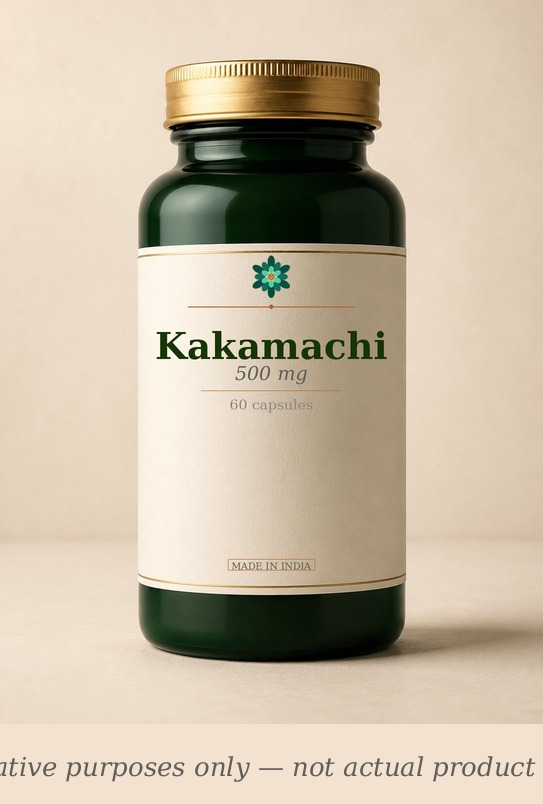
Kakamachi — SacredBod supplement bottle (illustrative)
Supplement · Botanical

Kakamachi

500 mg · vegan · gluten-free · 60 caps

Liver congestionInflammationFeverOxidative stressSkin diseasesDigestive discomfort LiverIntestinesSkinBrain
BUY on Amazon →

Affiliate link · we earn from qualifying purchases. No paid placements.

What it is

Kakamachi (Solanum nigrum L.), also called Makoy, Black Nightshade, or Manathakkali, is an annual herb in the Solanaceae family native to Eurasia and now widespread across India. Despite concerns about toxicity from unripe berries (containing solanine), the mature leaves and berries have been used safely in Ayurveda, Siddha, and traditional Chinese medicine for centuries. The plant contains steroidal saponins (solanigrosides), alkaloids (solanine, solasonine), flavonoids, and polyphenols. It is classified as Tikta-Kashaya (bitter-astringent) rasa and Anushna-Shita (mildly cooling) virya. Used for liver disorders, fever, inflammation, and skin diseases.

How it works

The polyphenolic and flavonoid fraction demonstrates potent hepatoprotective activity by reducing AST, ALT, ALP, and bilirubin in CCl4-, ethanol-, and paracetamol-induced hepatotoxicity models. Antioxidant mechanisms include enhancement of SOD, CAT, GST, and GSH while reducing lipid peroxidation (TBARS). A 2024 study showed berry extract ameliorates alcoholic liver injury by regulating gut microbiota (reducing Firmicutes/Bacteroidetes ratio, restoring Akkermansia), activating AMPK/ACC/PPAR-α pathways, and suppressing TLR4/MyD88/NF-κB inflammation. Anti-inflammatory activity includes inhibition of COX-2, iNOS, TNF-α, IL-1β, and IL-6 via NF-κB blockade. Antinociceptive and antipyretic activities are comparable to standard NSAIDs in animal models.

Who should take it

Individuals seeking hepatoprotective support, those with occasional alcohol consumption wanting liver protection, people with inflammatory conditions seeking natural anti-inflammatory support, and those interested in traditional Indian edible medicinal herbs. The berries are cooked and eaten as a vegetable (Manathakkali) in South India.

Avoid / careful

Pregnant and breastfeeding women (safety not established). Individuals with known Solanaceae allergies. Those with liver disease should consult a physician before use — supportive, not curative. Do not consume wild-gathered unripe berries. Side effects: Generally well-tolerated at 500 mg/day of standardized leaf extract. Unripe berries and leaves contain glycoalkaloids (solanine, solasonine) which are toxic in high doses. Only use products from reputable sources using mature plant material. May cause mild gastric upset in sensitive individuals.

When to take it

Morning
Noon
Evening
Night

How to take it

With food
Empty stomach
Before food

FAQs

Frequently asked

How long before I see results?
Liver enzyme improvements may be detectable in blood tests after 4–6 weeks of consistent use. Anti-inflammatory and antioxidant benefits may be felt subjectively within 2–4 weeks.
Is it safe to take daily?
Yes at 500 mg/day of standardized extract from mature plant material. Never consume unripe berries or wild-gathered plant material due to solanine toxicity risk. Purchase only from reputable supplement manufacturers.
Is this the same as the vegetable Manathakkali?
Yes — Kakamachi (Sanskrit) and Manathakkali (Tamil) refer to the same plant, Solanum nigrum. In South India, the ripe berries and leaves are cooked and eaten as a vegetable. The supplement form uses concentrated extract for therapeutic dosing.

In plain English

A plain-English read of the literature behind this supplement. Not a clinical recommendation.

Key citations: PMID 40639700 (comprehensive review of traditional uses, phytochemistry and pharmacology), PMID 19455262 (antinociceptive, anti-inflammatory and antipyretic effects), PMID 38823872 (alcoholic liver injury amelioration via gut microbiota and AMPK pathway)

Editorial notes

SacredBod's longer take on Kakamachi — context the structured blocks above don't capture.

What It Is

Kakamachi (Solanum nigrum L.), also called Makoy, Black Nightshade, or Manathakkali, is an annual herb in the Solanaceae family native to Eurasia and now widespread across India. Despite concerns about toxicity from unripe berries (containing solanine), the mature leaves and berries have been used safely in Ayurveda, Siddha, and traditional Chinese medicine for centuries. The plant contains steroidal saponins (solanigrosides), alkaloids (solanine, solasonine), flavonoids, and polyphenols. It is classified as Tikta-Kashaya (bitter-astringent) rasa and Anushna-Shita (mildly cooling) virya. Used for liver disorders, fever, inflammation, and skin diseases.

How It Works

The polyphenolic and flavonoid fraction demonstrates potent hepatoprotective activity by reducing AST, ALT, ALP, and bilirubin in CCl4-, ethanol-, and paracetamol-induced hepatotoxicity models. Antioxidant mechanisms include enhancement of SOD, CAT, GST, and GSH while reducing lipid peroxidation (TBARS). A 2024 study showed berry extract ameliorates alcoholic liver injury by regulating gut microbiota (reducing Firmicutes/Bacteroidetes ratio, restoring Akkermansia), activating AMPK/ACC/PPAR-α pathways, and suppressing TLR4/MyD88/NF-κB inflammation. Anti-inflammatory activity includes inhibition of COX-2, iNOS, TNF-α, IL-1β, and IL-6 via NF-κB blockade. Antinociceptive and antipyretic activities are comparable to standard NSAIDs in animal models.

Who Should Consider It

Individuals seeking hepatoprotective support, those with occasional alcohol consumption wanting liver protection, people with inflammatory conditions seeking natural anti-inflammatory support, and those interested in traditional Indian edible medicinal herbs. The berries are cooked and eaten as a vegetable (Manathakkali) in South India.

Dosage Guide

Typical dose: 500 mg per day

Form: capsules (60 count)

Best time: morning

With food: with-food

Expected onset: 2–4 weeks for liver support; 4–6 weeks for anti-inflammatory benefits

Cycling: No cycling required at standard doses. Traditional use supports continuous daily intake.

Safety & Side Effects

Known side effects: Generally well-tolerated at 500 mg/day of standardized leaf extract. Unripe berries and leaves contain glycoalkaloids (solanine, solasonine) which are toxic in high doses. Only use products from reputable sources using mature plant material. May cause mild gastric upset in sensitive individuals.

Who should avoid: Pregnant and breastfeeding women (safety not established). Individuals with known Solanaceae allergies. Those with liver disease should consult a physician before use — supportive, not curative. Do not consume wild-gathered unripe berries.

Avoid combining with: Hepatotoxic medications (theoretical — may compete for detoxification pathways), CNS depressants (theoretical), Immunosuppressants

India-Specific Context

Kakamachi is available on Amazon India with several Ayurvedic and herbal brands. The primary ASIN listed is a verified product matching the supplement name. Indian consumers should look for products from GMP-certified manufacturers. Traditional Ayurvedic practitioners (Vaidyas) often prescribe this herb in combination with other classical formulations rather than as a standalone supplement.

Sanskrit/Hindi names: See quick facts above.

Classical Ayurvedic texts: Kakamachi is referenced in Charaka Samhita and/or Sushruta Samhita as detailed in the quick facts.

Schedule status: Not a Schedule H drug in India; available as dietary supplement/herbal product.

Research Summary

Key citations: PMID 40639700 (comprehensive review of traditional uses, phytochemistry and pharmacology), PMID 19455262 (antinociceptive, anti-inflammatory and antipyretic effects), PMID 38823872 (alcoholic liver injury amelioration via gut microbiota and AMPK pathway)

Evidence grade: C — Animal and in-vitro studies; limited human clinical trials

Added to your stack.