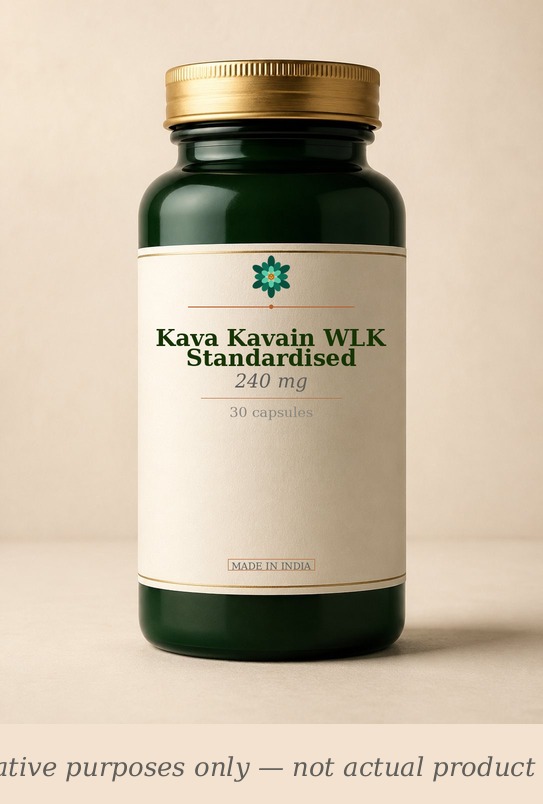
SacredBod's longer take on Kava Kavain WLK Standardised — context the structured blocks above don't capture.
What Kava Kavain WLK Is
Piper methysticum, commonly known as kava or kava-kava, is a shrub native to the South Pacific islands (Fiji, Vanuatu, Tonga, Samoa). For over 3,000 years, Pacific islanders have prepared kava by grinding the root and mixing it with water to create a ceremonial beverage that induces relaxation, social bonding, and mild euphoria without intoxication.
The active compounds — kavalactones (kavain, dihydrokavain, methysticin, dihydromethysticin, yangonin, desmethoxyyangonin) — are concentrated in the root. WLK and WS 1490 are standardised extracts containing 70% kavalactones, ensuring consistent anxiolytic potency. The noble cultivar distinction is critical: only roots from specific traditional cultivars are used in pharmaceutical extracts, as they lack the hepatotoxic compounds found in some wild varieties.
How It Works
- GABA-A receptor modulation — Kavalactones bind to GABA-A receptors, increasing chloride conductance and hyperpolarising neurons. This is the same receptor family targeted by benzodiazepines, but kava’s mechanism is partial and non-competitive, explaining the lack of addiction and withdrawal.
- Voltage-gated channel inhibition — Kavain blocks voltage-gated sodium and calcium channels, reducing neuronal excitability in the amygdala and limbic system.
- Monoamine reuptake inhibition — Weak inhibition of norepinephrine reuptake contributes to the alerting, non-sedating quality of kava’s anxiolysis.
- Endocannabinoid interaction — Yangonin binds to CB1 receptors, contributing to the mild euphoric and muscle-relaxant effects.
- Muscle relaxation — Kava reduces skeletal muscle tone via spinal cord GABAergic modulation, relieving tension headaches and jaw clenching associated with anxiety.
Who Benefits Most
- GAD patients — The Sarris 2013 trial demonstrated significant HAMA reduction with a moderate effect size (d = 0.62).
- Benzodiazepine tapering — Kava has been used in European clinical practice to help patients transition off lorazepam and diazepam.
- Social anxiety — The traditional ceremonial use of kava involves social gatherings; modern users report reduced social inhibition.
- Muscle tension anxiety — Unique among anxiolytics for its muscle-relaxant properties.
- Non-responders to SSRIs — The GABAergic mechanism is distinct from serotonergic antidepressants.
Dosage Guide
| Goal | Dose | Duration |
|---|
| GAD | 120–240 mg kavalactones/day | 4–8 weeks |
| Situational anxiety | 100–150 mg single dose | As needed |
| Sleep support | 150–200 mg 1 hour before bed | Ongoing |
| Muscle relaxation | 100 mg 2× daily | 2–4 weeks |
Take with food to enhance absorption and reduce stomach upset. Start at the lower end of the dose range.
Safety & Interactions
- Liver: Monitor ALT/AST at baseline and week 4 if using >4 weeks. Avoid alcohol completely.
- Benzodiazepines: Dangerous combination — do not use together.
- CYP450: Kava inhibits multiple liver enzymes; may increase levels of many medications.
- Parkinson’s: May worsen symptoms; avoid.
- Pregnancy: Not recommended.
India-Specific Context
- Availability: Kava supplements are not available on Amazon.in as of May 2026. Kava faces regulatory restrictions in several countries due to historical hepatotoxicity concerns, though the 2019 Cochrane review exonerated standardised extracts. Indian users may need to import from specialised vendors in the USA, Australia, or Pacific islands.
- Regulatory status: Kava is not a Schedule H drug in India but is not widely marketed. Import for personal use is possible but may face customs scrutiny.
- Ayurvedic parallel: While not in classical Ayurvedic texts, kava’s GABAergic anxiolysis is functionally similar to Jatamansi (Nardostachys jatamansi), Tagara (Valeriana wallichii), and Brahmi (Bacopa monnieri) — all classical Medhya Rasayanas used for anxiety and insomnia. Kava can be viewed as a “Pacific Jatamansi” with stronger clinical trial evidence.
- Cultural note: Kava bars are emerging in cosmopolitan Indian cities (Goa, Mumbai, Bangalore) as alcohol alternatives, reflecting growing interest in the plant.
- Cost: Imported kava capsules cost approximately $20–40 for 30–60 capsules plus shipping (roughly ₹2,000–4,000 total).
- Quality warning: Only purchase from vendors who specify “noble cultivar” and “root only”. Avoid products containing stem, leaf, or peel extracts.