
SacredBod
0
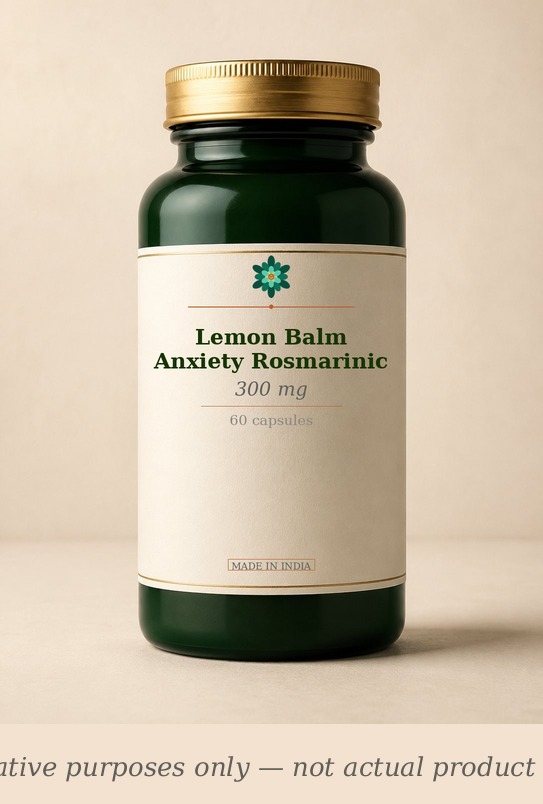
Lemon Balm Anxiety Rosmarinic — SacredBod supplement bottle (illustrative)
Supplement · Mood, Anxiety & Emotional Balance

Lemon Balm Anxiety Rosmarinic

300 mg · vegan · gluten-free · 60 caps

AnxietyCognitive agitationRacing thoughtsInsomniaRestlessnessMild depressionDigestive upset from anxiety BrainGABAergic synapsesDigestive tract
BUY on Amazon →

Affiliate link · we earn from qualifying purchases. No paid placements.

What it is

Melissa officinalis (lemon balm) is a lemon-scented herb in the Lamiaceae (mint) family with a 2,000-year history of use for anxiety, insomnia, and cognitive agitation. Standardised extracts rich in rosmarinic acid (5–10%) have demonstrated anxiolytic, antidepressant, and sleep-enhancing effects in clinical trials. The 2024 phytosome trial confirmed significant improvements in sleep quality and insomnia severity.

How it works

Rosmarinic acid is the primary anxiolytic compound in lemon balm. It inhibits GABA transaminase (GABA-T) — the enzyme that breaks down GABA — leading to increased GABA accumulation in synapses. Lemon balm compounds also bind directly to GABA-A receptors as partial agonists, enhancing inhibitory neurotransmission. Additionally, rosmarinic acid inhibits glutamate release and modulates nicotinic/muscarinic acetylcholine receptors, reducing cognitive agitation and restlessness.

Who should take it

Adults with mild-to-moderate anxiety, generalized anxiety with sleep disturbance, or cognitive agitation; students and professionals with racing thoughts; individuals seeking a gentle, non-sedating anxiolytic that also improves sleep quality; and those with anxiety-related digestive upset (lemon balm is a traditional carminative).

Avoid / careful

Pregnant or breastfeeding women (insufficient safety data); individuals with hypothyroidism (lemon balm may suppress thyroid function); those on sedative medications (additive CNS depression); people with glaucoma (theoretical concern due to anticholinergic properties at very high doses). Side effects: Very well tolerated. Mild nausea, stomach upset, or dizziness in rare cases. The 2024 phytosome trial reported no serious adverse events. Lemon balm may cause mild drowsiness in sensitive individuals.

When to take it

Morning
Noon
Evening
Night

How to take it

With food
Empty stomach
Before food

FAQs

Frequently asked

How long before I see results?
For acute calming, a single 300mg dose can reduce anxiety within 1–2 hours. For chronic anxiety, 1–2 weeks of daily use is needed. The 2024 phytosome trial showed significant ISI score reduction (6.8 vs 9.7, p=0.003) and 15% increase in slow-wave sleep after 4 weeks. For sleep quality, benefits appear within 3–4 weeks.
Will it make me drowsy?
Lemon balm is generally non-sedating at standard doses. It calms racing thoughts and reduces anxiety without the "hangover" effect of benzodiazepines. However, some sensitive individuals may experience mild drowsiness. If this occurs, reduce the dose or take only in the evening.
Can I take it with my thyroid medication?
Use caution. Lemon balm may reduce thyroid hormone levels by inhibiting TSH and peripheral conversion of T4 to T3. If you take levothyroxine or other thyroid medications, separate dosing by 4 hours and monitor thyroid function tests. Hypothyroid patients should avoid lemon balm or use only under endocrinologist guidance.

In plain English

A plain-English read of the literature behind this supplement. Not a clinical recommendation.

Key citations: PMID 39683592 (Melissa officinalis Phytosome on sleep quality — Di Pierro et al. 2024), PMID 11510126 (Clinical efficacy and tolerability of lemon balm — comprehensive 2024 review), PMID 12813068 (Acute anxiolytic effects of lemon balm — Kennedy et al. 2003)

Editorial notes

SacredBod's longer take on Lemon Balm Anxiety Rosmarinic — context the structured blocks above don't capture.

What Lemon Balm Anxiety Is

Melissa officinalis, commonly known as lemon balm, is a perennial herb in the mint family native to the Mediterranean and Central Asia. It has been used since ancient Greek and Roman times as a calming tea for anxiety, insomnia, and digestive complaints. The Greek physician Dioscorides (1st century AD) recommended it for “disorders of the mind” and “melancholy.”

The key active compound — rosmarinic acid — is a polyphenolic phytochemical that inhibits GABA transaminase (GABA-T), the enzyme responsible for breaking down GABA in the brain. By preserving GABA, lemon balm enhances the brain’s primary inhibitory neurotransmitter system, producing calm without sedation. Standardised extracts containing 5–10% rosmarinic acid ensure therapeutic consistency.

How It Works

  1. GABA-T inhibition — Rosmarinic acid blocks the enzyme that degrades GABA, increasing synaptic GABA levels. This is a unique mechanism distinct from benzodiazepines (which activate GABA-A receptors) and kava (which also activates GABA-A).
  2. Direct GABA-A binding — Lemon balm compounds act as partial agonists at GABA-A receptors, enhancing chloride conductance.
  3. Glutamate inhibition — Rosmarinic acid reduces glutamate release from presynaptic terminals, decreasing excitatory neurotransmission.
  4. Acetylcholine modulation — Lemon balm inhibits acetylcholinesterase (AChE), increasing acetylcholine — which paradoxically improves focus while reducing anxiety.
  5. Anti-inflammatory — Rosmarinic acid suppresses NF-κB and COX-2, reducing neuroinflammation associated with anxiety and depression.

Who Benefits Most

  • Anxious overthinkers — Lemon balm is particularly effective for “cognitive agitation” — racing thoughts, rumination, and mental restlessness.
  • Students and professionals — The combination of anxiolysis + cholinergic enhancement supports calm focus.
  • Anxiety-related insomnia — The 2024 phytosome trial confirmed significant improvements in sleep quality and insomnia severity.
  • Digestive anxiety — Lemon balm is a traditional carminative that reduces stomach upset caused by nervous tension.
  • Tulsi alternatives — Those who find Tulsi too stimulating may prefer lemon balm’s gentler GABAergic profile.

Dosage Guide

GoalDoseDuration
Anxiety300–600 mg/day2–4 weeks
Sleep quality300 mg 1 hour before bed3–4 weeks
Acute calming300 mg single doseAs needed
Cognitive agitation300 mg 2× dailyOngoing

Take with meals. The phytosome formulation (lipid-bound) may have 2–3× better bioavailability than standard extracts.

Safety & Interactions

  • Thyroid: May reduce TSH and T4→T3 conversion; monitor if hypothyroid.
  • Sedatives: Additive effect with benzodiazepines; use caution.
  • Iron: Tannins reduce absorption; separate by 2 hours.
  • Pregnancy: Not recommended due to insufficient data.
  • Glaucoma: Theoretical anticholinergic concern at very high doses.

India-Specific Context

  • Availability: Standalone lemon balm capsules are not available on Amazon.in as of May 2026. Lemon balm is occasionally included in combination sleep supplements with valerian, passionflower, or chamomile, but not as a standalone standardised product. Import from iHerb or Amazon.com is the best option.
  • Regulatory status: Lemon balm is not a Schedule H drug. It is sold as a dietary supplement in most countries.
  • Ayurvedic parallel: Lemon balm is not in classical Ayurvedic texts. However, it belongs to the same Lamiaceae family as Tulsi (Ocimum sanctum), and both share rosmarinic acid as a key bioactive. Tulsi is the Indian equivalent, though lemon balm has stronger clinical evidence for sleep and GABA-T inhibition specifically.
  • Culinary use: Lemon balm leaves can be used in herbal tea (1–2 tsp dried leaf steeped 5–10 minutes). While tea provides mild benefits, it lacks the concentration of standardised capsules.
  • Import cost: Standardised lemon balm capsules from brands like Nature’s Way, Solaray, or Pure Encapsulations cost approximately $10–20 for 60 capsules plus shipping (roughly ₹1,200–2,500 total).
  • DIY option: Lemon balm can be grown in Indian gardens (it thrives in temperate climates and partial shade). Fresh or dried leaves make a pleasant, mildly anxiolytic tea.
Added to your stack.