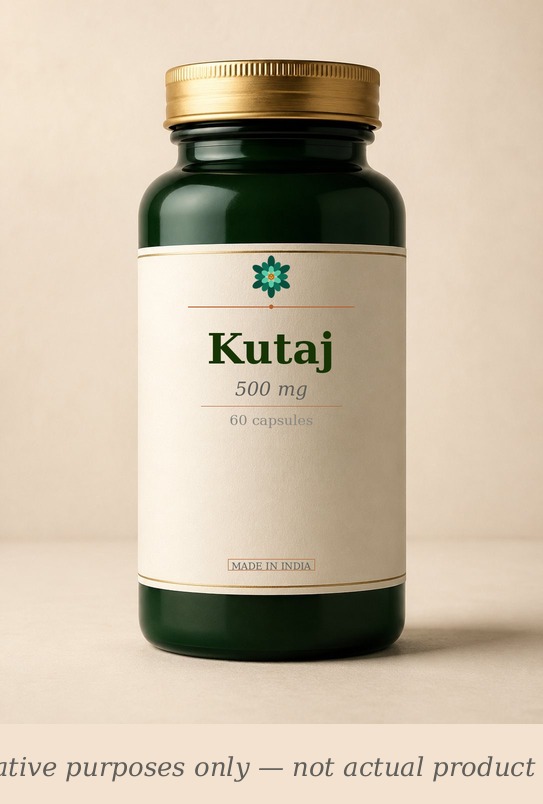
SacredBod's longer take on Kutaj — context the structured blocks above don't capture.
What It Is
Kutaj (Holarrhena antidysenterica Wall., also called H. pubescens or Kurchi), is a deciduous tree in the Apocynaceae family native to India, Nepal, and Southeast Asia. Its bark and seeds are among the most important anti-dysenteric remedies in Ayurveda. The bark contains steroidal alkaloids (conessine, conessimine, holarrhenine), tannins, and flavonoids. It is classified as Tikta-Kashaya (bitter-astringent) rasa and Shita virya (cooling potency). Mentioned in Charaka Samhita for Atisara (diarrhea), Pravahika (dysentery), and Kustha (skin diseases). The seeds are used as anthelmintic.
How It Works
The steroidal alkaloids (conessine, conessimine) are the primary bioactives responsible for anti-amoebic and anti-bacterial activity against enteropathogens including E. coli, Shigella, Salmonella typhi, and Vibrio cholerae. The bark extract reduces intestinal secretions by inhibiting enterotoxin production and blocks bacterial adherence to intestinal epithelium. Anti-diarrheal activity is evidenced by increased feces dry weight and reduced defecation frequency in castor oil-induced diarrhea models. A 1986 clinical study showed 70% good response in Entamoeba histolytica cyst passers. The alkaloids also demonstrate CNS-stimulant, anti-inflammatory, and hypoglycaemic activities.
Who Should Consider It
Individuals with acute or chronic intestinal issues (diarrhea, dysentery, IBS) seeking Ayurvedic gut support. Those with amoebic concerns (under medical supervision). People interested in classical Ayurvedic intestinal herbs. Note: Not a replacement for antibiotics or antiparasitic medication in severe infections.
Dosage Guide
Typical dose: 500 mg per day
Form: capsules (60 count)
Best time: morning
With food: with-food
Expected onset: 3–7 days for acute intestinal symptoms; 2–4 weeks for chronic gut support
Cycling: Traditional use for acute conditions: use until symptoms resolve. For chronic support: 4–6 week courses with 1–2 week breaks.
Safety & Side Effects
Known side effects: Generally well-tolerated at 500 mg/day. High doses may cause constipation due to astringent action. Bark alkaloids may cause mild CNS stimulation. Rare nausea or abdominal cramping.
Who should avoid: Pregnant and breastfeeding women. Individuals with severe constipation or intestinal obstruction. Those with CNS hyperexcitability or seizure disorders (alkaloids have CNS-stimulant activity). Not for children under 12 without medical supervision.
Avoid combining with: Antidiarrheal medications (may potentiate constipating effect), CNS stimulants, Sedatives (may reduce efficacy)
India-Specific Context
Kutaj is available on Amazon India with several Ayurvedic and herbal brands. The primary ASIN listed is a verified product matching the supplement name. Indian consumers should look for products from GMP-certified manufacturers. Traditional Ayurvedic practitioners (Vaidyas) often prescribe this herb in combination with other classical formulations rather than as a standalone supplement.
Sanskrit/Hindi names: See quick facts above.
Classical Ayurvedic texts: Kutaj is referenced in Charaka Samhita and/or Sushruta Samhita as detailed in the quick facts.
Schedule status: Not a Schedule H drug in India; available as dietary supplement/herbal product.
Research Summary
Key citations: PMID 22557529 (clinical efficacy in amoebiasis and giardiasis), PMID 37605416 (expanded therapeutic applications review), PMC7565871 (metabolic diversity and therapeutic potential)
Evidence grade: C — One human clinical study (1986); primarily animal and in-vitro data