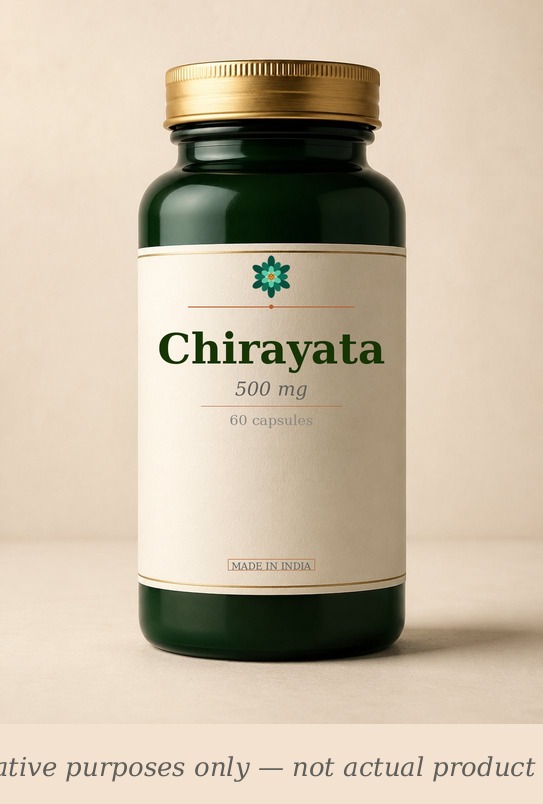
SacredBod's longer take on Chirayata — context the structured blocks above don't capture.
What It Is
Chirayata (Swertia chirayita Buch.-Ham.), also known as Chirata or Kiratatikta, is an annual herb in the Gentianaceae family native to the temperate Himalayas (1,200–3,000 m elevation). It is one of the most important bitter tonics in Ayurveda and traditional Tibetan medicine. The whole plant contains bitter principles (amarogentin, chiratin, swertiamarin), xanthones, and flavonoids. It is traditionally used for fever (malaria, intermittent fever), liver disorders, blood sugar dysregulation, and as a digestive bitter. It is classified as Tikta (bitter) rasa andSheet virya (cooling potency).
How It Works
The bitter compounds (amarogentin, swertiamarin) stimulate bitter taste receptors (TAS2Rs) on the tongue and throughout the GI tract, triggering the cephalic phase of digestion and enhancing bile secretion. A 2026 study showed Swertia chirayita ameliorates metabolic-associated fatty liver disease (MAFLD) by improving gut microbiota diversity, restoring beneficial SCFAs (butyric, acetic, propionic acid), and upregulating intestinal tight junction proteins (ZO-1, occludin, claudin-1). It also activates FXR/FGF15 signaling to inhibit hepatic lipogenesis. Anticarcinogenic activity includes activation of detoxification enzymes (GST, GPx, SOD, CAT) and induction of apoptosis in DMBA-induced skin carcinogenesis. Clinical studies from 1986 showed 70% good response in Entamoeba histolytica cyst passers.
Who Should Consider It
Individuals seeking bitter digestive support and liver health, those with occasional fever or parasitic concerns (under medical supervision), people with metabolic syndrome or MAFLD risk factors, and those interested in Himalayan Ayurvedic herbs. Traditionally used for ‘Agnimandya’ (low digestive fire) in Ayurveda.
Dosage Guide
Typical dose: 500 mg per day
Form: capsules (60 count)
Best time: morning
With food: with-food
Expected onset: 2–4 weeks for digestive and liver support; 4–8 weeks for metabolic benefits
Cycling: No cycling required. Traditional use supports continuous daily intake, though bitter herbs are often used in 4–6 week courses.
Safety & Side Effects
Known side effects: Very bitter taste may cause nausea in sensitive individuals. High doses may cause gastric irritation or diarrhea. May lower blood sugar — diabetics should monitor glucose levels. Traditional texts note it is cooling; excessive use may aggravate Vata.
Who should avoid: Pregnant and breastfeeding women. Individuals with hypoglycemia or on diabetes medications (may potentiate glucose-lowering effect). Those with severe gastric ulcers or hyperacidity. Not for children under 12.
Avoid combining with: Hypoglycaemic drugs, Anticoagulants (theoretical), Immunosuppressants
India-Specific Context
Chirayata is available on Amazon India with several Ayurvedic and herbal brands. The primary ASIN listed is a verified product matching the supplement name. Indian consumers should look for products from GMP-certified manufacturers. Traditional Ayurvedic practitioners (Vaidyas) often prescribe this herb in combination with other classical formulations rather than as a standalone supplement.
Sanskrit/Hindi names: See quick facts above.
Classical Ayurvedic texts: Chirayata is referenced in Charaka Samhita and/or Sushruta Samhita as detailed in the quick facts.
Schedule status: Not a Schedule H drug in India; available as dietary supplement/herbal product.
Research Summary
Key citations: PMID 41802510 (MAFLD amelioration via gut microbiota and FXR/FGF15), PMID 15173996 (anticarcinogenic and detoxification enzyme activation), PMID 22557529 (clinical efficacy in amoebiasis and giardiasis)
Evidence grade: C — Limited human clinical data; strong animal and in-vitro evidence