SacredBod
0
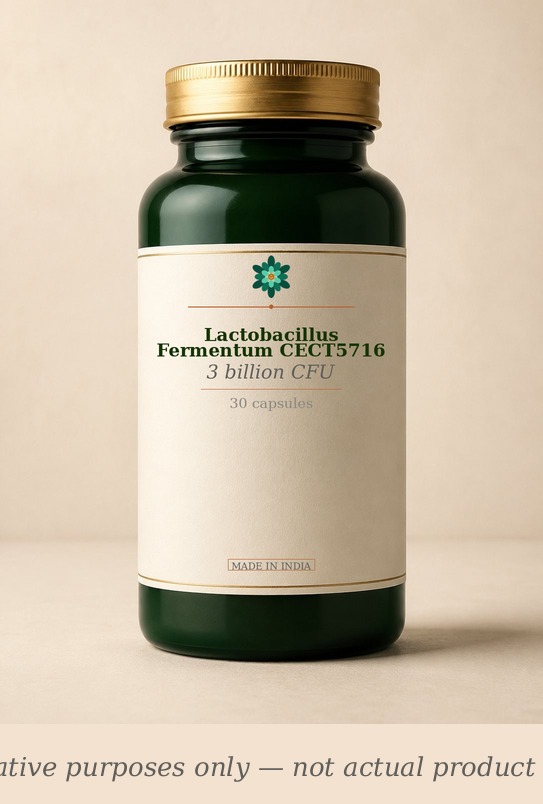
Lactobacillus Fermentum CECT5716 — SacredBod supplement bottle (illustrative)
Supplement · Probiotic

Lactobacillus Fermentum CECT5716

3 billion CFU · vegan · gluten-free · 30 caps

Breast painMastitisInfant infectionsUpper respiratory infectionsGI infectionsLow immunity Breast tissueGutImmune systemRespiratory tract
BUY on Amazon →

Affiliate link · we earn from qualifying purchases. No paid placements.

What it is

Lactobacillus fermentum CECT5716 (now reclassified as Limosilactobacillus fermentum CECT5716) is a probiotic strain originally isolated from human breast milk of healthy mothers 4 days postpartum. It is one of the few probiotics with a human milk origin, giving it natural affinity for infant gut colonisation and maternal breast tissue. It has been extensively studied in infants, lactating mothers and adults for immune and anti-infectious properties.

How it works

CECT5716 produces organic acids, hydrogen peroxide and bacteriocins that inhibit pathogens. It competitively excludes Staphylococcus aureus and other mastitis-causing bacteria from breast tissue. In infants, it stimulates IgA secretion, enhances mucosal barrier integrity and modulates Th1/Th2 immune balance. A 2012 RCT showed it reduced gastrointestinal infections by 46% and upper respiratory infections by 27% in infants. A 2015 RCT in lactating mothers showed it significantly reduced Staphylococcus load in breastmilk and breast pain scores.

Who should take it

Lactating mothers with breast pain or high Staphylococcus load in breastmilk. Parents seeking infant gut and immune support (via maternal supplementation or infant formula). Adults seeking immune support during cold/flu season. Those interested in human milk-derived probiotics with natural colonisation affinity.

Avoid / careful

Individuals with severe immunosuppression. Those with central venous catheters. Premature infants (consult paediatrician). People with artificial heart valves (rare endocarditis risk). Side effects: Generally well-tolerated. Mild GI adjustment in first week. No adverse effects reported in infant safety trials. As with all probiotics, immunocompromised individuals should consult a physician.

When to take it

Morning
Noon
Evening
Night

How to take it

With food
Empty stomach
Before food

FAQs

Frequently asked

How long before I see results?
For lactation/mastitis support, breast pain reduction was significant within 3 weeks in the RCT. For infant infection prevention, benefits accumulated over 6 months of formula supplementation. Adult immune benefits may be noticeable within 2–4 weeks.
Is it safe for infants?
Yes — CECT5716 was originally isolated from human milk and has been tested in multiple infant RCTs from 1–12 months of age with excellent safety profiles. It is used in commercial infant formulas in Europe.
Can men take it?
Yes — while much of the research focuses on lactation and infant health, the immune-modulating and anti-infectious properties apply to adults of all genders. Men can benefit from its immune and gut health support.

In plain English

A plain-English read of the literature behind this supplement. Not a clinical recommendation.

Key citations: PMID 21873895 (infant GI and URTI reduction RCT), PMID 26352805 (mastitis and breast pain RCT), PMID 22155106 (safety in infants 1–6 months), PMID 8305821 (2021 meta-analysis of GI infection prevention), PMID 37432320 (clinical potential review 2023)

Editorial notes

SacredBod's longer take on Lactobacillus Fermentum CECT5716 — context the structured blocks above don't capture.

What It Is

Lactobacillus fermentum CECT5716 (now reclassified as Limosilactobacillus fermentum CECT5716) is a probiotic strain originally isolated from human breast milk of healthy mothers 4 days postpartum. It is one of the few probiotics with a human milk origin, giving it natural affinity for infant gut colonisation and maternal breast tissue. It has been extensively studied in infants, lactating mothers and adults for immune and anti-infectious properties.

How It Works

CECT5716 produces organic acids, hydrogen peroxide and bacteriocins that inhibit pathogens. It competitively excludes Staphylococcus aureus and other mastitis-causing bacteria from breast tissue. In infants, it stimulates IgA secretion, enhances mucosal barrier integrity and modulates Th1/Th2 immune balance. A 2012 RCT showed it reduced gastrointestinal infections by 46% and upper respiratory infections by 27% in infants. A 2015 RCT in lactating mothers showed it significantly reduced Staphylococcus load in breastmilk and breast pain scores.

Who Should Consider It

Lactating mothers with breast pain or high Staphylococcus load in breastmilk. Parents seeking infant gut and immune support (via maternal supplementation or infant formula). Adults seeking immune support during cold/flu season. Those interested in human milk-derived probiotics with natural colonisation affinity.

Dosage Guide

Typical dose: 3 billion CFU per day

Form: capsules (30 count)

Best time: morning

With food: with-food

Expected onset: 2–4 weeks for immune benefits; 1–3 weeks for mastitis/lactation support

Cycling: No cycling required. Can be taken continuously.

Safety & Side Effects

Known side effects: Generally well-tolerated. Mild GI adjustment in first week. No adverse effects reported in infant safety trials. As with all probiotics, immunocompromised individuals should consult a physician.

Who should avoid: Individuals with severe immunosuppression. Those with central venous catheters. Premature infants (consult paediatrician). People with artificial heart valves (rare endocarditis risk).

Avoid combining with: Antibiotics (take 2 hours apart), Immunosuppressants, Antifungals

India-Specific Context

Lactobacillus Fermentum CECT5716 is available on Amazon India with varying brand quality. When selecting a probiotic, verify CFU count at expiry (not just at manufacture), strain specificity and refrigeration requirements. Indian brand preferences include Tata 1mg, ZEROHARM, Carbamide Forte, HealthKart, Jarrow Formulas, Now Foods, and Meibotan. Prices vary significantly; compare cost-per-CFU rather than capsule count alone.

Schedule status in India: Not a Schedule H drug; available as dietary supplement.

Research Summary

Key citations: PMID 21873895 (infant GI and URTI reduction RCT), PMID 26352805 (mastitis and breast pain RCT), PMID 22155106 (safety in infants 1–6 months), PMID 8305821 (2021 meta-analysis of GI infection prevention), PMID 37432320 (clinical potential review 2023)

Evidence grade: B — Multiple infant RCTs; lactation RCT; 2021 meta-analysis of 3 RCTs (n=435 infants)

Added to your stack.