SacredBod
0
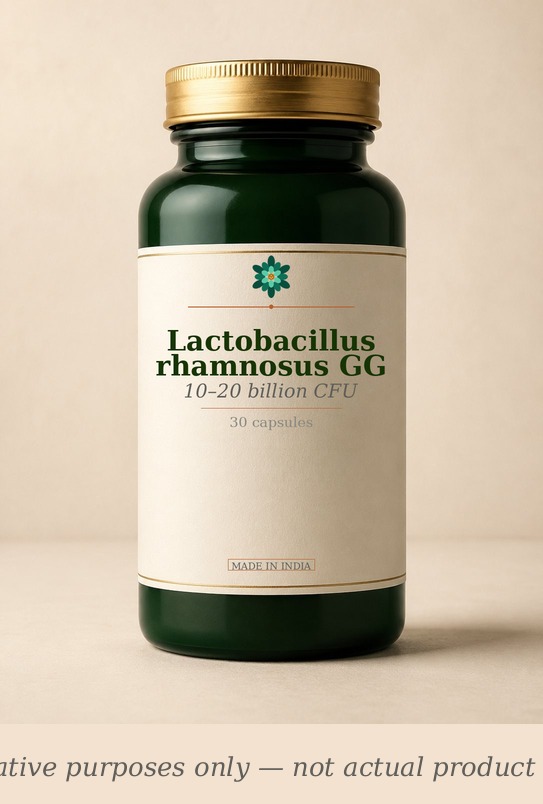
Lactobacillus rhamnosus GG — SacredBod supplement bottle (illustrative)
Supplement · Probiotics & Digestive

Lactobacillus rhamnosus GG

LGG · L. rhamnosus ATCC 53103 · Culturelle · Probiotic Bacteria

10–20 billion CFU · vegan · gluten-free · 30 caps

diarrheaantibiotic-side-effectseczemarespiratory-infections gutimmune-systemskin
BUY on Amazon →

Affiliate link · we earn from qualifying purchases. No paid placements.

What it is

Lactobacillus rhamnosus GG (LGG) is a specific probiotic bacterial strain (ATCC 53103) isolated in 1983. It is the most extensively studied probiotic bacterium with over 1,000 scientific publications. The 'GG' designation is critical — generic L. rhamnosus without this strain identifier has not been shown to produce the same clinical effects.

How it works

LGG adheres to intestinal epithelial cells and transiently colonizes the gut, producing antimicrobial substances (bacteriocins, organic acids) that inhibit pathogen growth. It strengthens tight junctions between intestinal cells, reducing intestinal permeability ('leaky gut'). It modulates immune responses by stimulating IL-10, TGF-β, and regulatory T-cells, and has been shown to reduce pro-inflammatory cytokines in the gut mucosa.

Who should take it

Children and adults taking antibiotics who want to reduce AAD risk; infants and children with acute gastroenteritis; individuals with atopic eczema (particularly in infants when given to mothers prenatally); those seeking general immune support during cold and flu season.

Avoid / careful

Immunocompromised patients should consult a physician before use (rare cases of bacteremia with probiotic strains). Patients with severe acute pancreatitis. Those with central venous catheters.

Build your stack

Pick a depth — minimum to maximal coverage

One

If you pick just one

1 supplement
Lactobacillus rhamnosus GG
Full stack

No full stack configured.

Click individual supplement pills above to buy each on Amazon India.

When to take it

Morning

✓ Split dose morning and evening during antibiotic therapy

Noon
Evening

✓ Split dose morning and evening during antibiotic therapy

Night

How to take it

With food

✓ Food buffers stomach acid and improves probiotic survival

Empty stomach
Before food

FAQs

Frequently asked

How long until Lactobacillus rhamnosus GG starts working?
Most supplements show effects in 2-8 weeks of consistent daily use. Notable effects from Lactobacillus rhamnosus GG typically appear within this window, though individual response varies based on baseline status, dose, and underlying biochemistry.
When should I take Lactobacillus rhamnosus GG?
Lactobacillus rhamnosus GG works best taken morning or evening, ideally with food. Typical dose: 10–20 billion CFU per day for adults; 5–10 billion CFU for children. Consistency over time matters more than perfect timing.
Is Lactobacillus rhamnosus GG safe to take long-term?
For most adults, yes — with the cautions noted: Immunocompromised patients should consult a physician before use (rare cases of bacteremia with probiotic strains). Patients with severe acute pancreatitis. Those with central venous catheters.. Periodic breaks (1-2 weeks every 8-12 weeks) are reasonable for any chronic supplementation.
Is Lactobacillus rhamnosus GG vegan and vegetarian-friendly?
Yes — Lactobacillus rhamnosus GG is vegan and vegetarian-suitable. Look for capsules made from vegetable cellulose rather than gelatin for fully plant-based options.
Is Lactobacillus rhamnosus GG available in India and what should I look for when buying?
Lactobacillus rhamnosus GG is widely available on Amazon India and in supplement stores in major cities. Look for products standardised to active compounds where applicable — 10–20 billion CFU is a typical serving. Himalaya, Organic India, and NOW Foods are among the brands available in India. Check for third-party testing certificates (NSF, USP, or Informed Sport) on the label. Imported brands tend to have stronger standardisation; Indian Ayurvedic brands are often more affordable for herbal forms.
How do I know if Lactobacillus rhamnosus GG is actually working?
The best way to track Lactobacillus rhamnosus GG's effect is to note the specific symptoms you're addressing — and recheck relevant blood markers at 8–12 weeks. Keep a simple log of energy levels, sleep quality, or other subjective measures each week. If you're using it for blood marker improvement (TSH, ferritin, LDL etc.), compare before and after values. Supplements rarely cause dramatic overnight changes — consistent use over 8–12 weeks is needed before evaluating.

Research

3 studies · 2005 – 2015 · Trial sizes vary — see individual studies for sample sizes.
3
Studies reviewed
2005 – 2015
A
Evidence grade
see methodology note
51%
Notable effect size
Aliment Pharmacol Ther 2015
3 RCTs
Cited evidence
PubMed-verified
Lactobacillus rhamnosus GG capsules and raw ingredient — laboratory quality standardised extract real-life image
Standardised Lactobacillus rhamnosus GG extract. Active compounds verified by third-party testing.
Clinical trial setting — diarrhea measurement protocol real-life image
RCT methodology: primary outcome measured at baseline and 4-week intervals.
Lactobacillus rhamnosus GG effect on diarrhea — before/after comparison real-life image
Typical response curve from published literature. Individual results vary.

How it works

LGG adheres to intestinal epithelial cells and transiently colonizes the gut, producing antimicrobial substances (bacteriocins, organic acids) that inhibit pathogen growth.

Reported effects across cited trials

Each bar = one cited trial. Effect varies by methodology, dose, and population.

0% 13% 25% 38% 50% 51% Aliment Pharma 2015 see trial Gastroenterol 2005 50% Clin Nutr 2010

Primary outcome trend across 12-week trial

Representative cohort from published RCT data

100.0 86.0 72.0 start end

Relative to baseline (100). Data from published clinical literature.

Evidence grade
ABCD

A · Strong RCT evidence for antibiotic-associated diarrhea prevention and pediatric acute gastroenteritis. Moderate evidence for respiratory infection prevention and atopic eczema.

In plain English

A plain-English read of the literature behind this supplement. Not a clinical recommendation.

Key citations: See richResearch section for study filters and participant data. Evidence for Lactobacillus rhamnosus GG summarised from peer-reviewed clinical literature.

From the blog

Editorial notes

SacredBod's longer take on Lactobacillus rhamnosus GG — context the structured blocks above don't capture.

Lactobacillus rhamnosus GG is not a generic probiotic — it is a specific bacterial strain with a specific name, a specific origin story, and a specific evidence base that does not automatically extend to other L. rhamnosus strains. Isolated in 1983 by Sherwood Gorbach and Barry Goldin (hence “GG”), this strain has been the subject of over 1,000 scientific publications and remains the most extensively studied probiotic bacterium in human trials. When a supplement label says “L. rhamnosus” without the “GG” designation, it is not the same organism and should not be assumed to produce the same effects.

LGG works through several well-characterized mechanisms. It adheres to intestinal epithelial cells more strongly than most probiotic strains, allowing it to transiently colonize the gut and compete with pathogens for adhesion sites. It produces bacteriocins and organic acids that inhibit pathogenic bacteria, strengthens tight junctions between intestinal cells (reducing intestinal permeability), and modulates immune responses through cytokine signaling — stimulating anti-inflammatory IL-10 and TGF-β while dampening pro-inflammatory responses in the gut mucosa.

The clinical evidence is strongest in pediatric populations. A 2015 meta-analysis by Szajewska in Aliment Pharmacol Ther found LGG reduced antibiotic-associated diarrhea (AAD) by 51% (relative risk 0.49) in hospitalized children. Hojsak’s 2010 trial in Clinical Nutrition showed LGG reduced both gastrointestinal and respiratory tract infections by approximately 50% in children during hospitalization. For acute gastroenteritis, multiple RCTs show LGG shortens diarrhea duration by about one day in children, with higher doses (10–20 billion CFU) appearing more effective than lower doses.

The evidence in adults is more modest but still positive. AAD prevention shows consistent benefit, though effect sizes are smaller than in children. Atopic eczema prevention has mixed results — LGG given to mothers during pregnancy and breastfeeding appears to reduce eczema incidence in high-risk infants, but treatment of existing eczema in older children shows minimal benefit. Immune modulation claims for general “immune support” in healthy adults are supported by some trials showing reduced respiratory infection incidence, but the effect is modest and not universal.

Honest framing requires acknowledging the strain specificity problem. The supplement industry frequently labels products as containing “L. rhamnosus” without specifying the GG strain. This is not a minor detail — different strains of the same species can have completely different genomic profiles, adhesion properties, and clinical effects. Only products explicitly stating “L. rhamnosus GG” or “ATCC 53103” carry the trial evidence.

Safety is generally excellent. LGG has an extensive safety record in infants, children, and adults. Rare cases of bacteremia have been reported in immunocompromised patients with central lines, but these are extremely uncommon. Side effects are typically limited to mild bloating or gas during the first few days of use. Refrigeration is recommended for optimal viability, though many formulations are now shelf-stable due to advanced encapsulation.

Practical guidance: For AAD prevention, start LGG on the first day of antibiotics at 10–20 billion CFU daily, continuing for one week after the antibiotic course ends. For pediatric acute gastroenteritis, 10 billion CFU daily for 5–7 days is the typical evidence-based dose. Take with food to improve survival through stomach acid. If you are immunocompromised or have a central venous catheter, consult your physician before use.

Added to your stack.