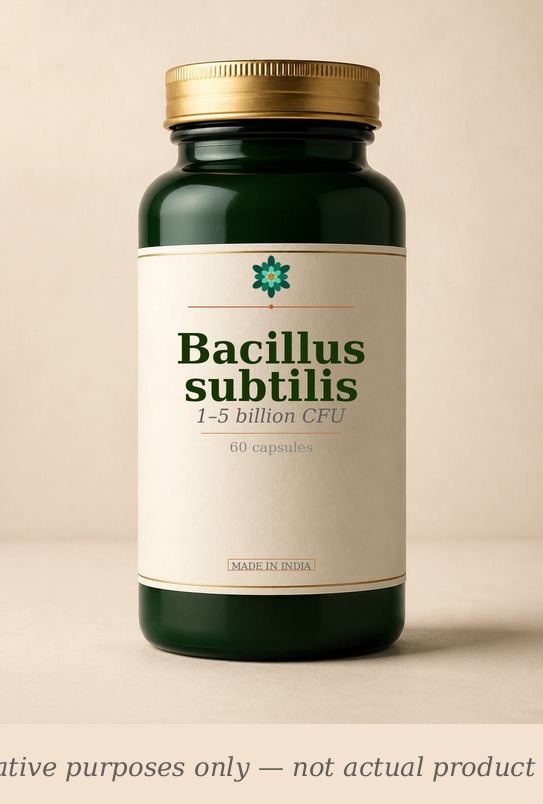
SacredBod's longer take on Bacillus subtilis — context the structured blocks above don't capture.
Bacillus subtilis is one of the most resilient microorganisms on Earth. Found in soil, water, and the human gut, it has the remarkable ability to form endospores — dormant, protected structures that can survive boiling water, desiccation, and years of storage. This resilience makes it an attractive probiotic candidate, but it also raises questions that do not apply to more fragile bacterial probiotics. Not all B. subtilis strains are equal, some carry antibiotic-resistance genes that could theoretically transfer to pathogenic bacteria, and the clinical evidence is concentrated in a handful of specific strains rather than the species as a whole.
The mechanism of action is multifaceted. In its spore form, B. subtilis survives passage through the stomach’s acidic environment and germinates in the small intestine, where it produces a suite of antimicrobial compounds including iturins, surfactins, and fengycins. These lipopeptides disrupt the cell membranes of competing pathogenic bacteria. Beyond direct antimicrobial action, B. subtilis stimulates the gut-associated lymphoid tissue (GALT), enhancing secretory IgA production and modulating innate immune cell activity. This immune-modulating effect is not limited to the gut — it appears to have systemic consequences, which is why some strains have been tested for respiratory infection prevention.
Lefevre’s 2015 trial in Immunity & Ageing is the most relevant clinical study. In a randomized, double-blind, placebo-controlled trial of elderly subjects during the common infection season, B. subtilis CU1 significantly increased immune cell activity and reduced the frequency of respiratory infections compared to placebo. The effect was modest but statistically significant, and the safety profile was excellent. This trial is particularly important because it tested a specific strain (CU1) in a vulnerable population during a defined high-risk period — the kind of rigorous design that is rare in probiotic research.
The HU58 strain has a different evidence profile. Bajaj’s 2020 pilot study in Nutrients tested HU58 in patients with hepatic encephalopathy — a serious complication of liver cirrhosis — and found it was safe and well tolerated with no serious adverse events attributed to the probiotic. This does not mean HU58 treats hepatic encephalopathy (the trial was not powered for efficacy), but it does establish safety in a medically complex population. HU58 is also marketed for general digestive health, though dedicated IBS or diarrhea RCTs are lacking.
The honest framing must address the antibiotic-resistance concern. Some B. subtilis strains, particularly those from uncharacterized environmental sources, carry genes conferring resistance to clinically important antibiotics. While the risk of horizontal gene transfer to human pathogens is theoretical and likely very low, it is not zero. This is why strain-specific, well-characterized products (CU1, HU58) are strongly preferred over generic “B. subtilis” powders of unknown origin. Reputable manufacturers test for antibiotic-resistance genes and document strain identity.
Safety in healthy adults is well established. Side effects are minimal — occasional bloating or gas during the first week. The spore form means no refrigeration is required, and the organism survives shelf storage for extended periods. However, immunocompromised patients, those with central venous catheters, and individuals with severe acute pancreatitis should avoid B. subtilis probiotics, as they should all live bacterial supplements.
Practical guidance: Choose products that specify the strain — CU1 for immune support (based on Lefevre 2015), HU58 for general digestive use. The typical dose is 1–5 billion CFU daily. Take with food to stimulate germination. No refrigeration needed. Give it 4–8 weeks before assessing immune or digestive benefits. Avoid generic, uncharacterized B. subtilis products, particularly those sold as bulk powders without strain documentation.