What it is
Magnesium malate is the magnesium salt of malic acid. The malic-acid portion enters the Krebs cycle directly, making this form attractive for energy support — unlike sedating forms like glycinate.
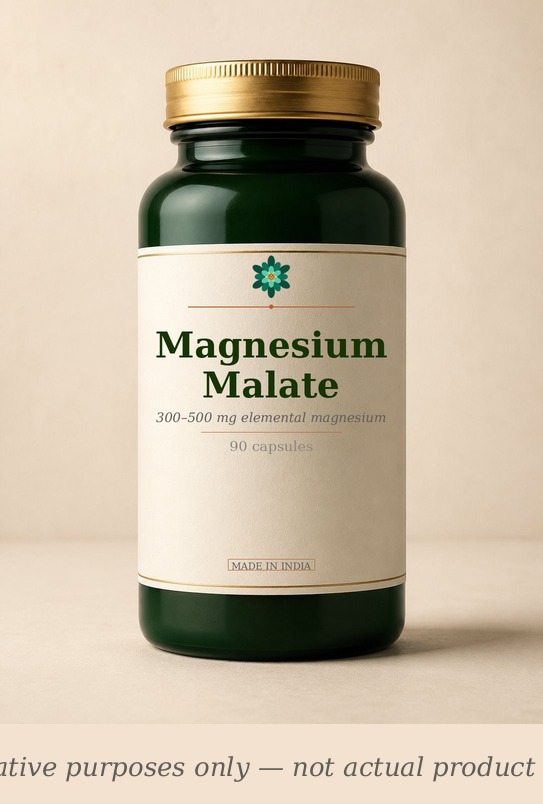
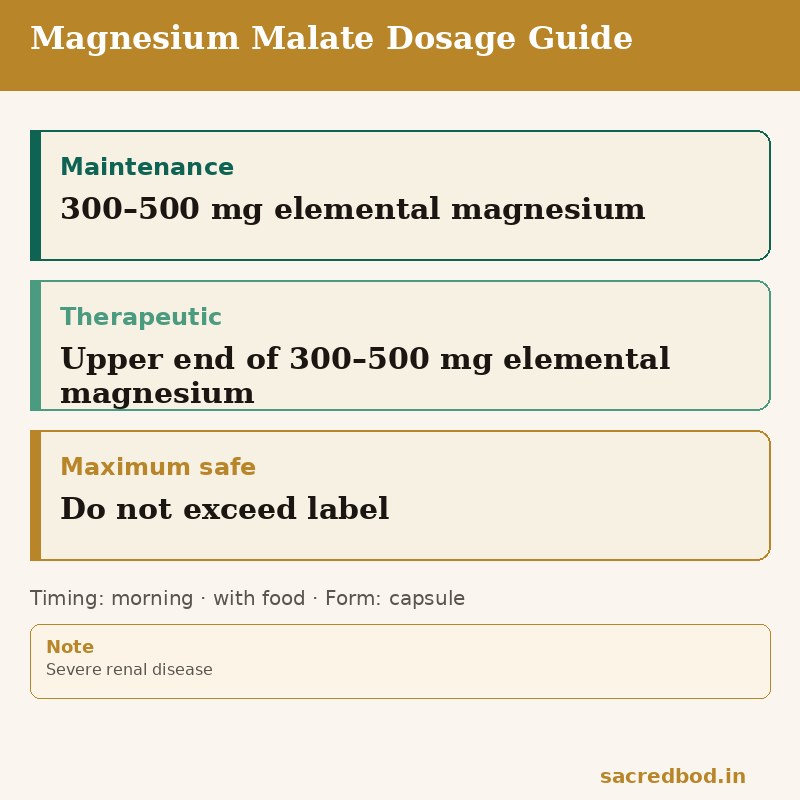
300–500 mg elemental magnesium · vegan · gluten-free · 90 caps
Affiliate link · we earn from qualifying purchases. No paid placements.
Magnesium malate is the magnesium salt of malic acid. The malic-acid portion enters the Krebs cycle directly, making this form attractive for energy support — unlike sedating forms like glycinate.
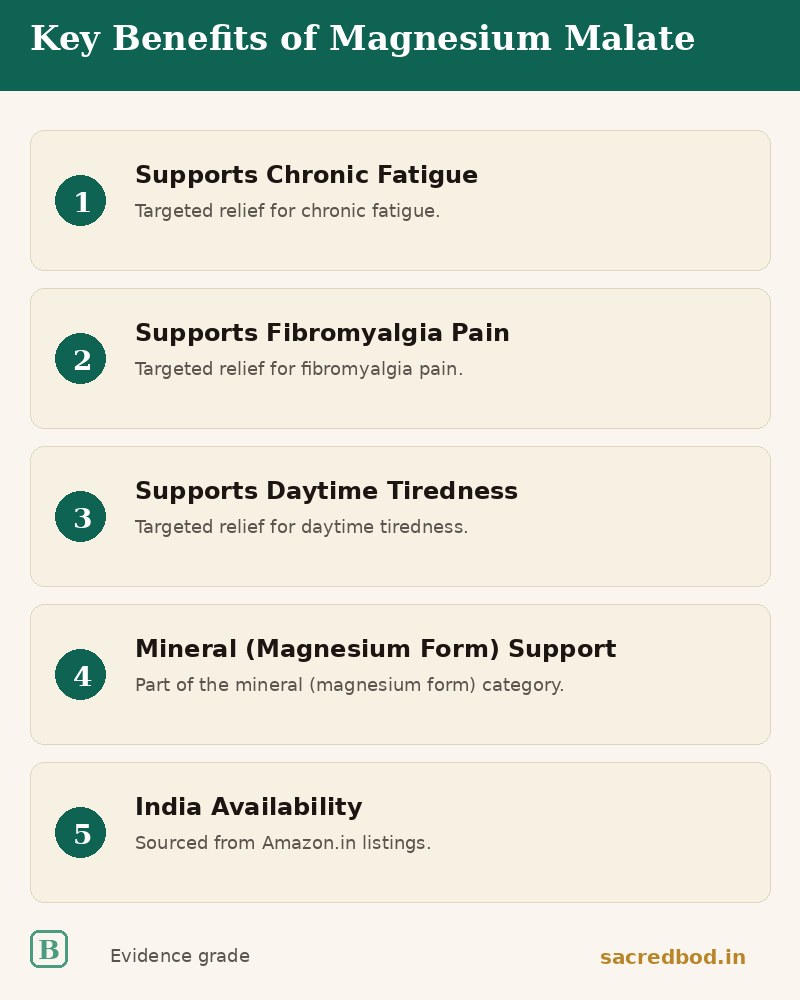
Magnesium activates 300+ enzymes including ATP-binding sites; malate participates in cellular ATP recycling. The combination shines in fatigue and fibromyalgia states.
Adults with daytime fatigue, fibromyalgia, or chronic muscle pain. The energy-leaning form of magnesium.
Severe renal disease. Space 2 hours from bisphosphonates and tetracyclines.
A plain-English read of the literature behind this supplement. Not a clinical recommendation.
Fibromyalgia RCTs (Russell et al. 1995) at 1200 mg malate showed reduced tender point counts. Magnesium status itself is widely deficient.
SacredBod's longer take on Magnesium Malate — context the structured blocks above don't capture.
Magnesium Malate is a mineral (magnesium form) supplement. Magnesium malate is the magnesium salt of malic acid. The malic-acid portion enters the Krebs cycle directly, making this form attractive for energy support — unlike sedating forms like glycinate.
Magnesium activates 300+ enzymes including ATP-binding sites; malate participates in cellular ATP recycling. The combination shines in fatigue and fibromyalgia states.
Adults with daytime fatigue, fibromyalgia, or chronic muscle pain. The energy-leaning form of magnesium.
Availability on Amazon India is currently limited or import-only for this form. International brands (iHerb, NOW Foods, Doctor’s Best) ship to India with variable customs handling. Local Ayurvedic equivalents may offer overlapping benefits.
Severe renal disease. Space 2 hours from bisphosphonates and tetracyclines.
Peptides are physician-only. Tell us a bit and we'll route you to the right specialist.
Request received.
We'll route this to a clinician familiar with peptide protocols. Expect a reply within about 48 hours.
How's your experience? We read every note.