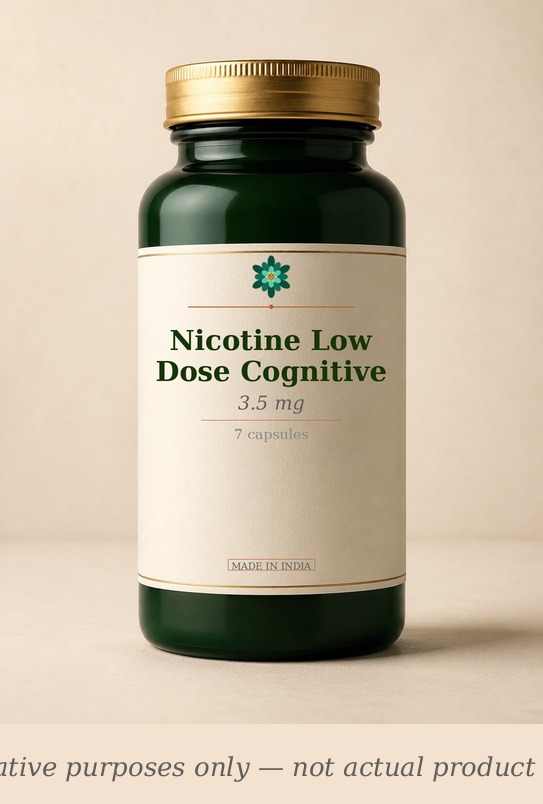
SacredBod's longer take on Nicotine Low Dose Cognitive — context the structured blocks above don't capture.
What Low-Dose Nicotine Is
Nicotine is one of the most paradoxical compounds in medicine: it is the addictive agent in tobacco, yet it is also a potent cognitive enhancer and neuroprotectant. The key distinction lies in dose and delivery method:
- Smoking/vaping: High, pulsatile doses delivered rapidly to the brain → addiction
- Transdermal patch: Low, steady doses delivered slowly → cognitive benefits with minimal addiction risk
At 3.5–7mg/day via transdermal patch, nicotine acts as a therapeutic cholinergic agonist — essentially a “natural” version of what Alzheimer’s drugs attempt to achieve artificially.
How It Works
Nicotinic Receptors & Cognition
The brain’s two primary nicotinic acetylcholine receptors (nAChRs) are:
- α4β2 — dominant in the cortex and hippocampus; critical for attention and working memory
- α7 — involved in sensory gating, memory, and neuroprotection
In Alzheimer’s disease and MCI, these receptors degenerate. Nicotine stimulates the remaining receptors, effectively “amplifying” the signal from a weakened cholinergic system.
Neuroprotection
Beyond immediate cognitive effects, nicotine:
- Reduces neuroinflammation
- Protects against glutamate excitotoxicity
- Promotes BDNF expression
- Inhibits amyloid-β toxicity in preclinical models
This has led to the hypothesis that nicotine may be disease-modifying, not merely symptomatic.
Who Benefits Most
- Mild cognitive impairment (MCI) — The Newhouse trial showed significant attention and memory improvements over 6 months.
- Age-associated memory impairment (AAMI) — The White trial demonstrated sustained attentional improvements in AAMI subjects.
- Alzheimer’s disease — While not a cure, nicotine patches improved attentional performance in AD patients over 4 weeks.
- Non-smokers only — Current smokers already have desensitised receptors and would not benefit from additional nicotine.
Dosage Guide
| Goal | Dose | Duration |
|---|
| Cognitive enhancement / MCI | 3.5–7 mg/day transdermal | 3–6 months |
| Attention support | 3.5 mg/day | 4–8 weeks |
| Neuroprotection research | 7 mg/day | 6 months |
Application: Apply in the morning to clean, dry, hairless skin (upper arm, shoulder, or back). Remove at bedtime to reduce insomnia and vivid dreams. Rotate application sites daily to prevent skin irritation.
Safety & Interactions
- Cardiovascular: Mild blood pressure reduction and rare arrhythmias; avoid in severe heart disease.
- Skin irritation: The most common side effect; rotate sites and use hydrocortisone cream if needed.
- Cholinesterase inhibitors: Additive effects with donepezil/rivastigmine — consult neurologist.
- Weight loss: Small (~1–2kg) reduction over 6 months due to nicotine’s anorexic effect.
India-Specific Context
- Availability: Low-dose nicotine patches (3.5mg or 7mg) are not available on Amazon.in. The only nicotine patch listed is Cipla Nicotex 21mg (smoking cessation Step 1). While this could theoretically be cut into smaller pieces, we do not recommend off-label modification without physician guidance.
- Regulatory status: Nicotine patches are over-the-counter (OTC) in India for smoking cessation. They are not Schedule H drugs. However, using them for cognitive enhancement is off-label.
- Cost: Cipla Nicotex 21mg (7 patches) costs approximately ₹300–₹400 on Amazon.in. At quartered doses, this provides ~28 cognitive doses — but again, off-label use is not endorsed.
- Cultural note: Tobacco use (smoking and chewing) is widespread in India, but the transdermal nicotine patch is underutilised as a harm-reduction tool, let alone a cognitive intervention. Public awareness of nicotine’s non-addictive therapeutic potential is minimal.
- Recommendation: We list this supplement as TBD for Amazon.in ASIN at the cognitive dose. Users interested in this approach should discuss it with a physician and consider importing low-dose patches (7mg) from international pharmacies if Cipla does not release a lower-dose variant.