
SacredBod
0
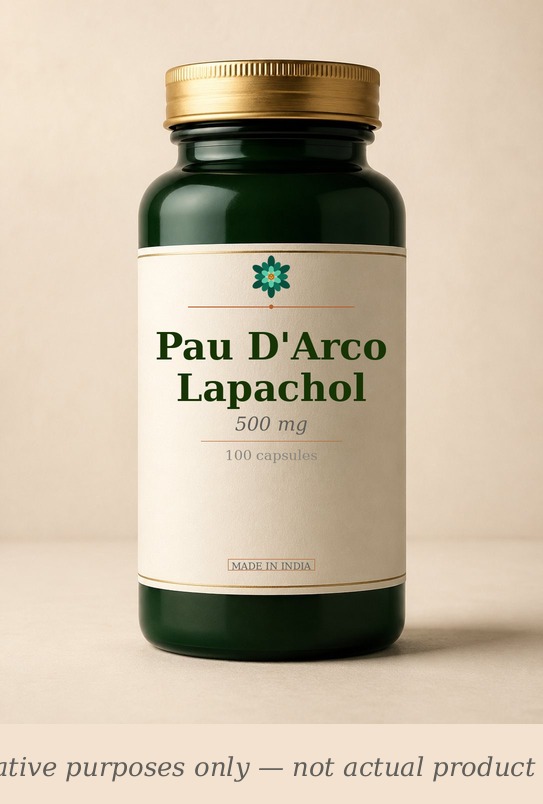
Pau D'Arco Lapachol — SacredBod supplement bottle (illustrative)
Supplement · Antimicrobial & Anti-Candida

Pau D'Arco Lapachol

500 mg · vegan · gluten-free · 100 caps

Candida overgrowthAzole-resistant candidaBacterial dysbiosisChronic infectionsFungal skin infectionsImmune weakness GutBloodSkinImmune system
BUY on Amazon →

Affiliate link · we earn from qualifying purchases. No paid placements.

What it is

Tabebuia impetiginosa (pau d'arco or lapacho) is a large tree native to the Amazon rainforest whose inner bark contains naphthoquinones — primarily lapachol and beta-lapachone. These compounds have demonstrated broad antimicrobial activity in vitro against fungi (including Candida albicans, C. auris, and Aspergillus), bacteria (including MRSA, H. pylori, and Brucella), and viruses. Beta-lapachone has also shown activity against fluconazole-resistant Candida auris.

How it works

Lapachol and beta-lapachone are naphthoquinones that generate reactive oxygen species (ROS) inside microbial cells, damaging mitochondria, cell walls, and DNA. Beta-lapachone specifically targets the cell wall and energy metabolism of Candida species, and has been shown to prevent biofilm formation and decrease metabolism of preformed biofilms at concentrations as low as 6.25 µg/mL. It also inhibits efflux pumps that confer antifungal resistance.

Who should take it

Individuals with candida overgrowth (especially azole-resistant strains); those with bacterial dysbiosis; individuals seeking Amazonian ethnobotanical antimicrobials; and those with chronic infections that have not responded to conventional treatments.

Avoid / careful

Pregnant or breastfeeding women; individuals with bleeding disorders or on anticoagulants; those with anaemia; people scheduled for surgery (discontinue 2 weeks prior). Side effects: Mild nausea, stomach upset, or diarrhoea in some users. Rare anaemia with prolonged high-dose use (lapachol can affect red blood cell production). Skin rash in sensitive individuals.

When to take it

Morning
Noon
Evening
Night

How to take it

With food
Empty stomach
Before food

FAQs

Frequently asked

How long before I see results?
For candida symptoms, 2–4 weeks of daily use is the typical protocol. For resistant or recurrent infections, 4–6 weeks may be needed. The in vitro data is strong — beta-lapachone prevents biofilm formation and decreases metabolism of preformed biofilms at very low concentrations — but human clinical trials are lacking. Pau d'arco is best used as part of a multi-herb antimicrobial protocol rather than as a standalone treatment.
Is it safe for long-term use?
Caution warranted. Lapachol in very high doses has been associated with anaemia in animal studies due to effects on red blood cell production. We recommend limiting use to 4–6 week cycles with 2-week breaks. Monitor haemoglobin if using for more than 2 months. Do not exceed 1,500 mg/day.
Can it treat MRSA or H. pylori?
In vitro studies show activity against MRSA and H. pylori, but human clinical data is insufficient. For confirmed MRSA or H. pylori infections, prescription antibiotics remain essential. Pau d'arco may serve as an adjunct in integrative protocols under medical supervision.

In plain English

A plain-English read of the literature behind this supplement. Not a clinical recommendation.

Key citations: PMC11405563 (Beta-lapachone antifungal activity against fluconazole-resistant Candida auris), PMID 36461604 (complementary juglone antiparasitic evidence), PMC3915762 (complementary artemisinin antimicrobial evidence)

Editorial notes

SacredBod's longer take on Pau D'Arco Lapachol — context the structured blocks above don't capture.

What Pau D’Arco Lapachol Is

Tabebuia impetiginosa, commonly known as pau d’arco, lapacho, or taheebo, is a towering hardwood tree native to the Amazon rainforest of South America. For centuries, indigenous tribes have used its inner bark as a traditional medicine for infections, inflammation, and cancer. Modern phytochemical analysis has identified lapachol and beta-lapachone as the primary bioactive naphthoquinones responsible for its antimicrobial effects.

Beta-lapachone is particularly notable for its activity against azole-resistant Candida auris — an emerging multidrug-resistant pathogen that poses a serious global health threat. The 2024 study showed that beta-lapachone damages the yeast cell wall, mitochondria, and energy metabolism at concentrations as low as 6.25 µg/mL.

How It Works

  1. ROS generation — Beta-lapachone is reduced by NAD(P)H:quinone oxidoreductase (NQO1) inside microbial cells, generating reactive oxygen species that damage DNA, proteins, and membranes.
  2. Cell wall damage — In Candida species, beta-lapachone disrupts cell wall integrity, leading to leakage of cellular contents.
  3. Mitochondrial disruption — Inhibits mitochondrial respiration and ATP production, starving the organism of energy.
  4. Efflux pump inhibition — Blocks the ABC transporters that confer antifungal drug resistance, potentially restoring sensitivity to azoles.
  5. Biofilm prevention — Prevents Candida biofilm formation and reduces metabolism of existing biofilms.

Who Benefits Most

  • Azole-resistant candida sufferers — Beta-lapachone’s activity against fluconazole-resistant strains is particularly valuable.
  • Chronic infection patients — Those with infections that have not responded to conventional antibiotics or antifungals.
  • Immunocompromised individuals — Broad-spectrum antimicrobial support for those with weakened immunity.
  • Ethnobotanical enthusiasts — One of the most studied Amazonian medicinal plants.

Dosage Guide

GoalDoseDuration
Candida support500 mg 2–3× daily4–6 weeks
General antimicrobial500 mg 2× daily3–4 weeks
Immune support500 mg/day2–4 weeks

Take with meals to reduce stomach upset.

Safety & Interactions

  • Anaemia: Monitor haemoglobin with prolonged use; lapachol may affect RBC production.
  • Bleeding: Increased risk with anticoagulants; discontinue 2 weeks before surgery.
  • Pregnancy: Not recommended.
  • Chemotherapy: Beta-lapachone may interact with radiation therapy; consult oncologist.
  • Iron: May interfere with iron metabolism.

India-Specific Context

  • Availability: NOW Foods Pau D’Arco (B0013OUQK6 — 250 caps, 500mg) and Nature’s Way Pau d’Arco Inner Bark (B00024D268 — 100 veg caps) are available on Amazon.in. Prices range from ₹1,200–₹2,000. No Indian domestic brand currently sells standalone pau d’arco.
  • Regulatory status: Pau d’arco is sold as a dietary supplement in India. It is not a Schedule H drug.
  • Ayurvedic parallel: Pau d’arco has no direct equivalent in Ayurvedic texts. The closest parallels are Neem (broad-spectrum antimicrobial) and Haridra (turmeric — antifungal and anti-inflammatory). In modern Indian integrative medicine, pau d’arco is sometimes combined with neem for resistant fungal infections.
  • Import note: Most pau d’arco products in India are imported from the USA (NOW Foods, Nature’s Way). Ensure the product specifies “inner bark” extract rather than whole bark, as the inner bark contains the highest lapachol concentration.
  • Cost: Imported pau d’arco is relatively expensive at ₹1,200–₹2,000 for 100–250 capsules. For budget-conscious users, neem or berberine offer more affordable domestic alternatives with overlapping antimicrobial spectra.
Added to your stack.