
SacredBod
0
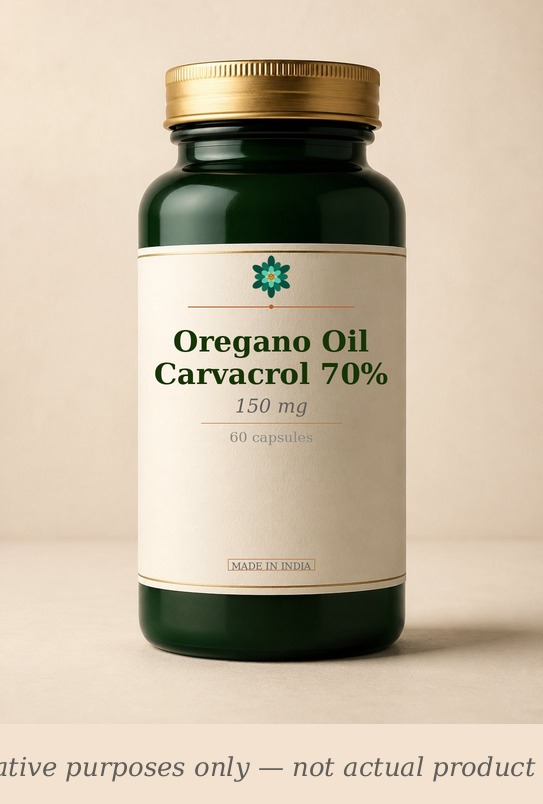
Oregano Oil Carvacrol 70% — SacredBod supplement bottle (illustrative)
Supplement · Antimicrobial & Anti-Candida

Oregano Oil Carvacrol 70%

150 mg · vegan · gluten-free · 60 caps

Candida overgrowthSIBOBloatingGasIntestinal dysbiosisH. pylori colonisationParasitic infection GutStomachSmall intestine
BUY on Amazon →

Affiliate link · we earn from qualifying purchases. No paid placements.

What it is

Origanum vulgare (oregano) essential oil standardised to 70%+ carvacrol is one of the most potent natural antimicrobial agents. Carvacrol and thymol — the primary phenolic compounds — disrupt microbial cell membranes and inhibit biofilm formation. It has demonstrated in vitro and in vivo activity against Candida albicans, H. pylori, SIBO-associated bacteria, and intestinal parasites.

How it works

Carvacrol is a monoterpenoid phenol that integrates into the lipid bilayer of fungal and bacterial cell membranes, increasing permeability and causing leakage of cellular contents. It also inhibits ergosterol synthesis in fungi (similar to azole antifungals) and disrupts bacterial quorum sensing. At 70%+ standardisation, the extract delivers a reproducible antimicrobial dose that can eradicate stationary-phase Candida and inhibit biofilm formation.

Who should take it

Individuals with intestinal candida overgrowth, SIBO (small intestinal bacterial overgrowth), H. pylori colonisation, or parasitic infections; those with chronic bloating, gas, or dysbiosis seeking a natural antimicrobial alternative to pharmaceutical antibiotics.

Avoid / careful

Pregnant or breastfeeding women; children under 12 years; individuals with iron deficiency (oregano may reduce iron absorption); those with peptic ulcers or severe GERD. Side effects: Mild stomach upset, heartburn, or nausea in ~10% of users. Strong oregano taste may cause burping. Rare allergic reactions in those sensitive to Lamiaceae family plants (mint, basil, thyme).

When to take it

Morning
Noon
Evening
Night

How to take it

With food
Empty stomach
Before food

FAQs

Frequently asked

How long before I see results?
For SIBO-related bloating and gas, improvement typically begins within 1–2 weeks. For candida overgrowth, 3–4 weeks of consistent use is needed to see reduced fungal burden in stool or symptom improvement. The murine study showed that 30 days of oregano oil administration resulted in 80% survivability in systemic candidiasis with complete renal clearance of C. albicans.
Will it kill good bacteria too?
Oregano oil is broad-spectrum and can affect beneficial gut flora. This is why we recommend cycling (4 weeks on, 1 week off) and combining with a probiotic taken at a different time of day (2+ hours apart). Spore-based probiotics like Bacillus coagulans are particularly resilient during antimicrobial therapy.
Can I take it with antibiotics?
Oregano oil can be taken alongside antibiotics for enhanced antimicrobial coverage, but consult your physician. Do not replace prescribed antibiotics for serious infections (e.g., H. pylori eradication protocols) with oregano oil alone without medical supervision.

In plain English

A plain-English read of the literature behind this supplement. Not a clinical recommendation.

Key citations: PMID 11855736 (Antifungal activities of origanum oil against Candida albicans — Manohar et al. 2001), PMID 33091857 (complementary propolis antimicrobial evidence), PMC8954725 (complementary fatty acid antifungal review)

Editorial notes

SacredBod's longer take on Oregano Oil Carvacrol 70% — context the structured blocks above don't capture.

What Oregano Oil Carvacrol Is

Origanum vulgare, commonly known as oregano or wild marjoram, is a perennial herb in the Lamiaceae (mint) family native to the Mediterranean and western Asia. While Ajwain (Trachyspermum ammi) is the closest Indian relative in the same botanical family, oregano has been extensively studied for its essential oil’s antimicrobial properties — particularly the phenolic compound carvacrol.

Standardised oregano oil extracts containing 70%+ carvacrol are among the most potent natural antimicrobial supplements available. The oil is extracted via steam distillation and standardised to ensure consistent phenolic content. At this concentration, it rivals pharmaceutical antifungals in vitro against Candida albicans and demonstrates broad-spectrum antibacterial activity against SIBO-associated organisms.

How It Works

  1. Cell membrane disruption — Carvacrol integrates into the lipid bilayer of fungal and bacterial cell membranes, increasing permeability and causing leakage of potassium, ATP, and other cellular contents.
  2. Ergosterol inhibition — In fungi, carvacrol inhibits ergosterol synthesis — the fungal equivalent of cholesterol — disrupting membrane integrity (similar mechanism to fluconazole).
  3. Biofilm inhibition — Oregano oil prevents Candida biofilm formation and disrupts existing biofilms, which are the primary reason candida infections become chronic and treatment-resistant.
  4. Quorum sensing disruption — In bacteria, carvacrol interferes with cell-to-cell communication, preventing the coordinated growth that characterises SIBO.
  5. Antioxidant synergy — The phenolic structure also scavenges free radicals, reducing inflammation in the gut mucosa during infection.

Who Benefits Most

  • Candida overgrowth sufferers — The Manohar study showed complete growth inhibition at 0.25 mg/mL and 80% survivability in a murine systemic candidiasis model.
  • SIBO patients — Broad-spectrum activity against hydrogen- and methane-producing bacteria without the systemic absorption concerns of rifaximin.
  • H. pylori colonised individuals — Oregano oil has demonstrated in vitro activity against H. pylori, though clinical eradication protocols require combination therapy.
  • Parasitic infection cases — Traditional use and emerging research support antiparasitic activity.

Dosage Guide

GoalDoseDuration
Candida overgrowth150 mg (70% carvacrol) 2× daily4 weeks on, 1 week off
SIBO support150 mg 2× daily with meals4 weeks
H. pylori adjunct150 mg 2× daily2–4 weeks
General gut dysbiosis150 mg 1–2× daily2–4 weeks

Take with food to reduce stomach irritation. Enteric-coated capsules are preferred to protect the stomach and release the oil in the intestines.

Safety & Interactions

  • Iron absorption: Oregano tannins may reduce non-heme iron absorption; separate from iron supplements by 2 hours.
  • Bleeding: Theoretical anticoagulant effect at high doses; monitor if on warfarin.
  • Pregnancy: Not recommended — essential oils can be uterotonic.
  • GERD/Ulcers: May aggravate acid reflux; use enteric-coated forms or take with substantial meals.

India-Specific Context

  • Availability: Vaastavik Oregano Capsules 60 Veg with 70% Carvacrol Extract (B0GFWVSM87) is available on Amazon.in. NOW Foods Oregano Oil liquid (B0019LVFFS) and Gaia Herbs Oil of Oregano (B0036THMYE) are also imported options. Prices range from ₹500–₹1,500.
  • Regulatory status: Oregano oil is sold as a dietary supplement in India. It is not a Schedule H drug.
  • Ayurvedic parallel: Ajwain (Trachyspermum ammi) contains thymol — the isomer of carvacrol — and shares similar antimicrobial properties. In Ayurveda, ajwain is used for digestive complaints, gas, and intestinal parasites (Krimighna). Oregano can be viewed as a “Mediterranean ajwain” with higher carvacrol concentration.
  • Traditional use: While not native to India, oregano has become widely used in Indian urban kitchens. The medicinal essential oil form is less known but growing in popularity among the biohacking community.
  • Cost: Vaastavik 70% carvacrol capsules cost approximately ₹600–₹900 for 60 capsules — a 1-month supply at standard doses.
Added to your stack.