
SacredBod
0
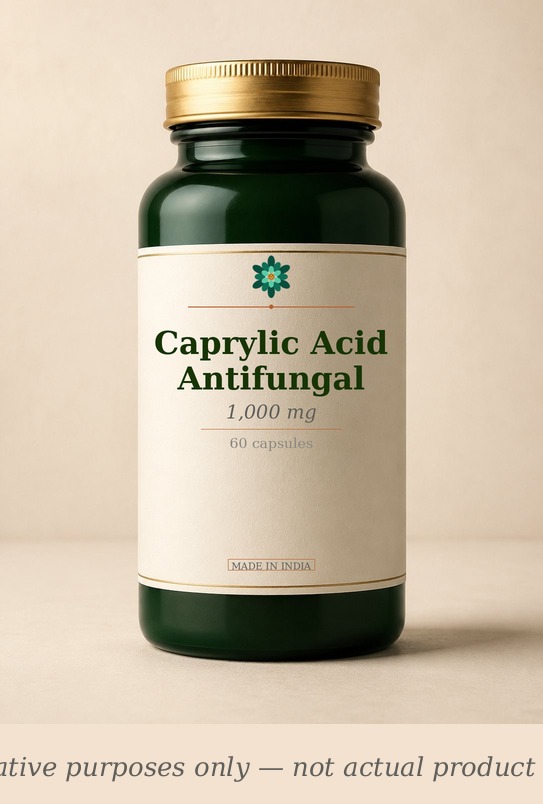
Caprylic Acid Antifungal — SacredBod supplement bottle (illustrative)
Supplement · Antimicrobial & Anti-Candida

Caprylic Acid Antifungal

1,000 mg · vegan · gluten-free · 60 caps

Candida overgrowthRecurrent yeast infectionsIntestinal dysbiosisBloatingGasFatigueBrain fog GutLiverBrain
BUY on Amazon →

Affiliate link · we earn from qualifying purchases. No paid placements.

What it is

Caprylic acid (octanoic acid) is a medium-chain fatty acid (MCFA, C8:0) found naturally in coconut oil, palm kernel oil, and breast milk. At doses of 1,000–2,000 mg/day, it exerts potent antifungal activity against Candida albicans and other pathogenic fungi by disrupting cell membranes. It also inhibits biofilm formation by 75% at low concentrations and mimics quorum-sensing molecules that prevent hyphal growth.

How it works

Caprylic acid is a small lipophilic molecule that penetrates fungal cell membranes and integrates into the lipid bilayer, causing detergent-like disruption and leakage of cellular contents. It specifically targets the ergosterol-rich membranes of fungi while being the least cytotoxic fatty acid to human cells. Additionally, caprylic acid mimics the quorum-sensing molecule farnesol, interfering with Candida's ability to switch from yeast to hyphal form and form biofilms. The combination of membrane disruption + biofilm inhibition + quorum-sensing interference makes it uniquely effective against candida.

Who should take it

Individuals with intestinal candida overgrowth, recurrent yeast infections, or fungal dysbiosis; those with malabsorption issues who may benefit from MCFA energy support; and individuals seeking a safe, well-tolerated antifungal that does not disrupt beneficial bacteria.

Avoid / careful

Pregnant or breastfeeding women (insufficient safety data at high doses); individuals with severe liver disease (MCFAs are metabolised in the liver); those with gallbladder removal (may cause diarrhoea due to rapid absorption). Side effects: Very well tolerated. Mild stomach upset, nausea, or loose stools at high doses (>2,000 mg/day). The MCFA structure may cause a temporary "ketone breath" odour. No serious adverse events reported in clinical use.

When to take it

Morning
Noon
Evening
Night

How to take it

With food
Empty stomach
Before food

FAQs

Frequently asked

How long before I see results?
For intestinal candida, 1–2 weeks of 1,000–2,000 mg/day typically reduces bloating, gas, and brain fog. For recurrent vaginal yeast infections, 2–4 weeks may be needed alongside topical treatment. The in vitro data shows 75% biofilm inhibition at very low concentrations (2 µg/mL), suggesting strong antifungal potential. Caprylic acid is one of the safest and best-tolerated natural antifungals.
Can I just eat more coconut oil?
Coconut oil contains only ~7% caprylic acid (C8) and ~8% capric acid (C10). To get 1,000 mg of caprylic acid from coconut oil, you would need to consume ~14g of coconut oil — which is practical but provides significant calories. Pure caprylic acid capsules deliver the therapeutic dose without the extra fat. For mild candida, 1–2 tablespoons of coconut oil daily may suffice. For moderate-to-severe overgrowth, pure caprylic acid is more effective.
Is it safe long-term?
Yes. Caprylic acid is a natural dietary fat found in coconut oil and breast milk. It is metabolised rapidly in the liver to ketones, which the brain and muscles can use for energy. Long-term use at 1,000–2,000 mg/day is safe for most people. Those with severe liver disease should consult a physician, as MCFA metabolism occurs in the liver.

In plain English

A plain-English read of the literature behind this supplement. Not a clinical recommendation.

Key citations: PMC8954725 (Potential of fatty acids as antifungal agents — comprehensive review), PMC11943374 (Caprylic acid ointment in wound biofilm model — 2024), PMID 11855736 (complementary oregano antifungal evidence)

Editorial notes

SacredBod's longer take on Caprylic Acid Antifungal — context the structured blocks above don't capture.

What Caprylic Acid Antifungal Is

Caprylic acid (octanoic acid, C8:0) is a medium-chain fatty acid (MCFA) that constitutes approximately 7% of coconut oil and is also found in palm kernel oil and breast milk. Unlike long-chain fatty acids that require bile and pancreatic enzymes for digestion, MCFAs are absorbed directly into the bloodstream and transported to the liver for rapid conversion to ketones.

At therapeutic doses (1,000–2,000 mg/day), caprylic acid exerts potent antifungal activity that is distinct from its nutritional role. It is one of the most studied natural antifungal compounds, with decades of in vitro and in vivo research supporting its efficacy against Candida albicans, Malassezia furfur, and dermatophytes.

How It Works

  1. Membrane disruption — Caprylic acid penetrates the fungal lipid bilayer and acts as a detergent, causing membrane leakage and cell death. It is particularly effective against ergosterol-rich fungal membranes.
  2. Biofilm inhibition — The 2021 study showed that caprylic acid and related MCFAs inhibit Candida biofilm formation by 75% at just 2 µg/mL — one of the lowest effective concentrations of any natural compound.
  3. Quorum-sensing interference — Caprylic acid mimics farnesol, the natural quorum-sensing molecule that Candida uses to regulate its morphology. By interfering with this signal, caprylic acid prevents the yeast-to-hypha transition that is essential for invasion and biofilm formation.
  4. Mitochondrial damage — Disrupts fungal energy metabolism by damaging mitochondrial membranes.
  5. Human safety — Flow cytometry studies confirm caprylic acid is the least cytotoxic fatty acid to human cells among all MCFAs tested.

Who Benefits Most

  • Candida overgrowth sufferers — Safe, effective, and well-tolerated for intestinal candida.
  • Recurrent yeast infection patients — Addresses the gut reservoir that seeds vaginal reinfection.
  • Brain fog / fatigue patients — The ketones produced from caprylic acid provide clean brain fuel while the antifungal action reduces candida-derived toxins.
  • Athletes and biohackers — MCFAs provide rapid energy without insulin spikes.
  • Those with malabsorption — MCFAs require minimal digestive effort and are ideal for compromised gut function.

Dosage Guide

GoalDoseDuration
Candida overgrowth1,000 mg 2× daily3–4 weeks
Recurrent yeast infections1,000 mg 2× daily4–6 weeks
General gut health500–1,000 mg/dayOngoing
Cognitive/energy support1,000 mg with breakfastOngoing

Take with meals containing some fat for optimal absorption.

Safety & Interactions

  • Liver disease: MCFAs are metabolised in the liver; use caution in severe hepatic impairment.
  • Gallbladder removal: Rapid absorption may cause loose stools; start at low dose and titrate up.
  • Antifungals: Redundant mechanism; consult physician if combining with prescription antifungals.
  • Pregnancy: Not recommended at therapeutic doses.
  • Orlistat: Fat-blocking drugs will reduce absorption.

India-Specific Context

  • Availability: Standalone caprylic acid (C8) capsules are not available on Amazon.in as of May 2026. MCT oil capsules (containing a mix of C8 and C10) are occasionally available, and coconut oil capsules are sold by Ayurvedic brands. However, coconut oil capsules contain only ~7% caprylic acid — insufficient for therapeutic antifungal doses. Pure caprylic acid needs to be imported.
  • Regulatory status: Caprylic acid is not a Schedule H drug. It is sold as a dietary supplement or MCT oil component.
  • Ayurvedic parallel: Nariyal (Cocos nucifera, coconut) is deeply revered in Ayurveda as Snigdha (unctuous), Balya (strength-giving), and Vrushya (aphrodisiac). Coconut oil is used for oil pulling (Gandusha), hair care, and digestive support. Caprylic acid’s antifungal properties align with the traditional use of coconut for gut health, though the concentrated C8 form is modern.
  • Import option: Pure caprylic acid capsules from brands like Bulletproof, NOW Foods, or Jarrow Formulas cost approximately $15–25 for 100 capsules plus shipping (roughly ₹1,500–3,000 total).
  • DIY alternative: For those who cannot import, 2–3 tablespoons of virgin coconut oil daily provides ~1,500–2,000 mg of caprylic acid along with other beneficial MCFAs. This is a practical and affordable option for mild-to-moderate candida in India.
  • Cost: Virgin coconut oil is widely available in India at ₹200–400 per litre, making it one of the most affordable antifungal interventions. Pure caprylic acid capsules are significantly more expensive if imported.
Added to your stack.