SacredBod
0
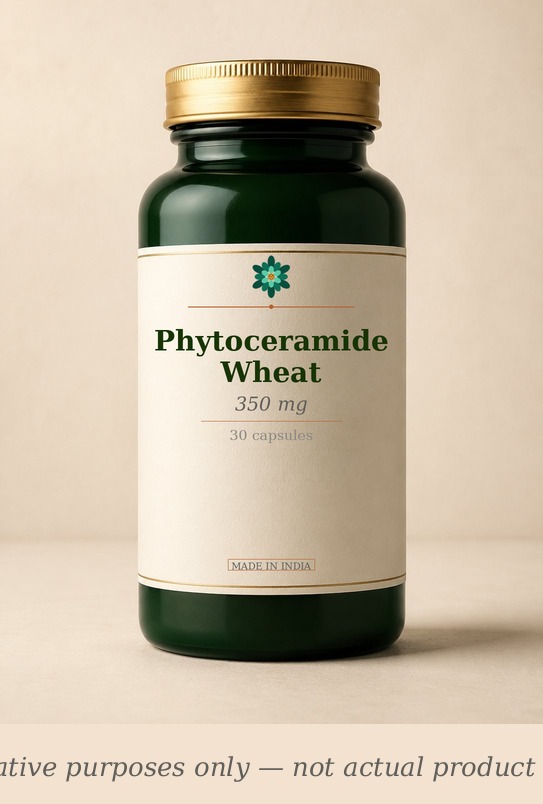
Phytoceramide Wheat — SacredBod supplement bottle (illustrative)
Supplement · Skin Barrier Restoration

Phytoceramide Wheat

350 mg · vegan · 30 caps

Dry skinDehydrated skinWrinkles and fine linesCompromised skin barrierEczema-prone skin Skin
BUY on Amazon →

Affiliate link · we earn from qualifying purchases. No paid placements.

What it is

Phytoceramides are plant-derived ceramides — lipid molecules that constitute 40–50% of the skin's intercellular matrix and are essential for maintaining the stratum corneum barrier. Wheat-derived phytoceramides (glucosylceramides) are the most studied form, with clinical trials demonstrating oral delivery to the skin where they integrate into the lipid bilayer and restore barrier function. Unlike topical ceramides that sit on the surface, oral phytoceramides work systemically to replenish the skin's own ceramide production.

How it works

When consumed, wheat glucosylceramides are absorbed through the intestinal lymphatic system and transported to the skin via the bloodstream. Once in the epidermis, they are incorporated into keratinocyte membranes and processed into ceramides, sphingosine, and sphinganine — the building blocks of the skin barrier. This increases skin hydration by reducing transepidermal water loss (TEWL), improves elasticity by maintaining the lipid matrix between corneocytes, and reduces wrinkle depth by plumping the skin from within.

Who should take it

Individuals with dry, dehydrated, or ageing skin, those with compromised skin barrier (eczema, dermatitis), people seeking an internal moisturiser, and anyone interested in beauty-from-within supplements. Relevant for Indians facing dry winter skin, pollution-induced barrier damage, and the growing ingestible beauty trend.

Avoid / careful

People with celiac disease or wheat allergy, those with severe gluten sensitivity, pregnant or breastfeeding women (limited safety data). Side effects: Very safe. Wheat-derived products contain trace gluten — not suitable for celiac disease or severe gluten sensitivity. Rarely: mild stomach upset.

When to take it

Morning
Noon
Evening
Night

How to take it

With food
Empty stomach
Before food

FAQs

Frequently asked

How long before I see skin results?
Hydration improvements appear within 2–4 weeks as the ceramides integrate into the skin barrier. Wrinkle and elasticity improvements require 8–12 weeks. The effect is gradual but sustained — unlike topical moisturisers that wash off, oral phytoceramides build the skin's own barrier capacity.
Is it safe for gluten-sensitive people?
Wheat-derived phytoceramides contain trace amounts of gluten and are NOT suitable for celiac disease or severe gluten sensitivity. Rice-derived phytoceramides (e.g., Radiplex) are a safer alternative for gluten-sensitive individuals.
Can I take it with my skincare routine?
Yes — oral phytoceramides complement topical skincare beautifully. They work from the inside to build the lipid barrier, while topical products work on the surface. Together they provide comprehensive barrier support.

In plain English

A plain-English read of the literature behind this supplement. Not a clinical recommendation.

Key citations: PMID 20642773 (Wheat extract food supplement on women's skin — RCT, 2011), PMID 28930283 (Wheat polar lipid complex on skin hydration & ageing — RCT, 2017), PMC9201759 (Dietary supplements for skin moisturising — systematic review & meta-analysis, 2022)

Editorial notes

SacredBod's longer take on Phytoceramide Wheat — context the structured blocks above don't capture.

Phytoceramides represent a revolution in beauty-from-within science — the discovery that you can eat your moisturiser and have it integrate into your skin’s lipid barrier. Wheat-derived glucosylceramides are the most clinically validated form, with multiple RCTs showing measurable improvements in hydration, elasticity, and wrinkle depth.

What the Research Shows

A 2011 randomised, double-blind, placebo-controlled trial (PMID 20642773) gave 51 women either a wheat extract food supplement (providing 350 mg glucosylceramides) or placebo for 12 weeks. The phytoceramide group showed significant improvements in skin hydration, measured by corneometry, compared to placebo. Skin roughness also decreased significantly.

A 2017 study (PMID 28930283) tested a wheat polar lipid complex (containing glucosylceramides and digalactosyl diglycerides) in healthy volunteers with dry, wrinkled skin. After 3 months, skin hydration improved significantly, skin microrelief was enhanced, and the depth of wrinkles was reduced. The mechanism involved improved barrier function and increased ceramide content in the stratum corneum.

A 2022 systematic review and meta-analysis (PMC9201759) evaluated dietary supplements for skin moisturisation across 19 RCTs and concluded that phytoceramides, collagen peptides, and hyaluronic acid all demonstrated significant efficacy for improving skin hydration in healthy adults.

India Context

  • Availability: Beautywise (Skin Resilience with ceramides + hyaluronic acid + astaxanthin), Radiplex (Moist Skin with rice phytoceramides), Thornova (Sea Buckthorn + phyto ceramides), and Setu (Youthful Marine Collagen with PhytoCeramides) all offer phytoceramide products on Amazon India.
  • Price: ₹750–₹1,500 for 30 capsules
  • Beauty market: India’s ingestible beauty market is booming, and phytoceramides are marketed as “oral moisturisers” — a concept that resonates with consumers who understand skincare but want internal support.
  • Winter relevance: North Indian winters cause severe skin dryness due to low humidity. Phytoceramides offer systemic barrier support that topical creams cannot match.
  • Ayurvedic parallel: While not native to Ayurveda, the concept of internal skin nourishment aligns with Kumari (Aloe vera) and Tila taila (sesame oil) used in Ayurvedic abhyanga (oil massage) for skin hydration and barrier protection.

Dosage & Safety

  • Standard dose: 350 mg daily with food (standardised to glucosylceramides)
  • Best time: Morning with breakfast
  • Caution: Contains trace gluten — not for celiac disease. Rice-derived alternatives available for gluten-sensitive individuals. Very safe otherwise.

Added to your stack.