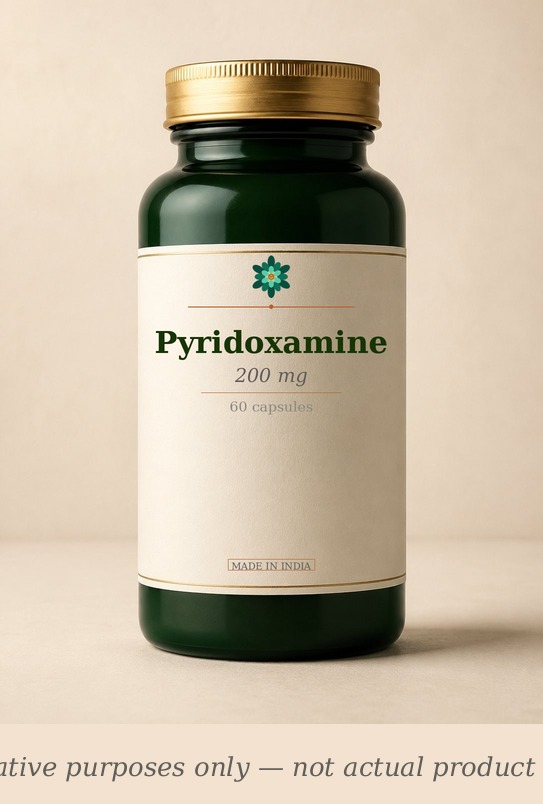
SacredBod's longer take on Pyridoxamine — context the structured blocks above don't capture.
What It Is
Pyridoxamine is one of the three natural forms of vitamin B6, alongside pyridoxine and pyridoxal. It is distinguished by its unique ability to trap reactive carbonyl intermediates (Amadori products) and scavenge reactive oxygen species during glycation reactions, making it a potent inhibitor of advanced glycation end-product (AGE) formation. Unlike pyridoxine HCl (the most common supplement form), pyridoxamine specifically targets the Maillard reaction pathway that damages proteins, lipids and DNA in diabetes, ageing and chronic kidney disease.
How It Works
Pyridoxamine inhibits AGE formation via three mechanisms: (1) trapping reactive carbonyl intermediates (Amadori products) before they form AGEs, (2) chelating metal ions (Cu²⁺, Fe³⁺) that catalyse oxidative glycation, and (3) scavenging reactive oxygen species generated during glycoxidation. In diabetic nephropathy, pyridoxamine reduced serum creatinine and albuminuria progression in Phase II trials. It also inhibits lipoxidation (AGE formation from lipids) and reduces retinal vascular damage in diabetic retinopathy models. Additionally, pyridoxamine modulates sphingosine-1-phosphate (S1P) and RhoA signalling, reducing metaflammation.
Who Should Consider It
Individuals with diabetes or prediabetes concerned about AGE accumulation and glycation damage. Those with early diabetic nephropathy or elevated albuminuria (under medical supervision). People interested in anti-ageing and glycation prevention. Those with peripheral neuropathy seeking B6 support beyond standard pyridoxine. Not a replacement for diabetes medication or nephrology care.
Dosage Guide
Typical dose: 200 mg per day
Form: capsules (60 count)
Best time: morning
With food: with-food
Expected onset: 4–8 weeks for AGE markers; 8–12 weeks for kidney and nerve benefits
Cycling: No cycling required. Can be taken continuously.
Safety & Side Effects
Known side effects: Generally well-tolerated at 200–600 mg/day. Rare nausea or GI upset. Unlike high-dose pyridoxine (>200 mg/day), pyridoxamine has minimal risk of peripheral neuropathy. However, all B6 forms should be used cautiously at very high doses (>500 mg/day) for extended periods.
Who should avoid: Pregnant and breastfeeding women (safety not established at supplemental doses). Individuals with severe kidney disease on dialysis (consult nephrologist). Those taking levodopa (B6 may reduce efficacy). Not for children.
Avoid combining with: Levodopa / L-DOPA (B6 accelerates peripheral decarboxylation, reducing CNS availability), Pyridoxine HCl supplements (redundant — choose one B6 form), P-5-P (pyridoxal-5-phosphate) supplements (redundant), High-dose B6 from multiple sources (risk of cumulative toxicity)
India-Specific Context
Pyridoxamine is available on Amazon India with varying brand quality. When selecting a product, verify standardization claims against the evidence base cited above. Indian brand preferences include Carbamide Forte, HealthyHey, Nutrabay Pure, Pure Nutrition, Now Foods, Nutricost, Himalaya, Patanjali, Dabur, Trexgenics, Evorina, Nervana, Life Extension, VITARUHE, ASTERVEDA, BECLEC, and GreenOpia. Prices vary significantly; compare cost-per-active-dose rather than capsule count alone.
Schedule status in India: Not a Schedule H drug; available as dietary supplement/herbal product.
Research Summary
Key citations: PMID 6770850 (DFT antioxidant and AGE inhibition), PMID 5805823 (bone AGE inhibition), PMID 10801874 (lipoxidation inhibition), PMID 40796077 (metaflammation via S1P/RhoA), PMID 39376018 (bone RCT in older women with T2D), PMID 12196477 (retinopathy protection in diabetes), PMID 20441560 (insulin resistance and metabolic effects)
Evidence grade: C — Phase II human trials for diabetic nephropathy; strong preclinical AGE inhibition data