SacredBod
0
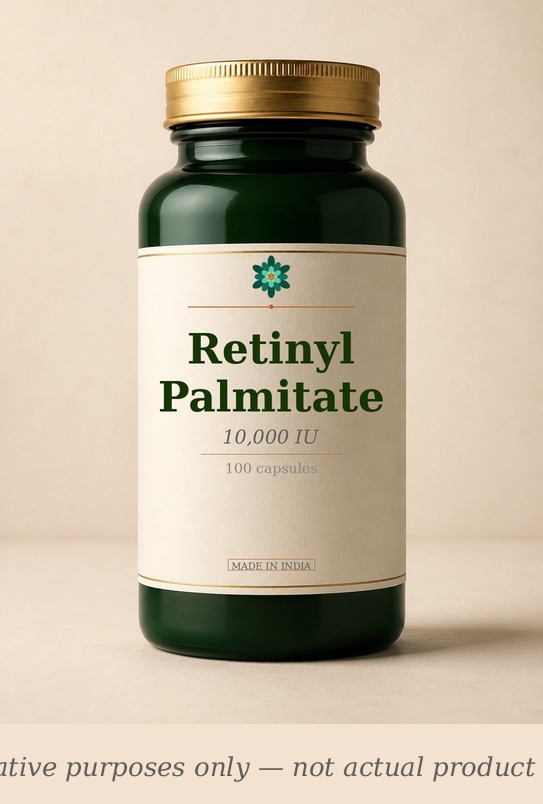
Retinyl Palmitate — SacredBod supplement bottle (illustrative)
Supplement · Vitamin

Retinyl Palmitate

10,000 IU · gluten-free · 100 caps

Night blindnessDry skinPoor immune responseKeratosis pilarisLow vitamin A statusPoor wound healing EyesSkinImmune systemLiverReproductive system
BUY on Amazon →

Affiliate link · we earn from qualifying purchases. No paid placements.

What it is

Retinyl palmitate (vitamin A palmitate) is an ester of retinol (preformed vitamin A) and palmitic acid. It is the most stable and widely used form of vitamin A in supplements and fortified foods. Unlike beta-carotene (a provitamin A carotenoid that must be converted), retinyl palmitate provides active vitamin A directly. It is essential for vision (rhodopsin synthesis), immune function (mucosal barrier integrity), cellular differentiation, reproduction and embryonic development.

How it works

Retinyl palmitate is hydrolysed in the intestine to retinol, which is absorbed, re-esterified and stored in the liver. When needed, retinol is oxidised to retinaldehyde and then retinoic acid, which binds to nuclear retinoic acid receptors (RARs) and retinoid X receptors (RXRs) to regulate gene transcription. This controls cellular differentiation, immune cell maturation, visual pigment regeneration and epithelial barrier function. Retinyl palmitate is more stable than retinol against oxidation, making it ideal for supplement formulation.

Who should take it

Individuals with low dietary vitamin A intake (vegetarians/vegans may lack preformed A), those with night vision concerns, people with skin conditions (acne, keratosis pilaris) seeking dermatological support, individuals with compromised immune function, and those in vitamin A-deficient populations. Not for pregnant women at high doses due to teratogenicity.

Avoid / careful

Pregnant women at doses >10,000 IU/day (teratogenic risk). Individuals with liver disease or hypervitaminosis A. Those with osteoporosis (high-dose retinol increases fracture risk). Smokers (high-dose beta-carotene increases lung cancer; retinyl palmitate does not share this risk but caution advised). Not for children except under paediatric guidance. Side effects: Well-tolerated at 5,000–10,000 IU/day. Doses above 25,000 IU/day long-term risk hypervitaminosis A (headache, nausea, liver toxicity, bone pain, hair loss). Acute toxicity at >100,000 IU. Pregnant women must avoid >10,000 IU/day due to birth defect risk. Yellowing of skin (carotenoderma) is from beta-carotene, not retinyl palmitate.

When to take it

Morning
Noon
Evening
Night

How to take it

With food
Empty stomach
Before food

FAQs

Frequently asked

How long before I see results?
Night vision improvements may be noticeable within 2–4 weeks in deficient individuals. Skin benefits (reduced dryness, improved keratosis pilaris) typically require 4–8 weeks. Immune support is ongoing and cumulative.
Is retinyl palmitate better than beta-carotene?
Retinyl palmitate provides direct, bioavailable vitamin A without conversion. Beta-carotene conversion varies widely between individuals (some are poor converters). However, beta-carotene has no toxicity risk (body regulates conversion). Retinyl palmitate is preferred for those with conversion issues or higher vitamin A needs, but must be dosed carefully to avoid toxicity.
Can I take it during pregnancy?
Only at or below 3,000 mcg RAE (10,000 IU) per day. Higher doses of preformed vitamin A are teratogenic and can cause birth defects. Pregnant women should consult their obstetrician and prefer beta-carotene sources for safety.

In plain English

A plain-English read of the literature behind this supplement. Not a clinical recommendation.

Key citations: PMID 11601862 (vitamin A deficiency and supplementation in developing countries), PMID 23801324 (vitamin A and immune function review), PMID 22142982 (vitamin A supplementation for mortality reduction in children)

Editorial notes

SacredBod's longer take on Retinyl Palmitate — context the structured blocks above don't capture.

What It Is

Retinyl palmitate (vitamin A palmitate) is an ester of retinol (preformed vitamin A) and palmitic acid. It is the most stable and widely used form of vitamin A in supplements and fortified foods. Unlike beta-carotene (a provitamin A carotenoid that must be converted), retinyl palmitate provides active vitamin A directly. It is essential for vision (rhodopsin synthesis), immune function (mucosal barrier integrity), cellular differentiation, reproduction and embryonic development.

How It Works

Retinyl palmitate is hydrolysed in the intestine to retinol, which is absorbed, re-esterified and stored in the liver. When needed, retinol is oxidised to retinaldehyde and then retinoic acid, which binds to nuclear retinoic acid receptors (RARs) and retinoid X receptors (RXRs) to regulate gene transcription. This controls cellular differentiation, immune cell maturation, visual pigment regeneration and epithelial barrier function. Retinyl palmitate is more stable than retinol against oxidation, making it ideal for supplement formulation.

Who Should Consider It

Individuals with low dietary vitamin A intake (vegetarians/vegans may lack preformed A), those with night vision concerns, people with skin conditions (acne, keratosis pilaris) seeking dermatological support, individuals with compromised immune function, and those in vitamin A-deficient populations. Not for pregnant women at high doses due to teratogenicity.

Dosage Guide

Typical dose: 10,000 IU per day

Form: softgels (100 count)

Best time: morning

With food: with-food

Expected onset: 2–4 weeks for skin/vision; 4–8 weeks for immune support

Cycling: Some practitioners recommend cycling (e.g., 5 days on / 2 days off) at doses above 10,000 IU to avoid hypervitaminosis A, though evidence for cycling is limited.

Safety & Side Effects

Known side effects: Well-tolerated at 5,000–10,000 IU/day. Doses above 25,000 IU/day long-term risk hypervitaminosis A (headache, nausea, liver toxicity, bone pain, hair loss). Acute toxicity at >100,000 IU. Pregnant women must avoid >10,000 IU/day due to birth defect risk. Yellowing of skin (carotenoderma) is from beta-carotene, not retinyl palmitate.

Who should avoid: Pregnant women at doses >10,000 IU/day (teratogenic risk). Individuals with liver disease or hypervitaminosis A. Those with osteoporosis (high-dose retinol increases fracture risk). Smokers (high-dose beta-carotene increases lung cancer; retinyl palmitate does not share this risk but caution advised). Not for children except under paediatric guidance.

Avoid combining with: Isotretinoin (additive vitamin A toxicity), Tretinoin/topical retinoids (additive), Hepatotoxic medications, Vitamin A from other supplements (risk of overdose), Beta-carotene supplements (redundant)

India-Specific Context

Retinyl Palmitate is available on Amazon India with varying brand quality. When selecting a product, verify standardization claims against the evidence base cited above. Indian brand preferences include Carbamide Forte, HealthyHey, Nutrabay Pure, Pure Nutrition, Now Foods, Nutricost, Himalaya, Patanjali, Dabur, Trexgenics, Evorina, Nervana, Life Extension, VITARUHE, ASTERVEDA, BECLEC, and GreenOpia. Prices vary significantly; compare cost-per-active-dose rather than capsule count alone.

Schedule status in India: Not a Schedule H drug; available as dietary supplement/herbal product.

Research Summary

Key citations: PMID 11601862 (vitamin A deficiency and supplementation in developing countries), PMID 23801324 (vitamin A and immune function review), PMID 22142982 (vitamin A supplementation for mortality reduction in children)

Evidence grade: A — Extensive clinical and epidemiological data; vitamin A deficiency is a well-established global health concern

Added to your stack.