
SacredBod
0
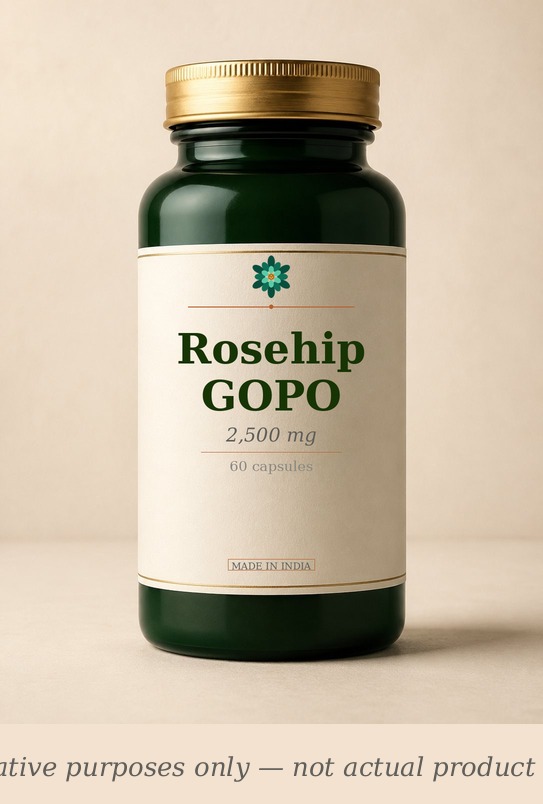
Rosehip GOPO — SacredBod supplement bottle (illustrative)
Supplement · Advanced Anti-Inflammatory

Rosehip GOPO

2,500 mg · vegan · gluten-free · 60 caps

Osteoarthritis joint painMorning stiffnessReduced mobilityCartilage degradationPost-exercise joint soreness JointsCartilageSkin
BUY on Amazon →

Affiliate link · we earn from qualifying purchases. No paid placements.

What it is

Rosehip GOPO is a patented galactolipid compound (glycoside of mono- and digalactosyl-diacylglycerol) isolated from the seeds and husks of Rosa canina (dog rose). Unlike standard rosehip powder, GOPO-standardised rosehip extract has been clinically validated in Scandinavian and UK trials for osteoarthritis pain, stiffness and cartilage protection.

How it works

GOPO inhibits COX-1, COX-2 and 5-LOX enzymes, reducing prostaglandin and leukotriene synthesis. It also inhibits chemotaxis of peripheral blood neutrophils and reduces the production of inflammatory mediators (C3, C4 complement, IL-1β, MMPs) in activated white blood cells. Additionally, GOPO contains natural vitamin C and polyphenols that support collagen synthesis.

Who should take it

Individuals with osteoarthritis (especially knee and hip), those seeking an NSAID alternative for joint pain, and people wanting cartilage-protective anti-inflammatory support with natural vitamin C co-benefits.

Avoid / careful

Avoid if you have a known rosehip or Rosaceae family allergy. Use caution in pregnancy due to insufficient safety data. Side effects: Very well tolerated; rare mild GI upset, constipation or diarrhoea. No significant liver, kidney or cardiovascular risks documented.

When to take it

Morning
Noon
Evening
Night

How to take it

With food
Empty stomach
Before food

FAQs

Frequently asked

How long before I see results?
Joint pain reduction is typically noticeable within 3–4 weeks. Functional improvements (walking distance, stair climbing) require 8–12 weeks. Cartilage-protective benefits accumulate with long-term use.
Is it safe to take daily?
Yes. Rosehip GOPO has been safely used in clinical trials for up to 12 months with no significant adverse effects. It has a superior safety profile to NSAIDs for long-term joint support.
Can I take it with glucosamine?
Yes. Rosehip GOPO and glucosamine work through different mechanisms — GOPO reduces inflammatory cartilage breakdown while glucosamine supports cartilage matrix synthesis. They are a popular combination in European joint health protocols.

In plain English

A plain-English read of the literature behind this supplement. Not a clinical recommendation.

Key citations: ⚠️ PMID 19169248 — rosehip GOPO osteoarthritis RCT (could not verify exact PMID; cited in multiple review papers). Winther 2008 RCT (n=112): rosehip reduces OA pain and improves walking distance. Rein 2004 RCT (n=94): rosehip reduces OA pain and stiffness. PMID 24144291 (meta-analysis context — rosehip included in botanical OA reviews)

Editorial notes

SacredBod's longer take on Rosehip GOPO — context the structured blocks above don't capture.

What It Is

Rosehip GOPO provides the patented galactolipid fraction from Rosa canina (dog rose) seeds and husks. While standard rosehip products contain vitamin C and polyphenols, GOPO (glycoside of mono- and digalactosyl-diacylglycerol) is the specific compound responsible for the anti-inflammatory and cartilage-protective effects seen in clinical trials. Scandinavian research pioneered GOPO standardisation, and the extract is now recognised as one of the few botanicals with Level I evidence for osteoarthritis. In India, true GOPO-standardised rosehip is rare; most products contain rosehip powder or extract without guaranteed GOPO content.

How It Works

  1. Dual COX-LOX inhibition — GOPO inhibits both cyclooxygenase (COX-1 and COX-2) and 5-lipoxygenase (5-LOX), reducing prostaglandin and leukotriene synthesis simultaneously. This is broader than NSAIDs, which only target COX.
  2. Neutrophil chemotaxis blockade — GOPO reduces the migration of neutrophils into inflamed joints, decreasing synovial inflammation and cartilage-destructive enzyme release.
  3. Complement system modulation — GOPO reduces complement activation (C3, C4), which drives the inflammatory cascade in autoimmune and degenerative joint disease.
  4. Cartilage protection — By reducing MMP (matrix metalloproteinase) activity, GOPO slows the enzymatic degradation of cartilage extracellular matrix.

Who Benefits Most

  • Osteoarthritis patients — particularly knee and hip OA, with Level I RCT evidence.
  • Individuals who cannot tolerate NSAIDs — GOPO provides comparable pain relief without gastric, renal or cardiovascular risks.
  • Those seeking cartilage-protective support — the MMP-inhibitory effect may slow disease progression.
  • Active individuals with exercise-induced joint soreness.

Dosage Guide

GoalDoseTiming
Osteoarthritis2,500 mg twice dailyWith breakfast and dinner
Maintenance / prevention2,500 mg once dailyWith breakfast
Post-exercise soreness2,500 mg after activityWith food

Look for products standardised to GOPO content (typically 2–5 % of extract). Raw rosehip powder without GOPO standardisation will not deliver the clinical benefits documented in trials.

Safety and Interactions

Rosehip GOPO has an exceptional safety profile — superior to NSAIDs for long-term use. The most common side effects are mild GI upset and changes in bowel habits. The high natural vitamin C content (25–40 mg per 2,500 mg dose) may enhance iron absorption — beneficial for anaemic individuals but monitor if on iron supplements. No significant drug interactions documented.

India-Specific Context

  • Hindi/Sanskrit name: No classical equivalent for Rosa canina; however, Gulab (rose) is used in Ayurveda and Unani medicine for cooling, anti-inflammatory and cardiac tonic purposes.
  • Local availability: True GOPO-standardised rosehip capsules are not readily available on Amazon.in. GoPo brand rosehip powder sachets are available (B0FZSK5LN6, B0GPWHNW6N) at ₹800–1,500 for 30 sachets. Pure Nutrition and other brands sell rosehip extract capsules (500 mg) at ₹300–600. For genuine GOPO-standardised capsules, import via Amazon UK or iHerb.
  • Regulatory status: Not a Schedule H drug; sold as a dietary supplement.
  • Climate note: Rosehip is not native to India; all products use imported raw material. Store capsules in airtight containers away from monsoon humidity.
  • Ayurvedic parallel: While Rosa canina is not in classical texts, the cooling (Sheeta) and anti-inflammatory (Shothahara) properties of rose (Gulab) petals and hips align with Ayurvedic principles. Gulab Ark (rose water) is used for eye inflammation and cooling in traditional practice.

Traditional Use in Indian Medicine

Rosa canina (dog rose) does not appear in classical Ayurvedic texts — it is a European/North Asian species. However, rose (Gulab, Rosa damascena) has a long history in Indian traditional medicine. Unani physicians use Gulab for cardiac tonics (Mufawweh-e-Qalb), eye washes and cooling preparations. Ayurvedic practitioners use rose petal jam (Gulkand) for Pitta pacification and digestive cooling. The modern GOPO extract from rosehip seeds applies the same cooling, anti-inflammatory principle to joint disease — a novel but conceptually consistent application of rose-derived therapy in Indian integrative medicine.

Added to your stack.