
SacredBod
0
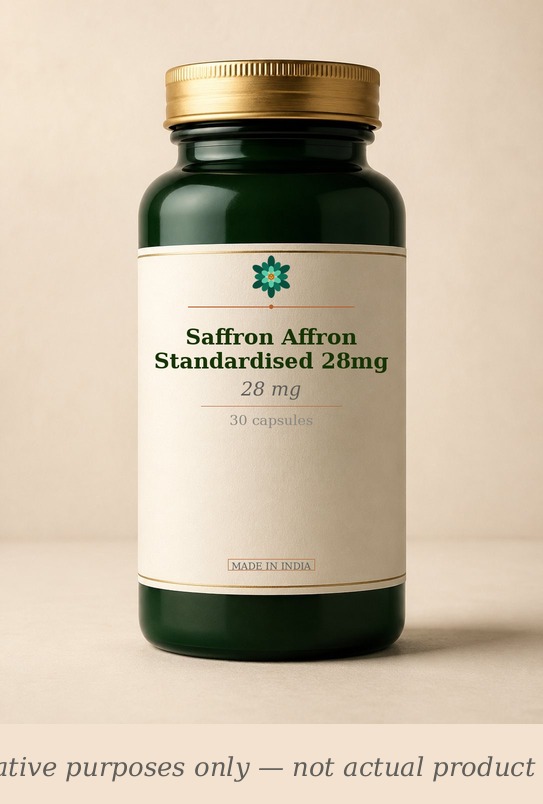
Saffron Affron Standardised 28mg — SacredBod supplement bottle (illustrative)
Supplement · Mood, Anxiety & Emotional Balance

Saffron Affron Standardised 28mg

28 mg · vegan · gluten-free · 30 caps

DepressionLow moodAnxietyStress-related emotional exhaustionSleep disturbanceAntidepressant-induced sexual dysfunction BrainHippocampusPrefrontal cortex
BUY on Amazon →

Affiliate link · we earn from qualifying purchases. No paid placements.

What it is

Affron is a patented, standardised extract of Crocus sativus L. (saffron) stigmas manufactured by Pharmactive Biotech Products in Spain. It is standardised to 3.5% Lepticrosalides (a combination of crocin and safranal), providing 88.28% crocin equivalent. Affron has been evaluated in multiple RCTs for depression, anxiety, and stress, including as an adjunct to pharmaceutical antidepressants.

How it works

Crocin and safranal — the primary bioactive carotenoids in saffron — modulate the serotonin, dopamine, and norepinephrine pathways in the brain. They also inhibit monoamine oxidase (MAO), increase brain-derived neurotrophic factor (BDNF), and exert potent antioxidant and anti-inflammatory effects in the hippocampus and prefrontal cortex. Affron's standardisation ensures reproducible crocin content for consistent mood effects.

Who should take it

Adults with mild-to-moderate depression, persistent depressive symptoms despite antidepressant medication, or stress-related low mood; individuals seeking a natural alternative or adjunct to SSRIs with fewer sexual side effects.

Avoid / careful

Pregnant or breastfeeding women; individuals with bipolar disorder (may trigger mania); those with bleeding disorders (saffron has mild anticoagulant effects); people allergic to Iridaceae family plants. Side effects: Very well tolerated. Mild nausea, headache, dizziness, or dry mouth in ~5–10% of users. No sexual dysfunction, weight gain, or withdrawal symptoms reported in clinical trials.

When to take it

Morning
Noon
Evening
Night

How to take it

With food
Empty stomach
Before food

FAQs

Frequently asked

How long before I see results?
Mood improvements typically begin within 2–4 weeks. The Lopresti 2019 adjunctive trial showed 41% reduction in clinician-rated MADRS scores after 8 weeks with Affron 28mg/day vs 21% with placebo. The 2025 low-mood trial confirmed significant improvements in mood and wellbeing. For standalone depression, 6–8 weeks is the standard clinical course.
Can I take it with my antidepressant?
Yes — Affron has been specifically studied as an adjunct to SSRIs and SNRIs. It may actually reduce antidepressant side effects (the 2019 trial showed reduced adverse effects checklist scores). However, consult your psychiatrist before combining, especially if you are on high-dose serotonergic medications.
Is it better than prescription antidepressants?
Head-to-head trials show saffron is broadly comparable to fluoxetine and imipramine for mild-to-moderate depression, with fewer side effects. However, for severe depression or suicidal ideation, prescription medications remain first-line. CANMAT guidelines classify saffron as a third-line complementary option for mild depression.

In plain English

A plain-English read of the literature behind this supplement. Not a clinical recommendation.

Key citations: PMID 31475623 (Affron adjunctive for persistent depression — Lopresti et al. 2019), PMID 40414301 (Affron for low mood and wellbeing — Lopresti et al. 2025), PMID 3153866 (Saffron vs placebo meta-analysis for depression)

Editorial notes

SacredBod's longer take on Saffron Affron Standardised 28mg — context the structured blocks above don't capture.

What Saffron Affron Is

Crocus sativus L., known in Sanskrit as Kumkuma (कुंकुम) and in Hindi as Kesar (केसर), is the world’s most expensive spice — and one of the most promising natural antidepressants in modern clinical psychiatry. The red stigmas of the saffron crocus contain crocin (a water-soluble carotenoid), safranal (a volatile oil), and picrocrocin (a bitter glycoside) — together called Lepticrosalides.

Affron is a patented, standardised saffron extract manufactured by Pharmactive Biotech Products in Spain. It is standardised to 3.5% Lepticrosalides, providing 88.28% crocin equivalent — the highest concentration of any commercial saffron extract. This standardisation is critical because raw saffron quality varies wildly, and therapeutic antidepressant effects require consistent carotenoid content.

How It Works

  1. Serotonin modulation — Crocin and safranal increase serotonin (5-HT) levels in the brain by inhibiting its reuptake and enhancing receptor sensitivity.
  2. Monoamine oxidase inhibition — Saffron inhibits MAO-A and MAO-B, the enzymes that degrade serotonin, dopamine, and norepinephrine — the same mechanism as some prescription antidepressants.
  3. BDNF elevation — Crocin increases brain-derived neurotrophic factor, supporting neurogenesis in the hippocampus — a region that shrinks in chronic depression.
  4. Anti-inflammatory — Depression is increasingly recognised as an inflammatory condition. Saffron reduces IL-6, TNF-α, and CRP in the brain and periphery.
  5. Antioxidant neuroprotection — Crocin is a potent antioxidant that protects neurons from oxidative stress-induced damage.

Who Benefits Most

  • Mild-to-moderate depression — Multiple RCTs show saffron is superior to placebo and comparable to fluoxetine and imipramine.
  • Persistent depression on antidepressants — The Lopresti 2019 trial demonstrated that adding Affron to existing antidepressants improved outcomes by 41% vs 21% placebo.
  • Antidepressant side-effect sufferers — Saffron does not cause sexual dysfunction, weight gain, or emotional blunting — the most common reasons for SSRI discontinuation.
  • Postpartum and perimenopausal depression — Saffron has been specifically studied in these populations with positive results.

Dosage Guide

GoalDoseDuration
Depression (adjunctive)28 mg/day (14 mg BID)8 weeks
Low mood / stress28 mg/day4–6 weeks
General wellbeing14–22 mg/dayOngoing

Take with meals containing some fat — crocin is fat-soluble and absorption increases 3–4× with dietary fat.

Safety & Interactions

  • Bleeding: Mild anticoagulant effect; avoid with warfarin or before surgery.
  • Bipolar: May trigger mania in bipolar disorder; use only under psychiatric supervision.
  • Pregnancy: Not recommended — saffron in high doses has uterotonic effects.
  • SSRIs: Generally safe as adjunct, but monitor for serotonin syndrome at very high doses.

India-Specific Context

  • Availability: Affron-brand saffron extract is not available on Amazon.in. Generic saffron extracts are available: Aurite 30mg (B07Y5M8N3C) with 2% safranal/crocin, and generic 88.5mg capsules (B0FNX4C7FH). However, these are not standardised to the Affron 28mg Lepticrosalide specification. three60 De-Stress tablets (B0CTSYGCZD) contain 30mg saffron as part of a blend.
  • Regulatory status: Saffron is sold as a dietary supplement in India. It is not a Schedule H drug.
  • Ayurvedic heritage: Kumkuma is mentioned in the Charaka Samhita and Sushruta Samhita as a Rasayana (rejuvenative) for complexion, vitality, and mental clarity. It is used in classical formulations like Kumkumadi Taila (facial oil) and Kesar Yoga (reproductive tonic). The antidepressant application is modern but aligns with the traditional concept of Medhya Rasayana.
  • Cultural significance: Kashmiri saffron (Mongra grade) is considered the finest in the world. Indian consumers may be familiar with saffron as a culinary spice but unaware of its psychiatric potential.
  • Cost: Generic saffron capsules on Amazon.in cost ₹500–₹1,200 for 30–60 capsules. Affron-brand products, if imported, cost approximately $25–40 for 30 capsules plus shipping.
Added to your stack.