What it is
Methylselenocysteine is a plant-form selenium that is more bioavailable than selenomethionine and used directly in selenoprotein synthesis without intermediate steps.
Se-methylselenocysteine, MSC
100–200 mcg · vegan · gluten-free · 60 caps
Affiliate link · we earn from qualifying purchases. No paid placements.
Methylselenocysteine is a plant-form selenium that is more bioavailable than selenomethionine and used directly in selenoprotein synthesis without intermediate steps.
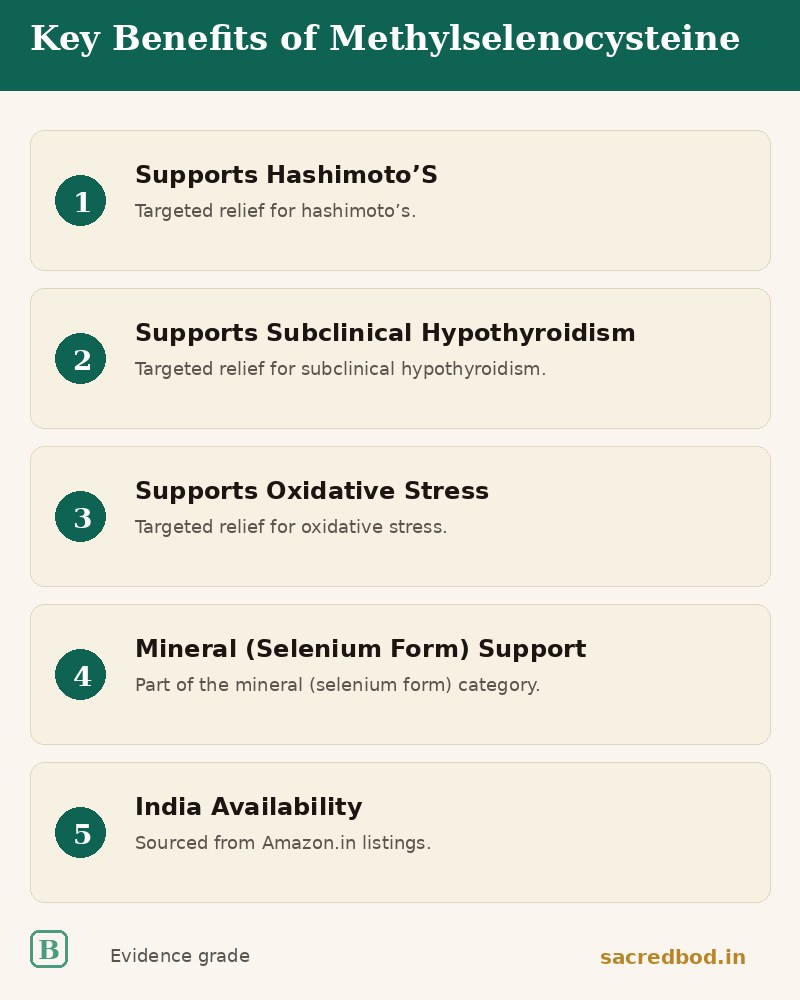
Direct donor to glutathione peroxidase and iodothyronine deiodinase (the T4 to T3 enzyme). Particularly effective in Hashimoto’s for lowering TPO antibodies.
Adults with Hashimoto’s thyroiditis, subclinical hypothyroidism, or low glutathione status. Indian soil is selenium-poor, raising deficiency risk.
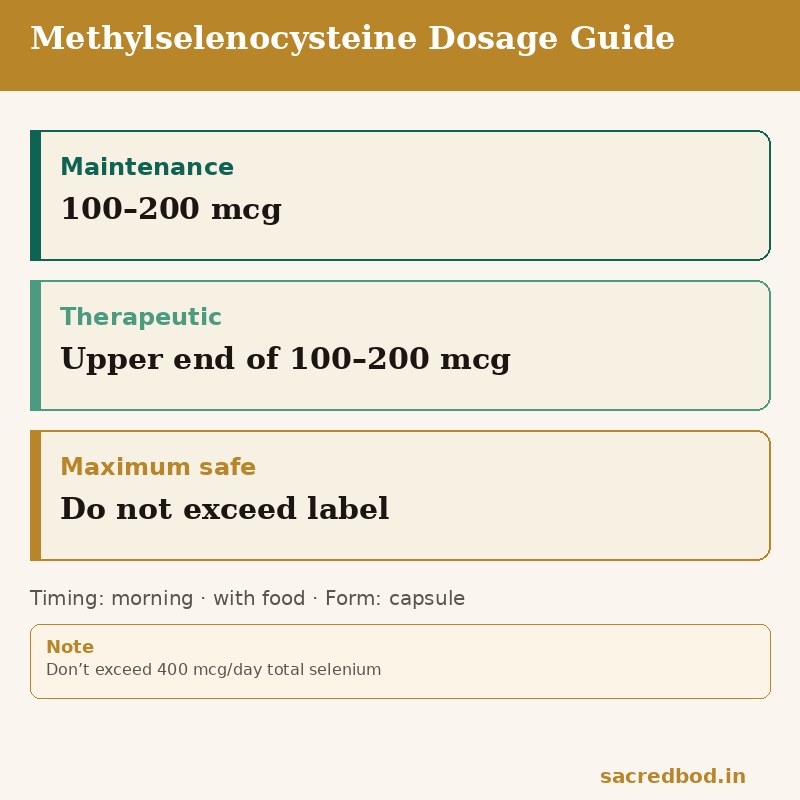
Don’t exceed 400 mcg/day total selenium. Hashimoto’s users should coordinate with endocrinologist.
A plain-English read of the literature behind this supplement. Not a clinical recommendation.
Italian and Greek Hashimoto’s RCTs show TPO antibody reductions at 200 mcg/day over 3–6 months.
SacredBod's longer take on Methylselenocysteine — context the structured blocks above don't capture.
Methylselenocysteine is a mineral (selenium form) supplement. Methylselenocysteine is a plant-form selenium that is more bioavailable than selenomethionine and used directly in selenoprotein synthesis without intermediate steps.
Direct donor to glutathione peroxidase and iodothyronine deiodinase (the T4 to T3 enzyme). Particularly effective in Hashimoto’s for lowering TPO antibodies.
Adults with Hashimoto’s thyroiditis, subclinical hypothyroidism, or low glutathione status. Indian soil is selenium-poor, raising deficiency risk.
Availability on Amazon India is currently limited or import-only for this form. International brands (iHerb, NOW Foods, Doctor’s Best) ship to India with variable customs handling. Local Ayurvedic equivalents may offer overlapping benefits.
Don’t exceed 400 mcg/day total selenium. Hashimoto’s users should coordinate with endocrinologist.
Peptides are physician-only. Tell us a bit and we'll route you to the right specialist.
Request received.
We'll route this to a clinician familiar with peptide protocols. Expect a reply within about 48 hours.
How's your experience? We read every note.