SacredBod
0
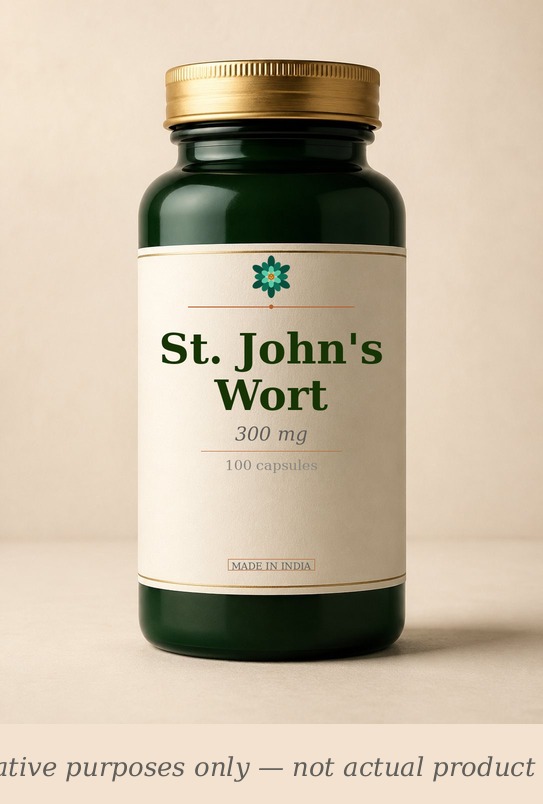
St. John's Wort — SacredBod supplement bottle (illustrative)
Supplement · Botanical

St. John's Wort

300 mg · vegan · gluten-free · 100 caps

Mild depressionModerate depressionAnxietyLow moodSeasonal affective disorderSleep disturbances BrainLiverSkin
BUY on Amazon →

Affiliate link · we earn from qualifying purchases. No paid placements.

What it is

St. John's Wort (Hypericum perforatum L.) is a flowering plant in the Hypericaceae family, native to Europe and now naturalised worldwide including the Himalayas. Its aerial parts contain hypericin, hyperforin, flavonoids and xanthones. Standardised extracts (typically 0.3% hypericin) are among the most extensively studied herbal medicines for depression, with multiple meta-analyses supporting efficacy for mild-to-moderate major depressive disorder.

How it works

Hyperforin inhibits serotonin, norepinephrine and dopamine reuptake — a triple reuptake mechanism distinct from SSRIs. It also modulates ionotropic glutamate receptors and downregulates β-adrenergic receptors. A 2017 network meta-analysis of 66 RCTs (15,161 participants) found St. John's Wort comparable to SSRIs for response and remission rates in mild-to-moderate depression, with lower dropout rates due to adverse effects.

Who should take it

Adults with mild-to-moderate depression seeking an evidence-based herbal alternative to prescription antidepressants. Those who have experienced SSRI side effects (sexual dysfunction, weight gain) and want a better-tolerated option. Not suitable for severe depression or bipolar disorder.

Avoid / careful

Pregnant and breastfeeding women. Individuals with severe depression, bipolar disorder, or schizophrenia. Those with a history of photosensitivity or taking photosensitising medications. Not for children under 18 without psychiatric supervision. Side effects: Generally well-tolerated with lower adverse event rates than SSRIs in meta-analyses. Possible photosensitivity (especially at high doses), gastrointestinal upset, dry mouth, dizziness, restlessness and headache. May cause serotonin syndrome if combined with other serotonergic agents.

When to take it

Morning
Noon
Evening
Night

How to take it

With food
Empty stomach
Before food

FAQs

Frequently asked

How long before I see results?
Initial mood improvement typically begins at 2–4 weeks, with full therapeutic effect by 6–8 weeks. This is similar to the onset timeline of prescription SSRIs. Do not discontinue prematurely if no immediate effect is felt.
Is it as effective as prescription antidepressants?
For mild-to-moderate depression, network meta-analyses show comparable response and remission rates to SSRIs, with better tolerability (lower dropout due to side effects). For severe depression, prescription medication and psychiatric care are essential — St. John's Wort is not a substitute.
Can I take it with birth control pills?
No — St. John's Wort induces CYP3A4 and P-glycoprotein, which can reduce oral contraceptive efficacy and increase risk of unintended pregnancy. Use alternative contraception if taking this herb.

In plain English

A plain-English read of the literature behind this supplement. Not a clinical recommendation.

Key citations: PMID 28064110 (network meta-analysis vs SSRIs, n=15,161), PMID 27468236 (meta-analysis of efficacy and acceptability), PMID 15684231 (Cochrane review of depression), PMID 10496508 (meta-analysis of well-defined trials)

Editorial notes

SacredBod's longer take on St. John's Wort — context the structured blocks above don't capture.

What It Is

St. John’s Wort (Hypericum perforatum L.) is a flowering plant in the Hypericaceae family, native to Europe and now naturalised worldwide including the Himalayas. Its aerial parts contain hypericin, hyperforin, flavonoids and xanthones. Standardised extracts (typically 0.3% hypericin) are among the most extensively studied herbal medicines for depression, with multiple meta-analyses supporting efficacy for mild-to-moderate major depressive disorder.

How It Works

Hyperforin inhibits serotonin, norepinephrine and dopamine reuptake — a triple reuptake mechanism distinct from SSRIs. It also modulates ionotropic glutamate receptors and downregulates β-adrenergic receptors. A 2017 network meta-analysis of 66 RCTs (15,161 participants) found St. John’s Wort comparable to SSRIs for response and remission rates in mild-to-moderate depression, with lower dropout rates due to adverse effects.

Who Should Consider It

Adults with mild-to-moderate depression seeking an evidence-based herbal alternative to prescription antidepressants. Those who have experienced SSRI side effects (sexual dysfunction, weight gain) and want a better-tolerated option. Not suitable for severe depression or bipolar disorder.

Dosage Guide

Typical dose: 300 mg per day

Form: capsules (100 count)

Best time: morning

With food: with-food

Expected onset: 2–4 weeks for mood improvement; full effect by 6–8 weeks

Cycling: No cycling required. Continuous daily use is standard for depression management.

Safety & Side Effects

Known side effects: Generally well-tolerated with lower adverse event rates than SSRIs in meta-analyses. Possible photosensitivity (especially at high doses), gastrointestinal upset, dry mouth, dizziness, restlessness and headache. May cause serotonin syndrome if combined with other serotonergic agents.

Who should avoid: Pregnant and breastfeeding women. Individuals with severe depression, bipolar disorder, or schizophrenia. Those with a history of photosensitivity or taking photosensitising medications. Not for children under 18 without psychiatric supervision.

Avoid combining with: SSRIs (serotonin syndrome risk), MAOIs, Tricyclic antidepressants, Oral contraceptives (reduced efficacy), Warfarin (reduced INR), Cyclosporine (reduced levels), Digoxin (reduced levels), HIV protease inhibitors (CYP3A4 induction), Triptans, Stimulants

India-Specific Context

St. John’s Wort is available on Amazon India with varying brand quality. When selecting a product, verify standardization claims against the evidence base cited above. Indian brand preferences include Carbamide Forte, HealthyHey, Nutrabay Pure, Pure Nutrition, Now Foods, Nutricost, Himalaya, Patanjali, Dabur, Trexgenics, Evorina, Nervana, and Life Extension. Prices vary significantly; compare cost-per-active-dose rather than capsule count alone.

Schedule status in India: Not a Schedule H drug; available as dietary supplement/herbal product.

Research Summary

Key citations: PMID 28064110 (network meta-analysis vs SSRIs, n=15,161), PMID 27468236 (meta-analysis of efficacy and acceptability), PMID 15684231 (Cochrane review of depression), PMID 10496508 (meta-analysis of well-defined trials)

Evidence grade: A — n=15,161 in largest network meta-analysis (2017); multiple Cochrane reviews

Added to your stack.