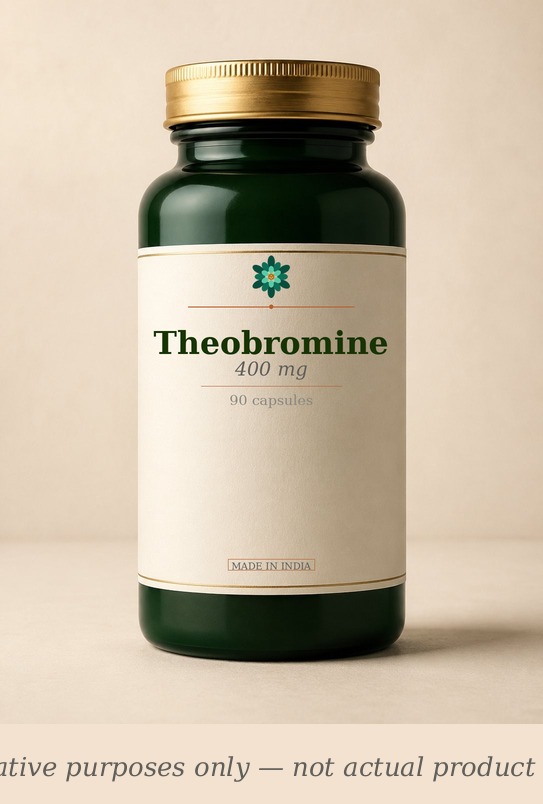
SacredBod's longer take on Theobromine — context the structured blocks above don't capture.
What It Is
Theobromine (3,7-dimethylxanthine) is a bitter alkaloid in the methylxanthine class, found primarily in cacao beans (Theobroma cacao), tea and the kola nut. It is structurally related to caffeine but has a much milder stimulant profile — approximately 10× weaker as an adenosine receptor antagonist. Theobromine provides smooth, sustained energy without the jitters, anxiety or crash associated with caffeine. It also acts as a bronchodilator, phosphodiesterase inhibitor and mild diuretic.
How It Works
Theobromine antagonises adenosine receptors (primarily A1 and A2A) with lower affinity than caffeine, producing gentler wakefulness and reduced sleep disruption. It inhibits phosphodiesterase enzymes, increasing intracellular cAMP and supporting bronchodilation — this is why cocoa has been used traditionally for respiratory complaints. Theobromine also enhances cerebral blood flow via nitric oxide-mediated vasodilation and may improve insulin sensitivity. Unlike caffeine, it has minimal effect on the HPA axis and cortisol, making it better tolerated by anxiety-prone individuals.
Who Should Consider It
Individuals seeking a gentler alternative to caffeine for morning energy and focus. Those with caffeine sensitivity who experience jitters, anxiety or sleep disruption. People with mild respiratory concerns (traditional use as a bronchodilator). Chocolate lovers wanting the mood-lifting benefits of cacao without the sugar and fat.
Dosage Guide
Typical dose: 400 mg per day
Form: capsules (90 count)
Best time: morning
With food: with-food
Expected onset: 30–60 minutes for acute effects; 2–4 weeks for sustained mood benefits
Cycling: No cycling required. Can be taken daily. Tolerance develops more slowly than caffeine.
Safety & Side Effects
Known side effects: Generally well-tolerated at 200–500 mg/day. Mild headache, nausea or increased urination at higher doses. Much lower toxicity than caffeine — the LD50 in humans is estimated at ~1,000 mg/kg (vs ~150 mg/kg for caffeine). Rarely causes insomnia if taken late in the day, though less likely than caffeine.
Who should avoid: Pregnant and breastfeeding women (theobromine crosses placenta and enters breast milk; high doses may cause fetal distress). Individuals with severe cardiac arrhythmias. Those with reflux oesophagitis (theobromine relaxes the lower oesophageal sphincter). Pets — highly toxic to dogs and cats.
Avoid combining with: Caffeine (additive stimulant effects, though milder), Theophylline (additive methylxanthine effects), MAO inhibitors, Stimulant medications, Viagra/sildenafil (additive vasodilation)
India-Specific Context
Theobromine is available on Amazon India with varying brand quality. When selecting a product, verify standardization claims against the evidence base cited above. Indian brand preferences include Carbamide Forte, HealthyHey, Nutrabay Pure, Pure Nutrition, Now Foods, Nutricost, Himalaya, Patanjali, Dabur, Trexgenics, Evorina, Nervana, and Life Extension. Prices vary significantly; compare cost-per-active-dose rather than capsule count alone.
Schedule status in India: Not a Schedule H drug; available as dietary supplement/herbal product.
Research Summary
Key citations: PMID 23764688 (human mood and vigilance study — no effect at 700 mg), PMID 25586946 (pharmacological mechanisms review), PMID 26784408 (bronchodilation and phosphodiesterase inhibition), PMC9698929 (cocoa methylxanthines and cognition review)
Evidence grade: C+ — Human studies limited; strong preclinical pharmacology data; one human mood study showed no effect at 700 mg