
SacredBod
0
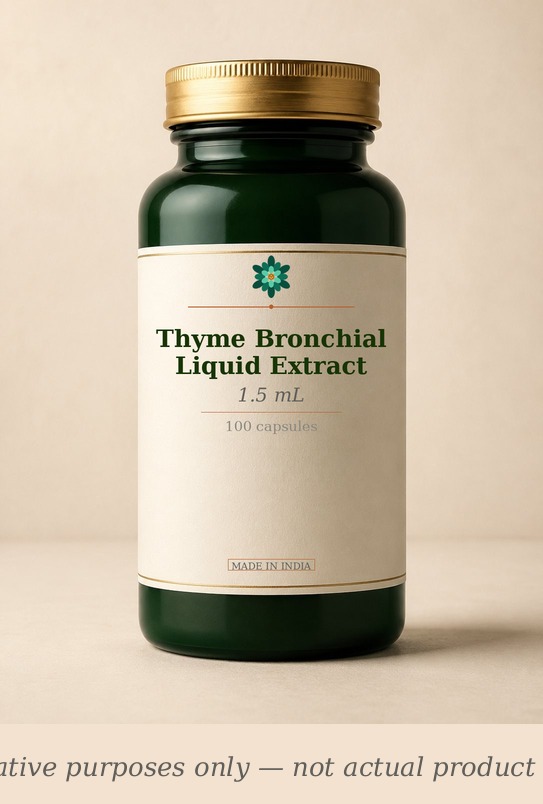
Thyme Bronchial Liquid Extract — SacredBod supplement bottle (illustrative)
Supplement · Respiratory & Lung Health

Thyme Bronchial Liquid Extract

1.5 mL · vegan · gluten-free · 100 caps

Chronic bronchitisProductive coughBronchospasmAsthma-related coughRecurrent chest infectionsMucus congestion BronchiLungsTrachea
BUY on Amazon →

Affiliate link · we earn from qualifying purchases. No paid placements.

What it is

Thymus vulgaris (common thyme) liquid extract is a traditional European respiratory remedy standardised for thymol and carvacrol content. It acts as an antispasmodic on bronchial smooth muscle, an antimicrobial against respiratory pathogens, and a secretolytic that thins mucus for easier expectoration. The 2024 paediatric RCT confirmed its efficacy in asthma-related cough.

How it works

Thymol and carvacrol — the primary phenolic compounds in thyme — relax bronchial smooth muscle (antispasmodic), inhibit bacterial and viral respiratory pathogens, and stimulate ciliary activity to enhance mucus clearance. Thyme also has mild expectorant properties that promote productive coughing, clearing infected material from the bronchi.

Who should take it

Adults and children over 5 with chronic bronchitis, productive cough, or asthma-related cough; individuals with recurrent respiratory infections seeking a broad-spectrum antimicrobial botanical.

Avoid / careful

Pregnant or breastfeeding women; children under 5 years; individuals with thyroid disorders (thyme may suppress thyroid function at very high doses); those with gastroesophageal reflux disease (GERD). Side effects: Mild stomach upset, nausea, or heartburn at high doses. Rare allergic reactions in those sensitive to Lamiaceae family plants (mint, basil, oregano).

When to take it

Morning
Noon
Evening
Night

How to take it

With food
Empty stomach
Before food

FAQs

Frequently asked

How long before I see results?
For acute cough, improvement typically begins within 3–7 days. The 2024 paediatric asthma trial showed significant reduction in activity-induced cough after 1 week of thyme syrup. For chronic bronchitis, 2–4 weeks of daily use is needed for sustained benefit.
Is liquid extract better than capsules?
Liquid extracts offer faster absorption and flexible dosing. They are the traditional European format (e.g., Bronchipret drops). Capsules are more convenient for travel but may have slower onset. For children, syrup or diluted liquid extract is preferred.
Can I use kitchen thyme instead?
Culinary thyme tea provides mild benefits but lacks the concentration of thymol and carvacrol found in standardised extracts. Medicinal liquid extracts are 5–10× more concentrated than herbal tea.

In plain English

A plain-English read of the literature behind this supplement. Not a clinical recommendation.

Key citations: PMID 38186189 (Thymus vulgaris ameliorates cough in children with asthma exacerbation — Eskandarpour et al. 2024), PMID 22103288 (Antimicrobial activity of thyme essential oil against multidrug-resistant bacteria), PMID 33091857 (complementary propolis URTI evidence)

Editorial notes

SacredBod's longer take on Thyme Bronchial Liquid Extract — context the structured blocks above don't capture.

What Thyme Bronchial Liquid Extract Is

Thymus vulgaris, commonly known as common thyme or garden thyme, is a Mediterranean herb that has been used for respiratory ailments since ancient Egyptian and Roman times. In modern phytotherapy, standardised liquid extracts of thyme are a first-line treatment for bronchitis and productive cough in Germany, where herbal medicine is integrated into mainstream healthcare.

The key active compounds — thymol and carvacrol — are phenolic monoterpenes with potent antimicrobial, antispasmodic, and secretolytic properties. Standardised extracts ensure consistent thymol content (typically 0.5–2.5%), which is critical for therapeutic efficacy.

How It Works

  1. Antispasmodic — Thymol and carvacrol relax bronchial smooth muscle, reducing cough spasms and wheezing. This is particularly valuable in asthma-related cough and bronchitis with bronchospasm.
  2. Antimicrobial — Thyme essential oil and extracts inhibit a broad spectrum of respiratory bacteria (including multidrug-resistant strains) and viruses. The 2024 trial confirmed clinical benefits in children with asthma exacerbation.
  3. Secretolytic & expectorant — Thyme stimulates ciliary activity and reduces mucus viscosity, making coughs more productive and less exhausting.
  4. Anti-inflammatory — Thymol suppresses COX-1 and 12-LOX pathways, reducing airway inflammation.

Who Benefits Most

  • Chronic bronchitis patients — Thyme is a traditional European remedy for persistent productive cough with tenacious mucus.
  • Asthma patients with cough — The 2024 RCT showed significant improvement in FEV1 and cough reduction in children with asthma exacerbation.
  • Recurrent respiratory infection sufferers — The antimicrobial spectrum covers common respiratory pathogens.
  • Parents seeking natural paediatric options — The paediatric trial used 20mg/kg thyme syrup every 8 hours safely in children aged 5–12.

Dosage Guide

FormDoseDuration
Liquid extract (1:1)1.5 mL 3× daily in warm water2–4 weeks
Syrup (children 5–12)20 mg/kg every 8 hours1 week
Standardised capsules200–400 mg 2–3× daily2–4 weeks

Dilute liquid extract in warm water and take with meals to reduce stomach irritation.

Safety & Interactions

  • Thyroid: Very high doses of thyme may suppress thyroid function; use caution with hypothyroidism.
  • GERD: Thyme can aggravate acid reflux in sensitive individuals.
  • Anticoagulants: Thymol may have mild antiplatelet effects.
  • Iron: Tannins in thyme may reduce iron absorption; separate by 2 hours.

India-Specific Context

  • Availability: Standalone Thymus vulgaris liquid extract or capsules are not available on Amazon.in. Thyme is included in combination cough syrups (e.g., TruHabit BronchiCure Herbal Lung Support Syrup with Thyme & Ivy Leaf). Pure thyme extract may need to be imported.
  • Ayurvedic parallel: Ajwain (Trachyspermum ammi) is the closest Ayurvedic relative — both belong to the Lamiaceae family and contain thymol. Ajwain is widely used in India for respiratory congestion, digestive issues, and as a Kapha-reducing agent. However, Ajwain is distinct from Thymus vulgaris and has different respiratory evidence.
  • Regulatory status: Thyme is sold as a spice and herbal supplement in India. It is not a Schedule H drug.
  • Traditional use: In Kashmiri and North Indian households, thyme (called Jangli ajwain) is occasionally used in herbal teas for colds, but this is not standardised medicinal use.
  • Cost: Imported thyme liquid extracts (e.g., from German brands like Bionorica or Hevert) cost approximately €8–15 (₹700–1,300) for 50–100mL.
Added to your stack.