
SacredBod
0
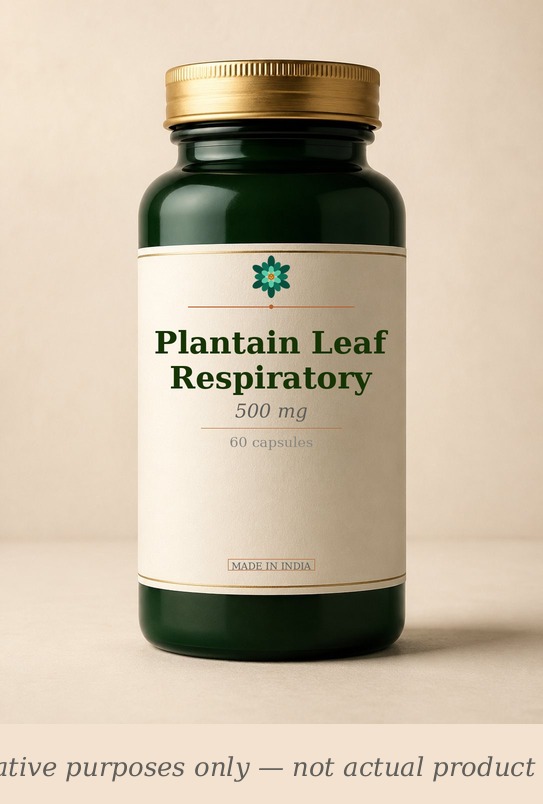
Plantain Leaf Respiratory — SacredBod supplement bottle (illustrative)
Supplement · Respiratory & Lung Health

Plantain Leaf Respiratory

500 mg · vegan · gluten-free · 60 caps

Dry coughAcute bronchitisChronic bronchitisPost-infectious coughRespiratory mucosal irritationSore throat Respiratory mucosaBronchiTracheaPharynx
BUY on Amazon →

Affiliate link · we earn from qualifying purchases. No paid placements.

What it is

Plantago lanceolata (ribwort plantain) leaf is a traditional European and Persian respiratory remedy rich in mucilage, iridoid glycosides (aucubin), and phenolic compounds. It soothes irritated respiratory mucosa, reduces inflammation, and has mild expectorant and antitussive properties. The 2024 Iranian RCT confirmed significant improvement in acute bronchitis symptoms.

How it works

Plantain leaf contains high concentrations of mucilage — complex polysaccharides that form a protective gel layer over irritated respiratory mucosa, reducing cough reflex sensitivity and mechanical irritation. Aucubin and other iridoid glycosides exert anti-inflammatory effects via NF-κB and COX inhibition. The leaf also has mild antimicrobial activity against respiratory pathogens and immunomodulatory effects that support mucosal healing.

Who should take it

Adults with dry, irritating cough; acute bronchitis; chronic bronchitis with mucosal irritation; and individuals with post-infectious cough that persists after the infection clears.

Avoid / careful

Pregnant or breastfeeding women (insufficient safety data); individuals taking blood thinners (plantain may increase bleeding risk at high doses). Side effects: Very well tolerated. Rare mild stomach upset or allergic reactions in those sensitive to Plantaginaceae family.

When to take it

Morning
Noon
Evening
Night

How to take it

With food
Empty stomach
Before food

FAQs

Frequently asked

How long before I see results?
For dry cough and mucosal irritation, soothing effects begin within 3–5 days. The 2024 Iranian RCT showed significant improvement in cough frequency, sputum production, and chest wall pain after 10 days of plantain syrup. Quality of life scores (LCQ) also improved significantly.
Is it better for dry or wet cough?
Plantain is particularly effective for dry, irritating coughs due to its mucilage content. For wet/productive coughs, it works best when combined with expectorants like thyme or ivy leaf. The 2024 trial noted that separating dry vs wet cough effects would be valuable for future research.
Can I make tea from fresh leaves?
Yes. Fresh or dried Plantago major/lanceolata leaves can be steeped as tea (1–2 teaspoons per cup, 10 minutes). This provides mild mucilage benefits but lacks the concentration of standardised extracts. For acute bronchitis, standardised syrup or capsules are more effective.

In plain English

A plain-English read of the literature behind this supplement. Not a clinical recommendation.

Key citations: PMC11444096 (Plantago major on cough severity in acute bronchitis — Naderi et al. 2024), PMID 7101883 (Plantago major in chronic bronchitis — Matev et al. 1982), PMID 33091857 (complementary propolis URTI evidence)

Editorial notes

SacredBod's longer take on Plantain Leaf Respiratory — context the structured blocks above don't capture.

What Plantain Leaf Respiratory Is

Plantago lanceolata (ribwort plantain) and Plantago major (broadleaf plantain) are perennial herbs found worldwide, including across India. In Persian medicine (Tibb), they are known as Bartang and have been used for centuries to treat respiratory inflammation, cough, and wounds. In Europe, plantain leaf is a licensed herbal medicine for dry cough and bronchitis.

The leaf is rich in mucilage (up to 10% by weight), aucubin (an iridoid glycoside with anti-inflammatory properties), and phenolic acids. The mucilage forms a protective gel over irritated mucosa, while aucubin and plantamajoside suppress NF-κB and COX inflammatory pathways.

How It Works

  1. Mucosal protection — Mucilage polysaccharides (arabinose, xylose, galactose, rhamnose) form a viscous gel that coats the respiratory epithelium, reducing mechanical irritation and cough reflex sensitivity.
  2. Anti-inflammatory — Aucubin and plantamajoside inhibit NF-κB activation and reduce TNF-α, IL-6, and PGE2 in mucosal tissues.
  3. Antimicrobial — Phenolic compounds show activity against common respiratory bacteria and viruses in vitro.
  4. Immunomodulatory — Plantain extracts modulate macrophage activity and enhance mucosal IgA production.
  5. Wound healing — Accelerates repair of damaged respiratory mucosa after infection or pollution exposure.

Who Benefits Most

  • Dry cough sufferers — The mucilage content is ideal for non-productive, irritating coughs that keep you awake at night.
  • Acute bronchitis patients — The 2024 RCT demonstrated significant BSS reduction and quality of life improvement over 10 days.
  • Post-infectious cough — After a cold or flu, the respiratory mucosa remains hypersensitive. Plantain soothes this residual irritation.
  • Air pollution exposure — PM2.5 and other pollutants damage respiratory mucosa. Plantain’s protective gel layer may reduce this damage.

Dosage Guide

FormDoseDuration
Standardised capsules500 mg 2–3× daily2–4 weeks
Syrup10 mL 3× daily10 days
Herbal tea1–2 tsp dried leaf, steeped 10 minOngoing

Take with plenty of water — the mucilage needs hydration to form the protective gel.

Safety & Interactions

  • Absorption interference: Mucilage can reduce absorption of other medications and supplements. Take plantain 1–2 hours apart from other drugs.
  • Bleeding: High doses may increase bleeding risk; caution with warfarin.
  • Lithium: May reduce lithium clearance; consult psychiatrist if on lithium.
  • Pregnancy: Not recommended due to insufficient safety data.

India-Specific Context

  • Availability: SAI HERBS Broadleaf Plantain Powder (Bartang Powder) is available on Amazon.in. However, standardised capsules or syrups are not listed. Users can encapsulate the powder or prepare tea. Some Ayurvedic cough syrups may contain plantain as a minor ingredient.
  • Regulatory status: Plantain is sold as a dietary supplement and herbal powder in India. It is not a Schedule H drug.
  • Ayurvedic & Unani use: Bartang (Plantago major) is documented in Unani medicine (Greek-Arabic tradition practised in India) for respiratory catarrh, cough, and inflammation. It is also used in Kashmiri folk medicine.
  • Climate relevance: India’s severe air pollution (Delhi’s AQI regularly exceeds 400) creates a massive population with chronically irritated respiratory mucosa. Plantain’s mucoprotective properties are particularly relevant for urban Indians.
  • Cost: SAI HERBS plantain powder costs approximately ₹300–500 for 100g, enough for 1–2 months of tea use.
Added to your stack.