
SacredBod
0
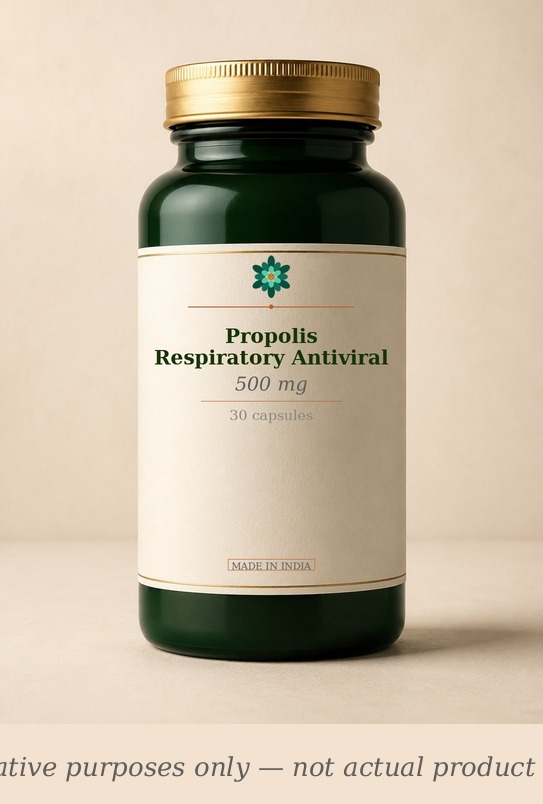
Propolis Respiratory Antiviral — SacredBod supplement bottle (illustrative)
Supplement · Respiratory & Lung Health

Propolis Respiratory Antiviral

500 mg · gluten-free · 30 caps

Sore throatUpper respiratory infectionSinusitisHoarsenessRecurrent throat infectionsCommon cold Upper respiratory tractPharynxSinusesOral cavity
BUY on Amazon →

Affiliate link · we earn from qualifying purchases. No paid placements.

What it is

Propolis is a resinous substance collected by honeybees from tree buds and sap flows. It contains over 300 bioactive compounds including flavonoids, phenolic acids, and caffeic acid phenethyl ester (CAPE). Standardised propolis extracts (typically standardised for total polyphenol or flavonoid content) have demonstrated antiviral, antibacterial, anti-inflammatory, and immunomodulatory effects in respiratory infections.

How it works

Propolis inhibits viral replication (including influenza, rhinovirus, and coronaviruses in vitro) through multiple mechanisms: blocking viral entry, inhibiting viral RNA synthesis, and modulating host immune response. Its flavonoids (apigenin, kaempferol, chrysin) and phenolic acids (caffeic acid, ferulic acid) also suppress NF-κB and reduce pro-inflammatory cytokines in the respiratory mucosa. CAPE specifically inhibits viral neuraminidase and haemagglutinin.

Who should take it

Adults with upper respiratory tract infections, sore throat, or sinusitis; individuals seeking immune support during cold/flu season; and those prone to recurrent throat infections.

Avoid / careful

Individuals with bee product allergies; pregnant or breastfeeding women (insufficient safety data); those with asthma (rare bronchospasm trigger). Side effects: Mild allergic reactions in those sensitive to bee products (rash, itching, swelling). Rare stomach upset or nausea. Avoid if allergic to honey, bee stings, or royal jelly.

When to take it

Morning
Noon
Evening
Night

How to take it

With food
Empty stomach
Before food

FAQs

Frequently asked

How quickly does it work?
For sore throat and URTI, the 2021 RCT showed that 83% of propolis-treated subjects had complete symptom remission after 3 days vs 72% in the placebo group. Full resolution occurred 2 days earlier than placebo (3 days vs 5 days). For sinusitis, benefits typically appear within 3–5 days.
Can I take it preventatively?
Yes. A paediatric trial of a propolis-Echinacea-vitamin C combination showed 55% reduction in illness episodes and 62% reduction in fever days over 12 weeks. While this was a combination product, propolis's immunomodulatory effects support prophylactic use during cold/flu season.
Is it safe for daily use?
Propolis is generally safe for 5–7 day courses. Long-term daily safety data is limited. We recommend cycling — use during infection risk periods (monsoon, winter) and take breaks between courses.

In plain English

A plain-English read of the literature behind this supplement. Not a clinical recommendation.

Key citations: PMID 33091857 (Standardised propolis oral spray for URTI — Esposito et al. 2021), PMID 34725836 (Antiviral and immunomodulatory activities of propolis — Magnavacca et al. 2022), PMC9824023 (Propolis effects on viral respiratory diseases)

Editorial notes

SacredBod's longer take on Propolis Respiratory Antiviral — context the structured blocks above don't capture.

What Propolis Respiratory Antiviral Is

Propolis is often called “bee glue” — a complex resinous mixture that honeybees collect from tree buds (particularly poplar, birch, and pine) and mix with beeswax and enzymes. It is used by bees to seal cracks, sterilise the hive, and protect against pathogens. For humans, this same antimicrobial arsenal translates into potent respiratory protection.

The key to propolis’s efficacy lies in its standardisation. Raw propolis varies wildly in composition depending on geography and botanical source. CAPE-standardised or polyphenol-standardised extracts (typically 15+ mg/mL polyphenols) ensure reproducible antiviral and anti-inflammatory effects. The 2021 Italian RCT used a standardised poplar-type propolis oral spray with 15 mg/mL total polyphenols.

How It Works

  1. Direct antiviral action — Propolis flavonoids (apigenin, kaempferol, quercetin) and phenolic acids inhibit viral entry, replication, and release. In vitro studies show activity against influenza A/H1N1, rhinoviruses, parainfluenza, adenoviruses, and coronaviruses.
  2. Immunomodulation — Propolis enhances macrophage activity, increases interferon production, and modulates Th1/Th2 balance, strengthening the innate immune response against respiratory viruses.
  3. Anti-inflammatory — CAPE and chrysin suppress NF-κB and reduce IL-6, TNF-α, and IL-8 in the respiratory mucosa, decreasing sore throat pain and sinus swelling.
  4. Antibacterial — Effective against Streptococcus pyogenes (strep throat), Staphylococcus aureus, and other respiratory bacteria — reducing the risk of bacterial superinfection after viral URI.
  5. Mucosal healing — Promotes repair of damaged throat and sinus mucosa after infection.

Who Benefits Most

  • URI sufferers — The 2021 RCT demonstrated 2-day faster symptom resolution.
  • Sore throat patients — Propolis lozenges and sprays provide rapid local relief.
  • Sinusitis patients — Antiviral and anti-inflammatory effects reduce sinus pressure and drainage.
  • Recurrent infection prone individuals — Immunomodulatory effects may reduce frequency of colds and flu.
  • Teachers, healthcare workers, and public-facing professionals — High exposure to respiratory pathogens makes prophylactic propolis valuable.

Dosage Guide

FormDoseDuration
Standardised capsules500 mg 2× daily5–7 days
Oral spray (15 mg/mL polyphenols)2–4 sprays 3× daily5 days
Prophylactic capsules500 mg/dayDuring cold/flu season

Take with food to reduce any stomach irritation.

Safety & Interactions

  • Bee allergies: Absolute contraindication. Those allergic to honey, bee stings, or royal jelly must avoid propolis.
  • Warfarin: Propolis may increase INR; monitor closely.
  • Asthma: Rare trigger for bronchospasm; use caution.
  • Pregnancy: Not recommended due to insufficient safety data.

India-Specific Context

  • Availability: Propolis capsules are available on Amazon.in. Superbee Propolis 500mg (30 capsules) at ₹200, Athinika Nutrition Pure Propolis 2500mg (120 capsules), and Bhabya Herbal bee propolis are all in stock. However, standardised CAPE/polyphenol content is not always declared on Indian products.
  • Regulatory status: Propolis is sold as a dietary supplement in India. It is not a Schedule H drug.
  • Ayurvedic parallel: Propolis has no direct Ayurvedic equivalent, but its immune-modulating function aligns with Rasayana (rejuvenative) therapy. In modern Indian integrative medicine, propolis is often combined with Tulsi and Haridra (turmeric) for respiratory immune support.
  • Quality concern: Indian propolis products vary in quality. Poplar-type propolis (European/Chinese) has the strongest clinical evidence. Indian propolis may be derived from different botanical sources with varying flavonoid profiles. Look for products that declare total polyphenol or flavonoid content.
  • Cost: Budget options start at ₹200 for 30 capsules. Higher-quality standardised extracts cost ₹800–₹1,500 for 60–120 capsules.
Added to your stack.