SacredBod
0
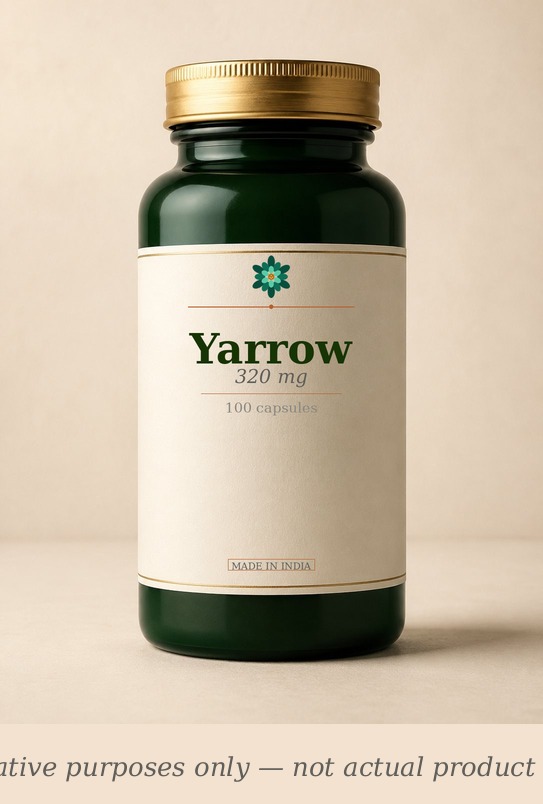
Yarrow — SacredBod supplement bottle (illustrative)
Supplement · Botanical

Yarrow

320 mg · vegan · gluten-free · 100 caps

Heavy periodsMenorrhagiaWoundsInflammationPoor digestionFever UterusSkinDigestive systemBlood vessels
BUY on Amazon →

Affiliate link · we earn from qualifying purchases. No paid placements.

What it is

Yarrow (Achillea millefolium L.) is a perennial herb in the Asteraceae family, native to Europe and Asia and now naturalised worldwide including the Himalayas. Its aerial parts have been used since ancient times for wound healing (the Greek hero Achilles reputedly used it to treat soldiers' wounds), digestive complaints, fever reduction and menstrual disorders. The plant contains essential oils (chamazulene, achillicin), flavonoids, sesquiterpene lactones, alkaloids and tannins. In Ayurveda, it is known as Biranjasipha or Gandana.

How it works

Yarrow's astringent tannins tighten tissues and reduce bleeding, making it valuable for heavy menstrual periods. The essential oil fraction (particularly chamazulene) demonstrates potent anti-inflammatory activity, inhibiting COX-2 and 5-LOX pathways. A 2017 RCT showed that yarrow oil extract significantly reduced inflammatory markers (TNF-α, IL-6) and improved clinical scores in patients with ulcerative colitis. The sesquiterpene lactones (achillin, leucodin) provide antimicrobial activity against common wound pathogens. Yarrow also acts as a bitter digestive tonic, stimulating bile flow and improving appetite.

Who should take it

Women with heavy menstrual bleeding (menorrhagia) seeking an astringent uterine tonic. Those with minor wounds, cuts or skin irritation seeking natural healing support. Individuals with mild digestive complaints or poor appetite. People interested in traditional Himalayan herbs (Biranjasipha). Note: Not for severe bleeding requiring medical intervention.

Avoid / careful

Pregnant women (traditional emmenagogue and uterine stimulant). Individuals with Asteraceae/Compositae allergies. Those with gallstones or bile duct obstruction (stimulates bile flow). People with clotting disorders or on anticoagulants (theoretical concern due to traditional use affecting bleeding). Not for children. Side effects: Generally well-tolerated at 320–1,000 mg/day. May cause allergic reactions in individuals sensitive to Asteraceae/Compositae family (ragweed, chamomile, echinacea). Very high doses may cause photosensitivity. May increase stomach acid in sensitive individuals. Rare contact dermatitis from topical use.

When to take it

Morning
Noon
Evening
Night

How to take it

With food
Empty stomach
Before food

FAQs

Frequently asked

How long before I see results?
Digestive and anti-inflammatory benefits may be noticeable within 1–2 weeks. Menstrual bleeding reduction requires 4–6 weeks of consistent use. Wound healing benefits are acute and topical.
Can it stop heavy periods?
Yarrow's astringent properties may reduce heavy menstrual flow, but it is not a treatment for severe menorrhagia caused by fibroids, polyps or hormonal disorders. If you soak through a pad in an hour or have periods lasting >7 days, see a gynaecologist immediately.
Is it related to chamomile?
Both are in the Asteraceae (daisy) family and share some chemical constituents (chamazulene, sesquiterpene lactones). People allergic to ragweed, chamomile, echinacea or marigold may also react to yarrow.

In plain English

A plain-English read of the literature behind this supplement. Not a clinical recommendation.

Key citations: PMID 28163113 (anti-inflammatory oil extract RCT in ulcerative colitis), PMID 40453653 (wound healing in equine model), PMC10703637 (comprehensive mechanism review), PMC12009018 (Achillea millefolium comprehensive review), PMC10315885 (essential oil antibacterial and wound healing)

Editorial notes

SacredBod's longer take on Yarrow — context the structured blocks above don't capture.

What It Is

Yarrow (Achillea millefolium L.) is a perennial herb in the Asteraceae family, native to Europe and Asia and now naturalised worldwide including the Himalayas. Its aerial parts have been used since ancient times for wound healing (the Greek hero Achilles reputedly used it to treat soldiers’ wounds), digestive complaints, fever reduction and menstrual disorders. The plant contains essential oils (chamazulene, achillicin), flavonoids, sesquiterpene lactones, alkaloids and tannins. In Ayurveda, it is known as Biranjasipha or Gandana.

How It Works

Yarrow’s astringent tannins tighten tissues and reduce bleeding, making it valuable for heavy menstrual periods. The essential oil fraction (particularly chamazulene) demonstrates potent anti-inflammatory activity, inhibiting COX-2 and 5-LOX pathways. A 2017 RCT showed that yarrow oil extract significantly reduced inflammatory markers (TNF-α, IL-6) and improved clinical scores in patients with ulcerative colitis. The sesquiterpene lactones (achillin, leucodin) provide antimicrobial activity against common wound pathogens. Yarrow also acts as a bitter digestive tonic, stimulating bile flow and improving appetite.

Who Should Consider It

Women with heavy menstrual bleeding (menorrhagia) seeking an astringent uterine tonic. Those with minor wounds, cuts or skin irritation seeking natural healing support. Individuals with mild digestive complaints or poor appetite. People interested in traditional Himalayan herbs (Biranjasipha). Note: Not for severe bleeding requiring medical intervention.

Dosage Guide

Typical dose: 320 mg per day

Form: capsules (100 count)

Best time: morning

With food: with-food

Expected onset: 2–4 weeks for digestive and wound support; 4–6 weeks for menstrual benefits

Cycling: No cycling required. Can be taken continuously.

Safety & Side Effects

Known side effects: Generally well-tolerated at 320–1,000 mg/day. May cause allergic reactions in individuals sensitive to Asteraceae/Compositae family (ragweed, chamomile, echinacea). Very high doses may cause photosensitivity. May increase stomach acid in sensitive individuals. Rare contact dermatitis from topical use.

Who should avoid: Pregnant women (traditional emmenagogue and uterine stimulant). Individuals with Asteraceae/Compositae allergies. Those with gallstones or bile duct obstruction (stimulates bile flow). People with clotting disorders or on anticoagulants (theoretical concern due to traditional use affecting bleeding). Not for children.

Avoid combining with: Anticoagulants and antiplatelets, Sedatives (theoretical CNS interaction), Lithium (theoretical diuretic interaction), Stomach acid-reducing medications (may counteract)

India-Specific Context

Yarrow is available on Amazon India with varying brand quality. When selecting a product, verify standardization claims against the evidence base cited above. Indian brand preferences include Carbamide Forte, HealthyHey, Nutrabay Pure, Pure Nutrition, Now Foods, Nutricost, Himalaya, Patanjali, Dabur, Trexgenics, Evorina, Nervana, Life Extension, VITARUHE, ASTERVEDA, BECLEC, GreenOpia, Rasayanam, Zyrex, and Shree Herbal. Prices vary significantly; compare cost-per-active-dose rather than capsule count alone.

Schedule status in India: Not a Schedule H drug; available as dietary supplement/herbal product.

Research Summary

Key citations: PMID 28163113 (anti-inflammatory oil extract RCT in ulcerative colitis), PMID 40453653 (wound healing in equine model), PMC10703637 (comprehensive mechanism review), PMC12009018 (Achillea millefolium comprehensive review), PMC10315885 (essential oil antibacterial and wound healing)

Evidence grade: C — One RCT for ulcerative colitis; strong traditional use; moderate modern pharmacology data

Added to your stack.