
Among supplements, NAC has an unusual pedigree. It started life as a drug — and still is one, in many countries. Hospitals stock injectable NAC as the standard antidote to paracetamol overdose, where it works by rebuilding the liver’s glutathione faster than the drug can destroy it. It’s also a respiratory medication: inhaled NAC breaks the disulfide bonds that hold thick mucus together, which is why it’s been used for decades in chronic bronchitis and cystic fibrosis.
Take that same molecule, package it in a 600 mg capsule, and you have one of the most evidence-rich supplements available — provided you understand what it actually does.
What NAC is, mechanically
Glutathione is the body’s primary intracellular antioxidant. Every cell makes its own; the liver makes most of the body’s reserve. Glutathione is what the liver uses to neutralise toxins, what the lungs use to manage the constant oxidative load of breathing, and what the brain uses to keep glial cells healthy.
Glutathione is built from three amino acids: glutamate, glycine, and cysteine. Two of those are abundant in any normal diet. Cysteine, the third, is the rate-limiting one — most cells will make exactly as much glutathione as they have cysteine for, no more.
NAC is a stable, bioavailable form of cysteine. Once inside a cell, it sheds the acetyl group and feeds the cysteine straight into glutathione synthesis. You’re not “taking glutathione” — you’re delivering the missing brick so cells can build their own.
That distinction matters because oral glutathione is a poor strategy. The molecule gets digested back into its component amino acids before it reaches the bloodstream. Liposomal glutathione gets around this somewhat, but at four to five times the cost of NAC for a more variable result.
Where the evidence is solid
The research base on NAC sorts neatly into three buckets.
Liver and detoxification. This is where NAC’s clinical use began, and the data is rock-solid. Anyone who’s taken paracetamol-acetaminophen to the upper end of the recommended range, anyone who drinks regularly, or anyone with a fatty liver picture is operating with chronically depleted glutathione. NAC at 600–1,200 mg daily reliably restores it.
Respiratory. The mucolytic effect is mechanical and well-documented. NAC thins thick respiratory secretions whether you have COPD, chronic bronchitis, or just a stubborn winter chest cold that won’t clear. The oral form is less dramatic than nebulised, but it works.
Neuropsychiatric, off-label. Smaller but interesting trials in OCD-spectrum conditions, trichotillomania (compulsive hair-pulling), and excoriation disorder. The proposed mechanism is glutamate modulation in the striatum. None of this is approved use, and dosing for those indications is higher (2,400–3,000 mg/day) than general consumer use. If you’re considering NAC for anything mood-related, do it with a clinician.
Where the evidence is less solid
NAC gets recommended for a long tail of conditions where the evidence is suggestive at best — male fertility, PCOS, “general detox”, post-COVID fatigue. Some of these may pan out; the trials so far are small and mixed. Buy NAC for the well-established uses, and treat any benefit elsewhere as a bonus rather than the reason.
How to use it
For general antioxidant support: 600 mg twice a day, with food. Morning and afternoon, not evening — a small fraction of users find NAC mildly activating. If you’re one of the few who find it relaxing, flip to evening.
For occasional alcohol use: 600 mg an hour or two before drinking, and another 600 mg the next morning with water. This doesn’t make you drink-proof; it does reliably soften the next day.
Cycle it. This is the under-discussed part. Constant high-dose antioxidant intake can blunt the body’s own adaptive response — including some of the long-term benefits of exercise, where transient oxidative stress is part of the signal. The reasonable compromise: eight weeks on, two weeks off, indefinitely. If you’re using NAC for a specific clinical reason under guidance, ignore that and follow the protocol you’re on.
What to look for on the bottle
NAC has a faintly sulfurous smell — like a slightly cracked egg. This is the molecule itself; it doesn’t mean the bottle is rancid. Reputable brands print the milligrams of NAC clearly, do not blend it with cheap fillers, and ideally have a USP or third-party purity test on file.
Avoid “NAC complexes” that bundle other ingredients at sub-therapeutic doses to justify a higher price. The 60-year track record of NAC is for plain NAC. There’s no formulation magic to chase.
Supplements mentioned
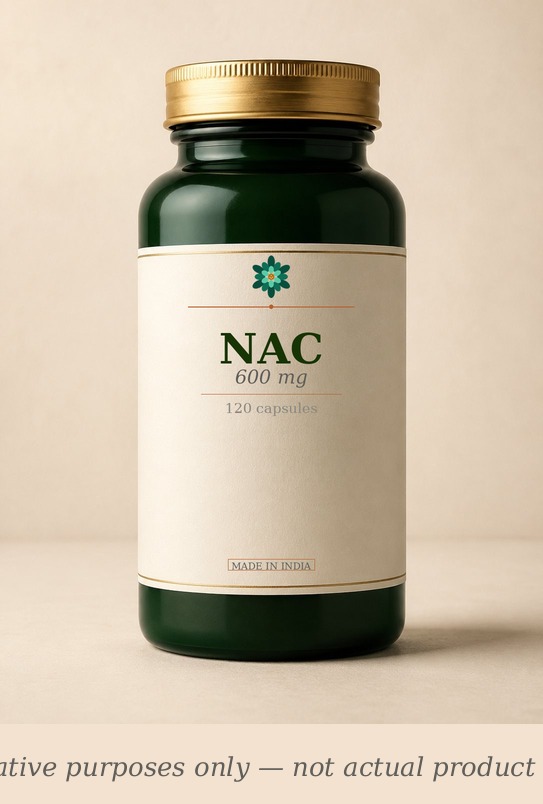
NAC
Amino Acid · 600 mg · 120 caps
Omega-3 (EPA/DHA)
Fatty Acid · EPA 600 + DHA 400 mg · 90 caps
People also ask
Is NAC the same as cysteine?
Can NAC replace glutathione directly?
Why do some people feel sleepy on NAC?
Keep reading

Sulforaphane for oxidative stress: protocol, dose, and what to track
How to use Sulforaphane specifically for oxidative stress — the right dose, timing, blood markers to track, and how to know if it is working.
Sulforaphane: what the research actually shows
A clinical evidence review of Sulforaphane — RCT data, effect sizes, evidence grade, and what the numbers mean for your specific situation.
Sulforaphane: complete India guide
Everything you need to know about Sulforaphane — mechanism, dose, safety, buying guide for India, and what the research actually says.