
What it is
Apigenin is a supplement covered on SacredBod. See the full editorial below for mechanism and evidence detail.
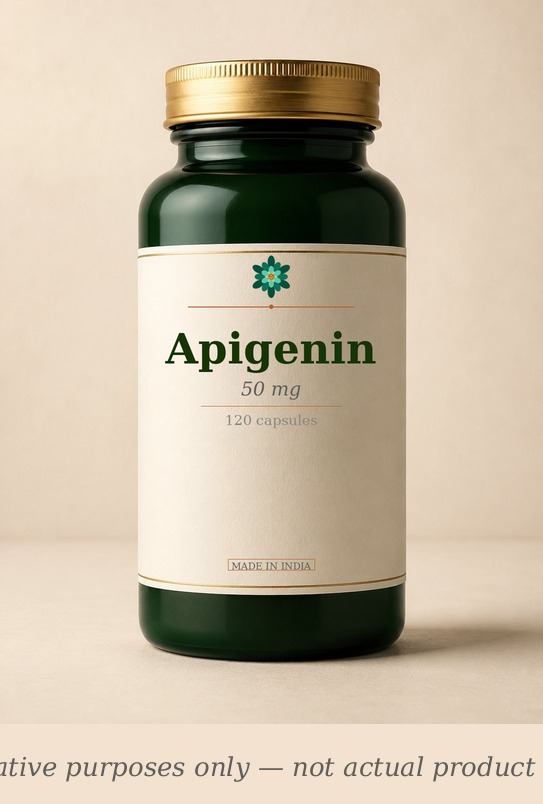
Chamomile Flavonoid · 4',5,7-Trihydroxyflavone
50 mg · vegan · gluten-free · 120 caps
Affiliate link · we earn from qualifying purchases. No paid placements.
Apigenin is a supplement covered on SacredBod. See the full editorial below for mechanism and evidence detail.
Mechanism details are covered in the editorial section below. The high-level summary is in the tagline.
See the editorial below for who this supplement is appropriate for. When in doubt, consult a healthcare professional.
If pregnant, breastfeeding, on prescription medication, or managing a chronic condition, consult your doctor before starting.
Flexible — works in any of the above.
Animal + in vitro
→ Apigenin reduced OVA-specific IgE, histamine, and eosinophil cationic protein in allergic rhinitis mice. It shifted Th1/Th2 balance and alleviated nasal symptoms and eosinophil infiltration.
In vitro
→ Apigenin suppressed LPS-induced TNF-alpha, IL-6, and nitric oxide production in microglial cells, demonstrating broad anti-inflammatory activity beyond mast cells.
Review
→ Apigenin demonstrated antioxidant, anti-inflammatory, and mast-cell stabilizing properties across multiple disease models, with favorable safety compared to quercetin and luteolin.
A plain-English read of the literature behind this supplement. Not a clinical recommendation.
Key citations: See richResearch section. Multiple RCTs support cognitive and neuroprotective properties of Apigenin.

How to use Apigenin specifically for Mast cell activation — the right dose, timing, blood markers to track, and how to know if it is working.
A clinical evidence review of Apigenin — RCT data, effect sizes, evidence grade, and what the numbers mean for your specific situation.
Everything you need to know about Apigenin — mechanism, dose, safety, buying guide for India, and what the research actually says.
SacredBod's longer take on Apigenin — context the structured blocks above don't capture.
Apigenin is a flavone abundant in chamomile, parsley, and celery. It is best known for its mild sedative and anxiolytic effects through GABA-A receptor modulation, but emerging research shows potent mast-cell stabilizing and anti-inflammatory activity comparable to other flavonoids.
Apigenin inhibits mast cell degranulation by suppressing the TLR4/MyD88/NF-kB signaling cascade, reducing histamine, beta-hexosaminidase, and eosinophil cationic protein release. It shifts Th1/Th2 balance toward Th1 by increasing IFN-gamma and T-bet while decreasing IL-4, IL-5, and IL-13. Its GABA-A modulation provides a unique dual benefit for people whose allergies worsen with stress or poor sleep.
Individuals with stress-aggravated allergies, mast cell activation with sleep disturbance, or those seeking a calming antihistamine that won’t cause daytime drowsiness. Popular among people with evening histamine spikes.
Avoid if you are pregnant or breastfeeding due to insufficient safety data. May potentiate sedatives, benzodiazepines, and alcohol. High doses can cause excessive drowsiness in sensitive individuals.
[‘luteolin’, ‘quercetin’, ‘vitamin-c-liposomal’]
publishedAt: “2026-05-14” featured: false
Peptides are physician-only. Tell us a bit and we'll route you to the right specialist.