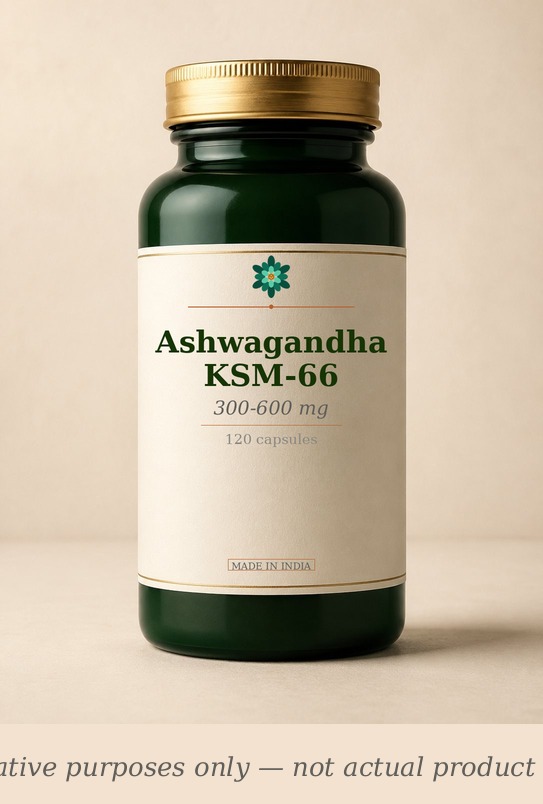
SacredBod's longer take on Ashwagandha KSM-66 — context the structured blocks above don't capture.
Ashwagandha is one of the most revered herbs in Ayurvedic medicine — used for over 3,000 years as a rasayana (rejuvenative tonic) for stress, energy, and vitality. The root of Withania somnifera contains withanolides, steroidal lactones that are the primary active compounds. KSM-66 is a proprietary full-spectrum root extract developed by Ixoreal Biomed, standardized to 5% withanolides, and backed by the largest clinical trial portfolio of any ashwagandha extract. While the traditional use is extensive, the modern evidence base is what justifies its position as one of the best-supported adaptogenic supplements available.
The cortisol-lowering effect is the best-documented benefit. A 2019 randomized trial by Lopresti and colleagues gave adults with chronic stress 240 mg of KSM-66 daily or placebo for 60 days. The KSM-66 group showed a 30% reduction in serum cortisol and significant improvements in perceived stress scores compared to placebo. A 2012 trial by Chandrasekhar and colleagues used a higher dose (600 mg) of a full-spectrum extract and found even more dramatic results: a 28% reduction in cortisol, significant reductions in anxiety scores on multiple validated scales, and improved sleep quality. These are not trivial effects — a 30% cortisol reduction is comparable to some lifestyle interventions and approaches the magnitude of pharmaceutical anxiolytics in some trials.
The strength and body composition data is promising but less robust than the stress data. Several trials have found that KSM-66 supplementation increases muscle strength, muscle size, and testosterone levels in men. The mechanism is likely multifactorial: reduced cortisol removes a brake on anabolic signaling, improved sleep enhances recovery, and direct effects on testosterone synthesis may occur. However, these trials are smaller than the stress trials, and the effect sizes, while statistically significant, are modest. The honest framing: ashwagandha may provide a small but meaningful boost to strength and testosterone, particularly in stressed individuals with elevated baseline cortisol, but it is not a replacement for resistance training, adequate protein intake, or sleep optimization.
The sleep benefits are genuine and clinically meaningful. A 2019 trial by Salve and colleagues found that ashwagandha root extract improved sleep quality, sleep onset latency, and sleep efficiency in healthy adults over 8 weeks. The mechanism involves GABAergic modulation — withanolides enhance GABA receptor signaling, promoting relaxation and sleep without the sedative hangover of pharmaceutical sleep aids. For people with stress-related insomnia who want to avoid prescription medications, ashwagandha is a well-supported natural option. The effects are gradual rather than immediate — expect 2-4 weeks before significant sleep improvements.
The pregnancy contraindication is absolute and non-negotiable. Ashwagandha has documented abortifacient properties in traditional Ayurvedic texts, and animal studies have confirmed embryotoxicity at high doses. The herb should never be used during pregnancy or breastfeeding. This is not a theoretical caution — it is a well-documented traditional use for inducing abortion in some cultures. Any supplement containing ashwagandha should carry a prominent pregnancy warning, and women of childbearing potential should discontinue use if pregnancy is suspected.
The thyroid interaction is often overlooked. Ashwagandha has been shown to increase thyroid hormone levels (T3 and T4) in some studies, likely through its effects on thyroid peroxidase and peripheral conversion. For people with hypothyroidism, this may be beneficial. For people with hyperthyroidism or those taking thyroid medication, it could push levels into the hyperthyroid range. If you have any thyroid condition or take levothyroxine, consult your endocrinologist before using ashwagandha and monitor thyroid function tests.
Quality and product selection is critical because not all ashwagandha extracts are equivalent. KSM-66 is the most clinically validated extract, with 24+ published trials. Sensoril is another standardized extract (10% withanolides) with a different extraction process and some trial support. Generic ashwagandha root powder has variable withanolide content and no clinical trial backing. Look for products that specify “KSM-66” or “Sensoril” and list the withanolide percentage. In the Indian market, KSM-66 is available from brands like QPUYT, TrueBasics, and Carbamide Forte. Avoid products that do not disclose the extract type or standardization.
Comparative positioning within the adaptogen landscape clarifies ashwagandha’s niche. Rhodiola is better for acute fatigue and physical performance under stress. Panax ginseng is better for immune support and physical stamina. Holy basil (tulsi) is better for calming and spiritual grounding. Ashwagandha’s unique strength is its cortisol-lowering and anxiolytic effects, combined with sleep and strength benefits. For people whose primary complaint is chronic stress with associated anxiety, poor sleep, and low energy, ashwagandha is the best-evidenced adaptogen.
Practical guidance: Take 300-600 mg of KSM-66 daily, divided into morning and evening doses. Start at 300 mg for 1-2 weeks to assess tolerance, then increase to 600 mg if desired. Take with meals to reduce stomach upset. For stress and cortisol, allow 2-4 weeks before assessing changes. For strength and testosterone, allow 8-12 weeks. Cycle 8 weeks on, 2 weeks off if desired, though continuous use is also safe. Combine with magnesium glycinate (300-400 mg) and L-theanine (200 mg) for comprehensive stress and sleep support. Do not use if pregnant, breastfeeding, or trying to conceive.
Storage and handling is straightforward. Ashwagandha root extract is stable at room temperature for 2-3 years. Keep in a cool, dry place away from direct sunlight. The characteristic earthy, slightly bitter taste of ashwagandha is normal and indicates genuine root content. Capsules mask the taste; powders can be mixed into smoothies or warm milk with honey. Traditional Ayurvedic preparation involves mixing ashwagandha powder with warm milk and ghee before bedtime — a practice that may enhance absorption of the fat-soluble withanolides.