SacredBod's longer take on Ashwagandha Thyroid TSH — context the structured blocks above don't capture.
What It Is
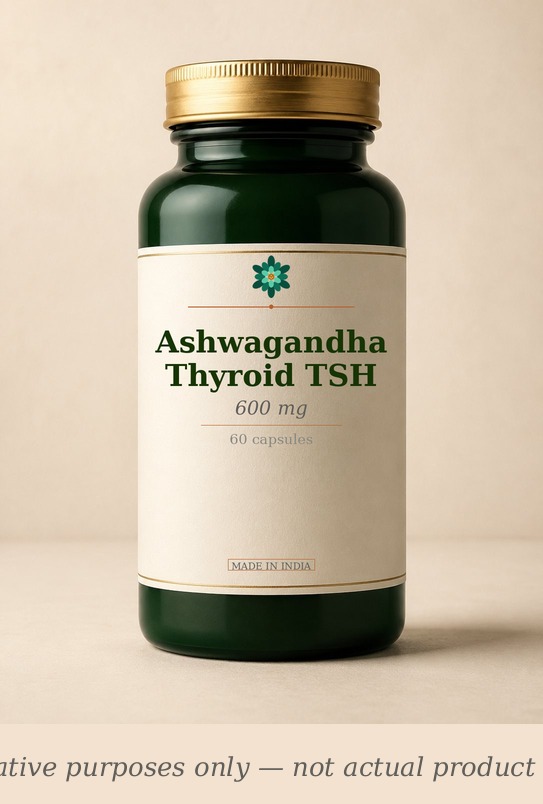
Ashwagandha Thyroid TSH features KSM-66, the most clinically studied ashwagandha extract and the only one with a dedicated thyroid RCT. Conducted at Sudbhawana Hospital in Varanasi, India, the 2018 Sharma trial randomised 50 subclinical hypothyroid patients to receive either 600 mg/day of ashwagandha root extract or placebo for 8 weeks. The results were striking: TSH dropped significantly, while T3 and T4 rose significantly — effectively normalising thyroid indices in a population that had not yet progressed to overt hypothyroidism.
How It Works
- HPT axis stimulation — Ashwagandha enhances hypothalamic thyrotropin-releasing hormone (TRH) and pituitary TSH secretion, increasing thyroid gland hormone output.
- Direct thyroid stimulation — Withanolides in ashwagandha appear to stimulate thyroid follicular cells directly, increasing iodine uptake and organification — the process of attaching iodine to tyrosine residues on thyroglobulin.
- Peripheral T4→T3 conversion — By reducing cortisol-mediated suppression of deiodinase activity, ashwagandha indirectly improves peripheral conversion of T4 to the metabolically active T3.
- Antioxidant thyroprotection — Withanolides A and D scavenge free radicals in the thyroid gland, reducing the oxidative stress that can trigger or worsen Hashimoto’s thyroiditis.
Who Benefits Most
- Subclinical hypothyroid patients (TSH 4.5–10 µIU/mL) who want to avoid or delay levothyroxine initiation.
- Stress-related thyroid dysfunction — chronic cortisol elevation suppresses the HPT axis; ashwagandha’s adaptogenic cortisol-lowering effect indirectly benefits thyroid function.
- Levothyroxine users who still experience hypothyroid symptoms despite “normal” labs — ashwagandha may improve endogenous T3 production.
Dosage Guide
| Goal | Dose | Timing |
|---|
| Subclinical hypothyroidism | 600 mg KSM-66/day | 300 mg with breakfast, 300 mg with dinner |
| General thyroid-adrenal support | 300–600 mg KSM-66/day | With meals |
Use KSM-66 specifically — this is the extract used in the Sharma thyroid RCT. Other extracts (Sensoril, generic root powder) have different withanolide profiles and have not been tested in thyroid-specific trials.
Safety and Interactions
Ashwagandha is remarkably safe at 600 mg/day. The Sharma trial reported only 1 mild adverse event in the treatment group versus 3 in placebo. However, three case reports document thyrotoxicosis in women taking very high doses (1,950 mg/day) or in those with underlying thyroid autonomy. Denmark and France have cautioned against use in pregnancy. Always monitor TSH, T3 and T4 when combining with thyroid medications.
India-Specific Context
- Sanskrit/Hindi name: Ashwagandha (अश्वगंधा), also known as Varahakarni, Vajigandha and Hayagandha.
- Ayurvedic classical texts: Extensively documented in Charaka Samhita (Sutra Sthana 4, 25, 27), Sushruta Samhita and Ashtanga Hridaya as a Rasayana (rejuvenative), Balya (strength-promoting) and Vajikarana (aphrodisiac) herb. Charaka classifies it under Brahmaneeya Rasayana — promoting intellect and vitality.
- Indian brands: KSM-66 is manufactured by Ixoreal Biomed (Hyderabad, India) and sold under dozens of brand names on Amazon.in: Trexgenics, Aarogya360, Kapiva, Tata 1mg Tejasya, BBETTER, Unived and TrueBasics. Prices range ₹400–1,200 for 60 capsules.
- Regulatory status: Not a Schedule H drug; widely sold as a dietary supplement and Ayurvedic proprietary medicine. The AYUSH Ministry recognises ashwagandha as a safe traditional medicine.
- Clinical context: The Sharma 2018 RCT was conducted entirely in India, making this one of the few thyroid supplements with direct evidence from the Indian population.
Traditional Use in Indian Medicine
Ashwagandha is the crown jewel of Ayurvedic Rasayana therapy. Charaka Samhita describes it as having the “smell of a horse and the strength of a horse” — Ashwa (horse) + Gandha (smell). It is used for Vata disorders, weakness, emaciation, impotence and nervous exhaustion. The classical indication for thyroid-like symptoms would fall under Galaganda (goitre) and Agnimandya (diminished metabolic fire) — conditions where ashwagandha’s warming, strengthening and stimulating properties are traditionally applied. The modern RCT evidence validates this empirical use for subclinical hypothyroidism.