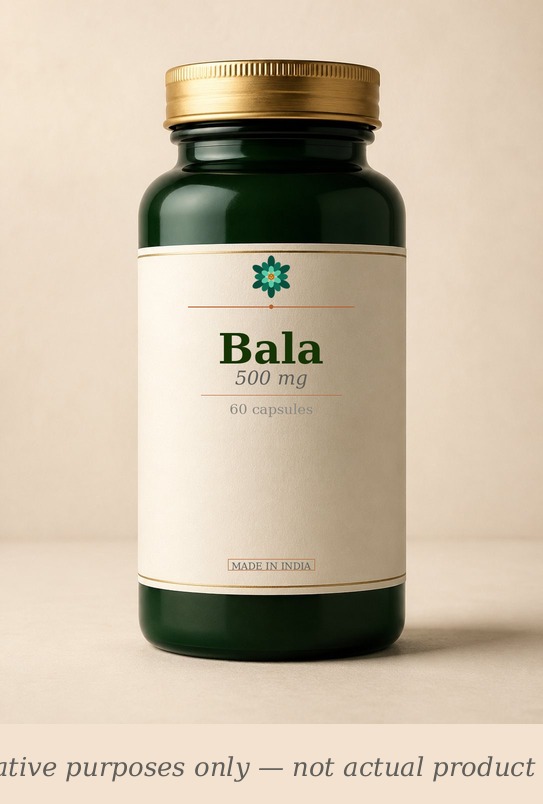
SacredBod's longer take on Bala — context the structured blocks above don't capture.
What It Is
Bala (Sida cordifolia L.), meaning ‘strength’ in Sanskrit, is a perennial subshrub in the Malvaceae family. Its roots are one of the most important Ayurvedic tonics, classified as balya (strength-promoting) and vata-hara (Vata-pacifying). The root contains alkaloids (ephedrine, pseudoephedrine), flavonoids, and hypaphorine, contributing to its analgesic, anti-inflammatory, and adaptogenic properties. It is mentioned in Charaka Samhita and Sushruta Samhita for treating neurological disorders, facial paralysis, and sciatica.
How It Works
Bala root extracts demonstrate analgesic activity through both central and peripheral mechanisms, comparable to standard NSAIDs in animal models. The anti-inflammatory effect is mediated via prostaglandin inhibition and cytokine modulation. Hypaphorine, an alkaloid isolated from the root, increases non-REM sleep time and shows anti-inflammatory activity. Adaptogenic effects are evidenced by improved swim endurance, reduced cortisol, and normalized blood glucose under stress in animal studies. A 2024 study showed Bala attenuates neuropathic pain by interfering with KIF17-NR2B signaling.
Who Should Consider It
Individuals seeking Ayurvedic adaptogenic and strength-building support, those with Vata-dominant constitution experiencing weakness or nerve discomfort, athletes and physically active individuals, and people recovering from illness or neurological conditions like facial paralysis or sciatica (under Ayurvedic practitioner guidance).
Dosage Guide
Typical dose: 500 mg per day
Form: capsules (60 count)
Best time: morning
With food: with-food
Expected onset: 2–4 weeks for adaptogenic benefits; 6–8 weeks for muscle and nerve support
Cycling: No cycling required. Traditional Ayurvedic use supports continuous daily intake as a Rasayana.
Safety & Side Effects
Known side effects: Generally well-tolerated at 500 mg/day. Contains trace ephedrine alkaloids; may cause mild stimulant effects (increased heart rate, insomnia) in sensitive individuals at high doses. Low acute toxicity demonstrated in animal studies.
Who should avoid: Individuals with hypertension, cardiac arrhythmias, or sensitivity to stimulants (due to ephedrine content). Pregnant and breastfeeding women. Those taking MAO inhibitors or stimulant medications. Not for children.
Avoid combining with: MAO inhibitors, Stimulant medications, Decongestants containing pseudoephedrine, Beta-blockers
India-Specific Context
Bala is available on Amazon India with several Ayurvedic and herbal brands. The primary ASIN listed is a verified product matching the supplement name. Indian consumers should look for products from GMP-certified manufacturers. Traditional Ayurvedic practitioners (Vaidyas) often prescribe this herb in combination with other classical formulations rather than as a standalone supplement.
Sanskrit/Hindi names: See quick facts above.
Classical Ayurvedic texts: Bala is referenced in Charaka Samhita and/or Sushruta Samhita as detailed in the quick facts.
Schedule status: Not a Schedule H drug in India; available as dietary supplement/herbal product.
Research Summary
Key citations: PMID 10189958 (analgesic, antiinflammatory and hypoglycaemic activities), PMID 10967481 (anti-inflammatory and analgesic activity), PMID 2865797 (antistress and adaptogenic activity in mice)
Evidence grade: C — Animal studies; no human RCTs identified