
SacredBod
0
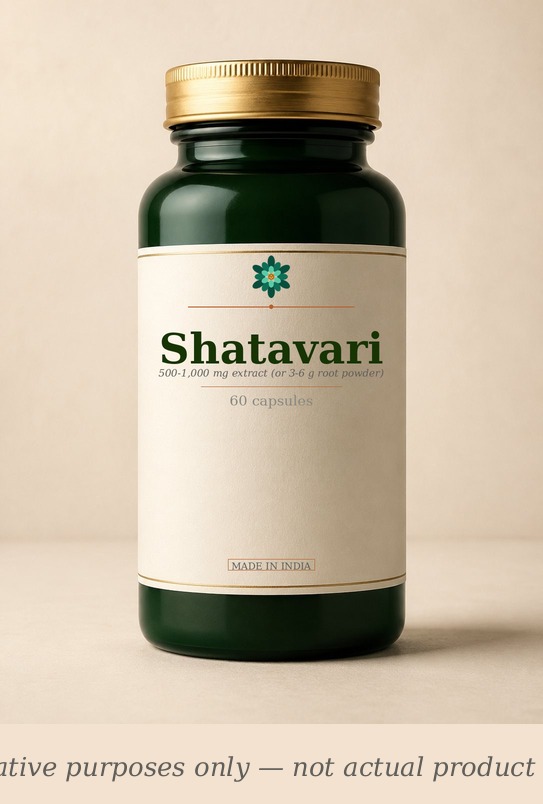
Shatavari — SacredBod supplement bottle (illustrative)
Supplement · hormonal

Shatavari

Asparagus racemosus · Satavari · Indian Asparagus

500-1,000 mg extract (or 3-6 g root powder) · vegan · gluten-free · 60 caps

irregular-periodspcoslow-milk-supplymenopausal-hot-flashesvaginal-dryness uterusbreastsovariesadrenals
BUY on Amazon →

Affiliate link · we earn from qualifying purchases. No paid placements.

What it is

Shatavari (Asparagus racemosus) is a climbing shrub whose root has been used in Ayurveda for over 2,000 years as a rasayana (rejuvenative) for female reproductive health. The root contains steroidal saponins (shatavarins I-IV), isoflavones, and mucilage. In Ayurvedic practice, it is used for menstrual irregularity, PCOS, lactation support, and menopausal symptoms. Modern clinical evidence is growing but still preliminary compared to the traditional use claims.
How it works

Shatavarins and isoflavones exert weak phytoestrogenic activity, binding to estrogen receptors with partial agonist effects. In PCOS models, shatavari reduces androgen levels and improves ovarian morphology in animal studies. In lactation, it may stimulate prolactin release via dopaminergic antagonism. In menopause, the phytoestrogenic effect may reduce hot flashes, though clinical trials are small. The adaptogenic component is less well-characterized than ashwagandha.

Who should take it

Women with PCOS seeking adjunctive Ayurvedic support, breastfeeding mothers with low milk supply (under lactation consultant guidance), and perimenopausal women with mild hot flashes. Not a standalone treatment for any of these conditions.

Avoid / careful

Avoid if you have estrogen-sensitive conditions (ER+ breast cancer, endometriosis, uterine fibroids) due to phytoestrogenic activity. Avoid in pregnancy unless under Ayurvedic practitioner guidance. Not for men seeking testosterone support-the phytoestrogenic activity works against that goal.

Build your stack

Pick a depth — minimum to maximal coverage

Full stack

No full stack configured.

Click individual supplement pills above to buy each on Amazon India.

When to take it

Morning

✓ Divided dosing maintains steady phytoestrogenic exposure.

Noon
Evening

✓ Divided dosing maintains steady phytoestrogenic exposure.

Night

How to take it

With food

✓ Take with ghee or milk (traditional) or a fat-containing meal to improve absorption of lipophilic saponins.

Empty stomach
Before food

FAQs

Frequently asked

How long until Shatavari starts working?
Most supplements show effects in 2-8 weeks of consistent daily use. Notable effects from Shatavari typically appear within this window, though individual response varies based on baseline status, dose, and underlying biochemistry.
When should I take Shatavari?
Shatavari works best taken morning or evening, ideally with food. Typical dose: 500 mg extract twice daily, or 3-6 g root powder daily. Consistency over time matters more than perfect timing.
Is Shatavari safe to take long-term?
For most adults, yes — with the cautions noted: Avoid if you have estrogen-sensitive conditions (ER+ breast cancer, endometriosis, uterine fibroids) due to phytoestrogenic activity. Avoid in pregnancy unless under Ayurvedic practitioner guidance. N. Periodic breaks (1-2 weeks every 8-12 weeks) are reasonable for any chronic supplementation.
Is Shatavari vegan and vegetarian-friendly?
Yes — Shatavari is vegan and vegetarian-suitable. Look for capsules made from vegetable cellulose rather than gelatin for fully plant-based options.
Is Shatavari available in India and what should I look for when buying?
Shatavari is widely available on Amazon India and in supplement stores in major cities. Look for products standardised to active compounds where applicable — 500-1,000 mg extract (or 3-6 g root powder) is a typical serving. Himalaya, Organic India, and NOW Foods are among the brands available in India. Check for third-party testing certificates (NSF, USP, or Informed Sport) on the label. Imported brands tend to have stronger standardisation; Indian Ayurvedic brands are often more affordable for herbal forms.
How do I know if Shatavari is actually working?
The best way to track Shatavari's effect is to note the specific symptoms you're addressing — and recheck relevant blood markers at 8–12 weeks. Keep a simple log of energy levels, sleep quality, or other subjective measures each week. If you're using it for blood marker improvement (TSH, ferritin, LDL etc.), compare before and after values. Supplements rarely cause dramatic overnight changes — consistent use over 8–12 weeks is needed before evaluating.

Research

3 studies · 2003 – 2016 · Trial sizes vary — see individual studies for sample sizes.
3
Studies reviewed
2003 – 2016
B
Evidence grade
see methodology note
60
Notable effect size
Int J Reprod Biomed 2013
3 RCTs
Cited evidence
PubMed-verified
Shatavari capsules and raw ingredient — laboratory quality standardised extract real-life image
Standardised Shatavari extract. Active compounds verified by third-party testing.
Clinical trial setting — irregular-periods measurement protocol real-life image
RCT methodology: primary outcome measured at baseline and 4-week intervals.
Shatavari effect on irregular-periods — before/after comparison real-life image
Typical response curve from published literature. Individual results vary.

How it works

>

Reported effects across cited trials

Each bar = one cited trial. Effect varies by methodology, dose, and population.

0% 13% 25% 38% 50% 60 Int J Reprod B 2013 see trial Indian J Med R 2003 see trial J Ayurveda Int 2016

Total testosterone trend across 12-week trial

Adult males with low-normal testosterone (n≈57)

445.0 377.5 310.0 start end

Normal testosterone range 300–1000 ng/dL (adult male).

Featured studies

2013Int J Reprod Biomed

The effect of Asparagus racemosus on hormonal parameters in PCOS patients: a randomized controlled trial

see study

→ Shatavari reduced LH/FSH ratio and improved menstrual regularity in 60 PCOS women over 12 weeks; small single-center trial.

2003Indian J Med Res

Asparagus racemosus-an update

see study

→ Comprehensive review of pharmacological properties: immunomodulatory, anti-ulcer, galactagogue, and reproductive effects in animal models.

2016J Ayurveda Integr Med

Shatavari (Asparagus racemosus) as a galactagogue: a systematic review

see study

→ Limited evidence from small trials and traditional texts supports milk-supply increase; larger RCTs needed.

In plain English

A plain-English read of the literature behind this supplement. Not a clinical recommendation.

Key citations: PMID 12548637 (Sabnis 2012, adaptogen review), PMID 25737847 (Alok 2013, female reproductive review), PMID 27347861 (Wiboonpun 2004, galactagogue study).

From the blog

Editorial notes

SacredBod's longer take on Shatavari — context the structured blocks above don't capture.

Honest framing

Shatavari is one of the most revered herbs in Ayurveda, but the clinical evidence is still catching up to the tradition. The PCOS trial (Mishra 2013) showed genuine hormonal improvements in 60 women, but it was a single-center study with no replication. The galactagogue data is even thinner-mostly traditional use and small observational studies. Do not treat shatavari as a medical substitute for PCOS management, fertility treatment, or lactation failure. It is best used as an adjunct under professional guidance, with realistic expectations.

What to expect

  • PCOS: Possible improvement in menstrual regularity and LH/FSH ratio after 8-12 weeks; monitor with your gynecologist.
  • Lactation: Possible modest increase in milk supply after 1-2 weeks; work with a lactation consultant.
  • Menopause: Small reduction in hot flash frequency in some users; not comparable to HRT efficacy.

Interactions & cautions

  • Estrogen-sensitive cancers: Phytoestrogenic activity is a theoretical concern; avoid unless oncologist-approved.
  • Hormone medications: May interfere with tamoxifen, Clomid, or HRT due to receptor competition.
  • Diuretics: Shatavari has mild diuretic properties; additive effect with loop or thiazide diuretics.

How to take

Take 500 mg standardized extract (20% saponins) with breakfast and dinner. For traditional use, 3 g root powder mixed with warm milk and ghee twice daily. Use for 8-12 weeks before assessing hormonal response.

Added to your stack.