SacredBod
0
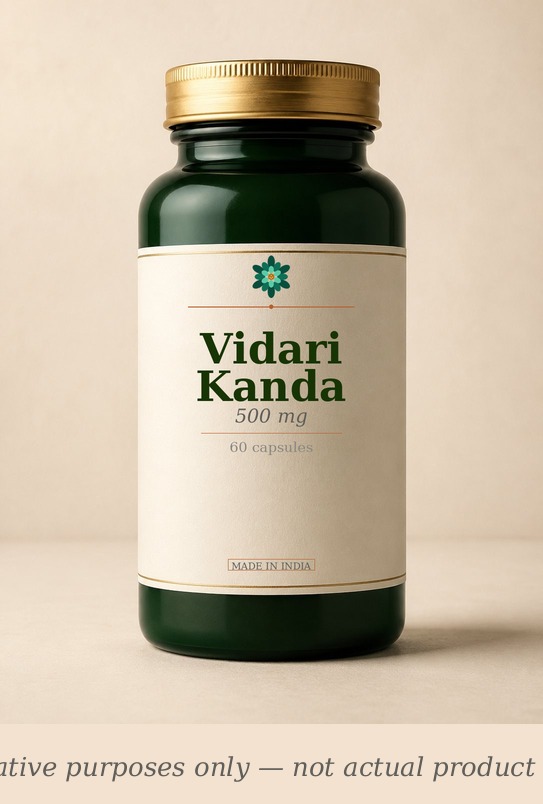
Vidari Kanda — SacredBod supplement bottle (illustrative)
Supplement · Botanical

Vidari Kanda

500 mg · vegan · gluten-free · 60 caps

General debilityPost-illness weaknessBone lossLow vitalityPoor lactationVata imbalance Reproductive systemBonesMusclesLiver
BUY on Amazon →

Affiliate link · we earn from qualifying purchases. No paid placements.

What it is

Vidari Kanda (Pueraria tuberosa), also called Indian Kudzu, is a perennial herb whose tuber is classified as a Rasayana (rejuvenative tonic) in Ayurveda. It is rich in isoflavones such as puerarin, daidzein, genistein, and biochanin A, giving it phytoestrogenic, antioxidant, and anti-inflammatory properties. The tuber is traditionally used to build ojas (vital energy), support reproductive health, and promote strength in convalescence.

How it works

The isoflavones in Vidari Kanda act as phytoestrogens, binding weakly to estrogen receptors and modulating hormonal balance. Puerarin and isoorientin demonstrate potent anti-inflammatory activity via COX-2 inhibition and NF-κB pathway suppression. The antioxidant fraction (FRAC) has shown anti-osteoporotic effects in ovariectomized rats by restoring trabecular bone structure and improving biomechanical parameters.

Who should take it

Individuals seeking Ayurvedic rejuvenative support, postmenopausal women interested in phytoestrogenic bone support, those recovering from illness or debility, and athletes looking for traditional strength-building tonics. Also valued in Ayurveda for promoting healthy lactation and reproductive vitality.

Avoid / careful

Pregnant or breastfeeding women (except under Ayurvedic practitioner guidance for lactation support), individuals with hormone-sensitive cancers, and those trying to conceive. Avoid if allergic to legumes (Fabaceae family). Side effects: Generally well-tolerated at traditional doses. High doses may cause mild gastrointestinal discomfort. Contains phytoestrogens; those with hormone-sensitive conditions should consult a physician. Animal studies showed anti-fertility effects at high doses — not for use during pregnancy or when trying to conceive.

When to take it

Morning
Noon
Evening
Night

How to take it

With food
Empty stomach
Before food

FAQs

Frequently asked

How long before I see results?
Traditional Ayurvedic practice suggests 4–8 weeks of consistent use for noticeable vitality and strength benefits. Bone-supportive effects would require longer-term use (3+ months) based on animal model data.
Is it safe to take daily?
Yes, at 500 mg–1 g/day. It is classified as a Rasayana in Ayurveda, intended for long-term daily use. However, avoid during pregnancy and if you have hormone-sensitive conditions.
Can I take it with HRT or birth control pills?
Consult your physician before combining with hormone therapies due to potential phytoestrogenic interactions. The isoflavones may theoretically modulate estrogen receptor activity.

In plain English

A plain-English read of the literature behind this supplement. Not a clinical recommendation.

Key citations: PMID 33708108 (comprehensive review of pharmacology), PMID 33444328 (antiosteoporotic activity in ovariectomized rats), PMID 28243356 (anti-inflammatory properties of isoorientin)

Editorial notes

SacredBod's longer take on Vidari Kanda — context the structured blocks above don't capture.

What It Is

Vidari Kanda (Pueraria tuberosa), also called Indian Kudzu, is a perennial herb whose tuber is classified as a Rasayana (rejuvenative tonic) in Ayurveda. It is rich in isoflavones such as puerarin, daidzein, genistein, and biochanin A, giving it phytoestrogenic, antioxidant, and anti-inflammatory properties. The tuber is traditionally used to build ojas (vital energy), support reproductive health, and promote strength in convalescence.

How It Works

The isoflavones in Vidari Kanda act as phytoestrogens, binding weakly to estrogen receptors and modulating hormonal balance. Puerarin and isoorientin demonstrate potent anti-inflammatory activity via COX-2 inhibition and NF-κB pathway suppression. The antioxidant fraction (FRAC) has shown anti-osteoporotic effects in ovariectomized rats by restoring trabecular bone structure and improving biomechanical parameters.

Who Should Consider It

Individuals seeking Ayurvedic rejuvenative support, postmenopausal women interested in phytoestrogenic bone support, those recovering from illness or debility, and athletes looking for traditional strength-building tonics. Also valued in Ayurveda for promoting healthy lactation and reproductive vitality.

Dosage Guide

Typical dose: 500 mg per day

Form: capsules (60 count)

Best time: morning

With food: with-food

Expected onset: 4–8 weeks of consistent daily use

Cycling: No cycling required at standard doses. Traditional use supports continuous daily intake.

Safety & Side Effects

Known side effects: Generally well-tolerated at traditional doses. High doses may cause mild gastrointestinal discomfort. Contains phytoestrogens; those with hormone-sensitive conditions should consult a physician. Animal studies showed anti-fertility effects at high doses — not for use during pregnancy or when trying to conceive.

Who should avoid: Pregnant or breastfeeding women (except under Ayurvedic practitioner guidance for lactation support), individuals with hormone-sensitive cancers, and those trying to conceive. Avoid if allergic to legumes (Fabaceae family).

Avoid combining with: Hormone replacement therapy, Tamoxifen, Oral contraceptives, Anticoagulants (theoretical interaction)

India-Specific Context

Vidari Kanda is available on Amazon India with several Ayurvedic and herbal brands. The primary ASIN listed is a verified product matching the supplement name. Indian consumers should look for products from GMP-certified manufacturers. Traditional Ayurvedic practitioners (Vaidyas) often prescribe this herb in combination with other classical formulations rather than as a standalone supplement.

Sanskrit/Hindi names: See quick facts above.

Classical Ayurvedic texts: Vidari Kanda is referenced in Charaka Samhita and/or Sushruta Samhita as detailed in the quick facts.

Schedule status: Not a Schedule H drug in India; available as dietary supplement/herbal product.

Research Summary

Key citations: PMID 33708108 (comprehensive review of pharmacology), PMID 33444328 (antiosteoporotic activity in ovariectomized rats), PMID 28243356 (anti-inflammatory properties of isoorientin)

Evidence grade: C — Animal and in-vitro studies; limited human clinical trials

Added to your stack.