
SacredBod
0
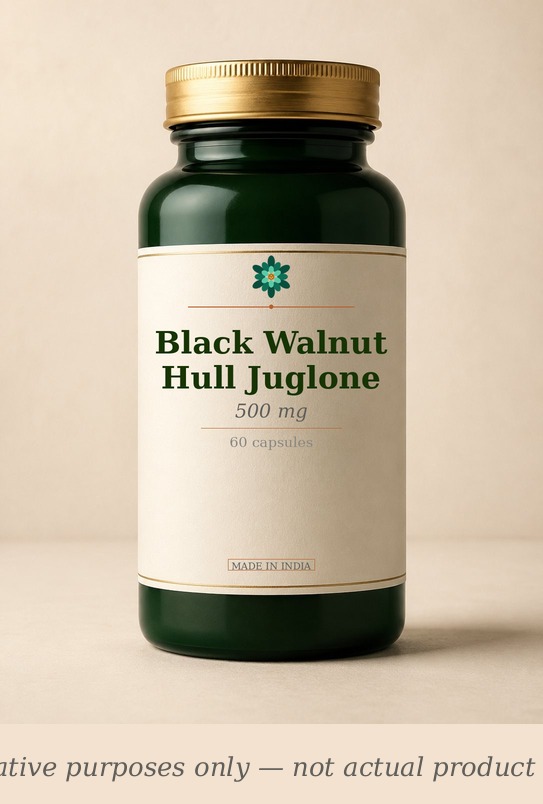
Black Walnut Hull Juglone — SacredBod supplement bottle (illustrative)
Supplement · Antimicrobial & Anti-Candida

Black Walnut Hull Juglone

500 mg · vegan · gluten-free · 60 caps

Intestinal parasitesCandida overgrowthChronic bloatingUnexplained fatigueItchy anusDigestive upset GutLiverIntestines
BUY on Amazon →

Affiliate link · we earn from qualifying purchases. No paid placements.

What it is

Juglans nigra (black walnut) hull extract contains juglone (5-hydroxy-1,4-naphthoquinone) — a phenolic compound with documented antiparasitic, antifungal, and immunomodulatory properties. The green hulls harvested before nut hardening contain the highest juglone concentration. Black walnut has been used in traditional American herbalism for over 200 years for intestinal parasites and fungal infections.

How it works

Juglone exerts antiparasitic effects by interfering with the energy metabolism of helminths and protozoa, inhibiting mitochondrial function and ATP production. In fungi, juglone disrupts cell wall integrity and inhibits ergosterol synthesis. It also has immunomodulatory properties — reducing pro-inflammatory cytokines (IL-4, IL-13, TNF-α) while enhancing antioxidant enzymes (catalase, SOD, GSH) in infected tissues. The 2022 murine schistosomiasis study demonstrated 63.1% reduction in male worms and 65.7% reduction in tissue egg burden.

Who should take it

Individuals with suspected intestinal parasites (helminths, protozoa); those with candida overgrowth seeking adjunctive botanical support; and individuals with chronic gut inflammation who may benefit from juglone's immunomodulatory and antioxidant effects.

Avoid / careful

Pregnant or breastfeeding women; children under 12 years; individuals with nut allergies (Juglans family); those with chronic kidney or liver disease. Side effects: Mild stomach upset, nausea, or loose stools in some users. Rare skin irritation. The hulls contain tannins that may cause constipation in sensitive individuals.

When to take it

Morning
Noon
Evening
Night

How to take it

With food
Empty stomach
Before food

FAQs

Frequently asked

How long before I see results?
For intestinal parasites, 2–4 weeks of daily use is the traditional protocol. The murine schistosomiasis study showed significant worm and egg burden reduction after a treatment course. For candida, black walnut is typically used as an adjunct to other antifungals (oregano, caprylic acid) for 3–6 weeks.
Is it safe for daily use?
Black walnut hull is generally safe for 4–6 week courses. The tannins in the hull can be harsh on the digestive system if used indefinitely. We recommend cycling — 4–6 weeks on, 2 weeks off — and not using continuously for more than 3 months without a break.
Can it replace prescription antiparasitics?
No. While juglone has demonstrated significant antiparasitic activity in animal models, human clinical data is limited. For confirmed parasitic infections (e.g., helminths, schistosomiasis, giardia), prescription antiparasitics (albendazole, praziquantel, metronidazole) remain first-line. Black walnut can be used as an adjunct or for preventive support in high-risk travel scenarios.

In plain English

A plain-English read of the literature behind this supplement. Not a clinical recommendation.

Key citations: PMID 36461604 (Juglone as antiparasitic, immunomodulatory and hepatoprotective agent — Khalil et al. 2022), PMID 11855736 (complementary oregano antifungal evidence), PMC8954725 (complementary fatty acid antifungal review)

Editorial notes

SacredBod's longer take on Black Walnut Hull Juglone — context the structured blocks above don't capture.

What Black Walnut Hull Is

Juglans nigra, commonly known as black walnut, is a large deciduous tree native to North America. Unlike the English walnut (Juglans regia) commonly eaten in India, the black walnut’s green hulls — the fleshy outer covering of the nut — contain juglone (5-hydroxy-1,4-naphthoquinone), a potent phenolic compound with antiparasitic, antifungal, and immunomodulatory properties.

Black walnut hull has been a cornerstone of American eclectic herbalism for over 200 years, traditionally used for intestinal worms, skin fungus, and as a general “blood purifier.” Modern research has validated the antiparasitic activity of juglone in animal models, though human clinical trials remain limited.

How It Works

  1. Antiparasitic — Juglone interferes with energy metabolism in helminths and protozoa by inhibiting mitochondrial enzymes and reducing ATP production. The 2022 study showed 63.1% reduction in male worms and 52.1% in female worms in schistosomiasis-infected mice.
  2. Antifungal — Juglone disrupts fungal cell wall integrity and inhibits ergosterol synthesis, making it active against Candida species.
  3. Immunomodulation — Reduces Th2 cytokines (IL-4, IL-13) that drive parasitic immunopathology while enhancing IL-10 and IL-17 for balanced immune response.
  4. Hepatoprotection — In infected mice, juglone restored hepatic ALT, AST, GGT, and LDH activities while increasing catalase, SOD, and glutathione.
  5. Antioxidant — Scavenges free radicals and reduces lipid peroxidation in inflamed tissues.

Who Benefits Most

  • Suspected intestinal parasite cases — Unexplained fatigue, bloating, itchy anus, or travel history to endemic regions.
  • Candida overgrowth — As an adjunct to primary antifungal therapy.
  • Chronic gut inflammation — Juglone’s immunomodulatory and antioxidant effects may reduce tissue damage.
  • Preventive travellers — Those visiting parasite-endemic regions who want botanical prophylaxis.

Dosage Guide

GoalDoseDuration
Parasite cleanse500 mg 2× daily4–6 weeks
Candida adjunct500 mg 1–2× daily3–6 weeks
General gut support500 mg/day2–4 weeks

Take with meals to reduce stomach upset. The hull extract is bitter and tannin-rich.

Safety & Interactions

  • Nut allergy: Avoid if allergic to walnuts or tree nuts.
  • Pregnancy: Not recommended — juglone may be cytotoxic to dividing cells.
  • Children: Not for use under 12.
  • Iron: Tannins reduce absorption; separate from iron supplements.
  • Kidney/liver disease: Use caution; consult physician.

India-Specific Context

  • Availability: Standalone black walnut hull capsules are not available on Amazon.in as of May 2026. Some imported combination “parasite cleanse” products may contain black walnut alongside wormwood and clove, but standalone hull extract is absent.
  • Regulatory status: Black walnut is not a Schedule H drug in India but is not widely marketed as a supplement.
  • Ayurvedic parallel: Black walnut has no direct equivalent in Ayurvedic texts. The closest classical antiparasitic herbs are Kutaja (Holarrhena antidysenterica), Vidanga (Embelia ribes), and Neem (Azadirachta indica). In modern Indian integrative medicine, black walnut is sometimes used alongside these classical herbs for a “East-West” antiparasitic protocol.
  • Import option: Black walnut hull capsules from brands like Nature’s Way, NOW Foods, or Dr. Christopher’s cost approximately $10–15 for 100 capsules plus shipping (roughly ₹1,200–2,000 total).
  • Culinary note: English walnut (akhrot) is widely consumed in India for brain health (Medhya Rasayana). Black walnut is a different species with distinct medicinal properties focused on the green hull rather than the nut kernel.
Added to your stack.