
SacredBod
0
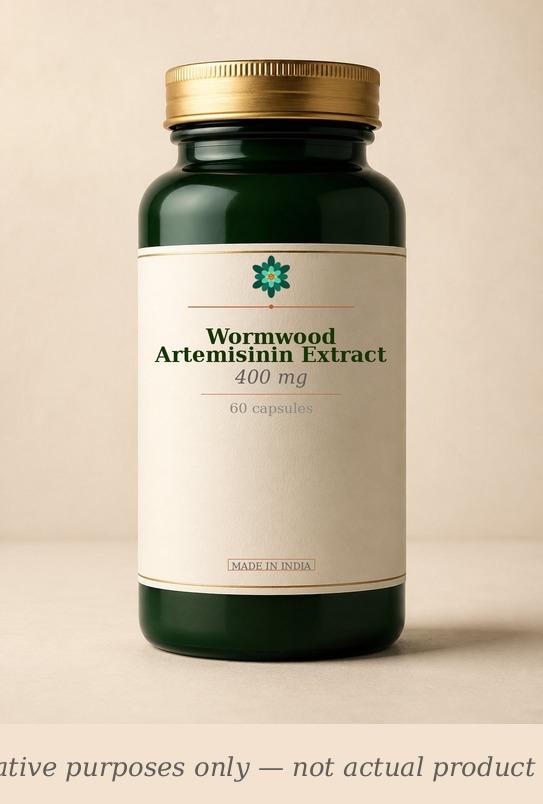
Wormwood Artemisinin Extract — SacredBod supplement bottle (illustrative)
Supplement · Antimicrobial & Anti-Candida

Wormwood Artemisinin Extract

400 mg · vegan · gluten-free · 60 caps

Parasitic infectionMalaria (adjunct/prophylaxis)Candida overgrowthBiofilm-associated infectionIntestinal dysbiosisFever BloodLiverGutSpleen
BUY on Amazon →

Affiliate link · we earn from qualifying purchases. No paid placements.

What it is

Artemisia annua (sweet wormwood or qinghao) is an annual herb whose leaves contain artemisinin — a sesquiterpene lactone that is the basis of the world's most effective antimalarial drugs (artemisinin-based combination therapies, ACTs). Standardised extracts (typically 5% artemisinin) also demonstrate broad antimicrobial activity against bacteria, fungi, and parasites beyond malaria. The 2025 study showed that whole-plant extracts have 10× higher antimalarial efficacy than isolated artemisinin due to synergistic phytochemicals.

How it works

Artemisinin contains an endoperoxide bridge that is cleaved by intracellular iron (particularly high in parasites and cancer cells), generating reactive oxygen species (ROS) that destroy the organism. In bacteria and fungi, artemisinin disrupts cell membrane integrity, inhibits biofilm formation, and interferes with energy metabolism. The whole-plant matrix contains flavonoids, phenolic acids, and polysaccharides that enhance artemisinin bioavailability and prolong its activity.

Who should take it

Individuals with parasitic infections (malaria prophylaxis in endemic areas, intestinal parasites); those with candida overgrowth or biofilm-associated infections; and individuals seeking an evidence-based botanical antimicrobial with Nobel Prize-winning scientific pedigree.

Avoid / careful

Pregnant or breastfeeding women; children under 12; individuals with G6PD deficiency (favism); those with severe liver or kidney disease; people on anticoagulants. Side effects: Mild nausea, dizziness, or stomach upset in some users. Rare neurotoxicity at very high doses or prolonged use. Artemisinin can cause haemolysis in G6PD-deficient individuals (common in India).

When to take it

Morning
Noon
Evening
Night

How to take it

With food
Empty stomach
Before food

FAQs

Frequently asked

How long before I see results?
For acute parasitic symptoms (fever, chills), artemisinin acts rapidly — within 24–48 hours. For intestinal parasites and candida, 2–4 weeks of daily use is needed. The 2025 study showed that whole-plant extracts cleared malaria parasites 10× more effectively than isolated artemisinin at equivalent doses, highlighting the importance of the full phytochemical matrix.
Is it safe for daily use?
Artemisinin should be cycled. Continuous use beyond 8 weeks may cause neurotoxicity or haemolysis (especially in G6PD deficiency, which affects ~8% of Indian males). The standard protocol is 2–4 weeks on, 1 week off. Always screen for G6PD deficiency before prolonged use.
Can it prevent malaria?
Artemisinin-based combination therapies (ACTs) are the WHO-recommended first-line treatment for malaria. However, prophylactic use of artemisinin supplements is not recommended due to the risk of resistance development and potential toxicity. For malaria-endemic regions in India (northeastern states, Odisha, Chhattisgarh), use WHO-approved chemoprophylaxis (doxycycline, atovaquone-proguanil) rather than supplements.

In plain English

A plain-English read of the literature behind this supplement. Not a clinical recommendation.

Key citations: PMID 40334250 (Plant matrix of Artemisia annua for malaria — Xu et al. 2025), PMC3915762 (Antimicrobial activity of artemisinin and precursors — in vitro study), PMID 36461604 (complementary juglone antiparasitic evidence)

Editorial notes

SacredBod's longer take on Wormwood Artemisinin Extract — context the structured blocks above don't capture.

What Wormwood Artemisinin Is

Artemisia annua, known as sweet wormwood, qinghao (青蒿), or annual mugwort, is a medicinal plant from the Asteraceae family that has been used in traditional Chinese medicine for over 2,000 years. Its modern fame comes from the 1972 isolation of artemisinin by Chinese scientist Tu Youyou — a discovery that revolutionised malaria treatment and earned the 2015 Nobel Prize in Physiology or Medicine.

While artemisinin is best known as an antimalarial, the whole-plant extract contains a rich matrix of flavonoids, phenolic acids, and polysaccharides that enhance the activity of isolated artemisinin. The 2025 study demonstrated that whole-plant extracts are approximately 10× more effective than pure artemisinin alone at equivalent doses — a powerful argument for using standardised botanical extracts rather than isolated compounds.

How It Works

  1. Endoperoxide cleavage — Artemisinin contains an unusual endoperoxide bridge that is cleaved by intracellular iron, generating carbon-centred free radicals. These radicals alkylate proteins and membranes, destroying the parasite from within.
  2. Biofilm disruption — Artemisinin inhibits Candida biofilm formation and disrupts existing biofilms, which are the primary barrier to antifungal treatment.
  3. Antibacterial — Active against E. coli, Staphylococcus aureus, Pseudomonas aeruginosa, and Mycobacterium intracellulare in vitro.
  4. Immunomodulation — Flavonoids in the whole-plant extract modulate cytokine production and enhance macrophage activity.
  5. Enhanced bioavailability — The plant matrix inhibits P-glycoprotein efflux, increasing artemisinin absorption and extending its half-life.

Who Benefits Most

  • Parasite-exposed individuals — Those living in or travelling to malaria-endemic regions of India (northeastern states, tribal belts).
  • Candida biofilm sufferers — Artemisinin’s biofilm-disrupting property is unique among natural antifungals.
  • SIBO/dysbiosis patients — Broad-spectrum antibacterial activity against gut pathogens.
  • Biohackers — The Nobel Prize-winning science behind this herb makes it one of the most credible botanical antimicrobials.

Dosage Guide

GoalDoseDuration
Parasite support400 mg (5% artemisinin) 2× daily2–4 weeks
Candida/biofilm400 mg 2× daily3–4 weeks
General antimicrobial400 mg/day2–3 weeks
Malaria (adjunct only)As per physician guidancePer protocol

Take with fat-containing meals — artemisinin is lipophilic and absorption increases with dietary fat.

Safety & Interactions

  • G6PD deficiency: ~8% of Indian males have G6PD deficiency. Artemisinin can cause haemolysis in these individuals. Screen before use.
  • Pregnancy: Contraindicated — artemisinin derivatives are used for malaria in pregnancy only under strict medical supervision.
  • Neurotoxicity: Very high doses or prolonged use may cause neurotoxicity in animal models; stick to standard doses and cycle.
  • Iron: Iron supplements may enhance artemisinin’s toxicity; avoid concurrent use.
  • Anticoagulants: May increase bleeding risk.

India-Specific Context

  • Availability: Vaastavik Sweet Wormwood Capsule (B0C3MLXZ6J — 5% artemisinin, 400mg, 60 capsules) is available on Amazon.in. Generic Artemisinin 200mg (B0GMKLZGC9 — 120 capsules) and Paraciclon-W 400mg (B0G1CRJRJ3) are also listed. Prices range from ₹600–₹1,200.
  • Regulatory status: Artemisinin is a prescription antimalarial drug in India under the National Malaria Elimination Programme. However, dietary supplements containing Artemisia annua extract at ≤5% artemisinin are sold as herbal supplements and are not Schedule H drugs.
  • Malaria relevance: India accounts for ~3% of global malaria cases, with highest burden in Odisha, Chhattisgarh, Jharkhand, and northeastern states. While supplements are not a substitute for ACTs, they represent an adjunctive option for gut health and general antimicrobial support.
  • Ayurvedic parallel: While not in classical Ayurvedic texts, Artemisia’s antipyretic action aligns with Kalmegh (Andrographis paniculata) and Tulsi (Ocimum sanctum) — both used for fever and infections in Ayurveda.
  • Nobel Prize significance: Tu Youyou’s 2015 Nobel Prize brought global attention to traditional Chinese medicine’s value. In India, this parallels the ongoing effort to validate Ayurvedic remedies through modern clinical research.
Added to your stack.