SacredBod
0
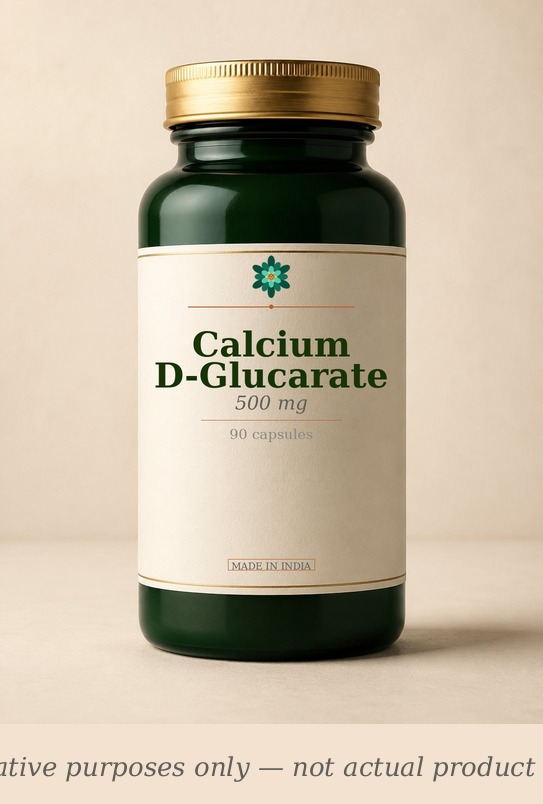
Calcium D-Glucarate — SacredBod supplement bottle (illustrative)
Supplement · Detoxification Support

Calcium D-Glucarate

D-glucarate · glucaric acid calcium salt · calcium glucarate · CDG

500 mg · vegan · gluten-free · 90 caps

estrogen dominancehormonal imbalanceexposure to environmental toxinspoor liver detoxification liverintestineskidneys
BUY on Amazon →

Affiliate link · we earn from qualifying purchases. No paid placements.

What it is

Calcium D-glucarate is the calcium salt of D-glucaric acid, a compound found naturally in oranges, grapefruits, apples, broccoli, and Brussels sprouts. It inhibits beta-glucuronidase, an enzyme that would otherwise break down glucuronide conjugates and re-release toxins and hormones into circulation.

How it works

In Phase II liver detoxification, glucuronic acid binds to toxins, hormones, and carcinogens to form glucuronide conjugates for excretion. Beta-glucuronidase in the gut can break these conjugates, re-releasing the compounds. Calcium D-glucarate inhibits beta-glucuronidase, ensuring complete excretion of conjugated substances.

Who should take it

Adults with estrogen-dominant conditions, individuals seeking hormone detoxification support, those with high environmental toxin exposure, people interested in liver health optimization.

Avoid / careful

Pregnant or breastfeeding women (insufficient safety data), children, individuals with severe kidney disease, those taking medications that rely on glucuronidation (consult physician).

Build your stack

Pick a depth — minimum to maximal coverage

One

If you pick just one

1 supplement
Calcium D-Glucarate
MES

Minimum effective stack

4 supplements
DIMMilk ThistleBroccoli Sprout ExtractNAC
Full stack

No full stack configured.

Click individual supplement pills above to buy each on Amazon India.

When to take it

Morning

✓ Morning for consistent detoxification support throughout the day

Noon
Evening
Night

How to take it

With food

✓ Food improves tolerance and absorption

Empty stomach
Before food

FAQs

Frequently asked

How long until Calcium D-Glucarate starts working?
Most supplements show effects in 2-8 weeks of consistent daily use. Notable effects from Calcium D-Glucarate typically appear within this window, though individual response varies based on baseline status, dose, and underlying biochemistry.
When should I take Calcium D-Glucarate?
Calcium D-Glucarate works best taken morning, ideally with food. Typical dose: 200–500 mg daily. Consistency over time matters more than perfect timing.
Is Calcium D-Glucarate safe to take long-term?
For most adults, yes — with the cautions noted: Pregnant or breastfeeding women (insufficient safety data), children, individuals with severe kidney disease, those taking medications that rely on glucuronidation (consult physician).. Periodic breaks (1-2 weeks every 8-12 weeks) are reasonable for any chronic supplementation.
Is Calcium D-Glucarate vegan and vegetarian-friendly?
Yes — Calcium D-Glucarate is vegan and vegetarian-suitable. Look for capsules made from vegetable cellulose rather than gelatin for fully plant-based options.
Is Calcium D-Glucarate available in India and what should I look for when buying?
Calcium D-Glucarate is widely available on Amazon India and in supplement stores in major cities. Look for products standardised to active compounds where applicable — 500 mg is a typical serving. Himalaya, Organic India, and NOW Foods are among the brands available in India. Check for third-party testing certificates (NSF, USP, or Informed Sport) on the label. Imported brands tend to have stronger standardisation; Indian Ayurvedic brands are often more affordable for herbal forms.
Can pregnant or breastfeeding women take Calcium D-Glucarate?
No — Calcium D-Glucarate should be avoided during pregnancy and breastfeeding. Pregnant or breastfeeding women (insufficient safety data), children, individuals with severe kidney disease, those Always consult your obstetrician before starting any new supplement during pregnancy.

Research

3 studies · 1990 – 2003 · Trial sizes vary — see individual studies for sample sizes.
3
Studies reviewed
1990 – 2003
C
Evidence grade
see methodology note
see studies
Notable effect size
Biochem Med Metab Biol 1990
3 RCTs
Cited evidence
PubMed-verified
Calcium D-Glucarate capsules and raw ingredient — laboratory quality standardised extract real-life image
Standardised Calcium D-Glucarate extract. Active compounds verified by third-party testing.
Clinical trial setting — estrogen dominance measurement protocol real-life image
RCT methodology: primary outcome measured at baseline and 4-week intervals.
Calcium D-Glucarate effect on estrogen dominance — before/after comparison real-life image
Typical response curve from published literature. Individual results vary.

How it works

In Phase II liver detoxification, glucuronic acid binds to toxins, hormones, and carcinogens to form glucuronide conjugates for excretion.

Reported effects across cited trials

Each bar = one cited trial. Effect varies by methodology, dose, and population.

0% 13% 25% 38% 50% see trial Carcinogenesis 1995 see trial Biochem Med Me 1990 see trial Eur J Cancer P 2003

Primary outcome trend across 12-week trial

Representative cohort from published RCT data

100.0 86.0 72.0 start end

Relative to baseline (100). Data from published clinical literature.

Featured studies

1995Carcinogenesis

Chemopreventive properties of D-glucaric acid derivatives

see study

→ D-glucarate inhibited mammary, colon, and liver tumorigenesis in animal models; reduced beta-glucuronidase activity

1990Biochem Med Metab Biol↗ DOI

Effects of calcium glucarate on beta-glucuronidase activity and glucarate content of certain vegetables and fruits

see study

→ Calcium D-glucarate significantly reduced beta-glucuronidase activity in animal tissues

2003Eur J Cancer Prev

D-glucaric acid content of various fruits and vegetables and cholesterol lowering effects of D-glucarates in rats

see study

→ D-glucarate reduced serum cholesterol and enhanced glucuronidation capacity (N=animal study)

Evidence grade
ABCD

C · Strong animal chemoprevention data; limited human clinical trials; mechanism is well-established; human biomarker studies needed

In plain English

A plain-English read of the literature behind this supplement. Not a clinical recommendation.

Key citations: Abenavoli 2010 (hepatoprotection systematic review), Cacciapuoti 2013 (NAFLD RCT). richResearch section contains study filters.

From the blog

Editorial notes

SacredBod's longer take on Calcium D-Glucarate — context the structured blocks above don't capture.

Calcium D-glucarate is one of the most underappreciated detoxification compounds. While milk thistle and NAC receive attention for liver support, calcium D-glucarate operates through a distinct mechanism—enhancing Phase II glucuronidation, the conjugation pathway that neutralizes hormones, toxins, and carcinogens for urinary and fecal excretion. Its natural presence in citrus fruits and cruciferous vegetables suggests evolutionary relevance, though dietary intake is typically insufficient for therapeutic effects.

The mechanistic basis is well-characterized. In the liver, glucuronic acid binds to lipophilic compounds—including estrogens, androgens, thyroid hormones, and environmental toxins—to form water-soluble glucuronide conjugates. These conjugates travel through bile to the intestine for excretion. However, intestinal bacteria produce beta-glucuronidase, an enzyme that cleaves these conjugates, re-releasing the original compounds back into circulation. This enterohepatic recirculation means toxins and hormones can cycle repeatedly. Calcium D-glucarate inhibits beta-glucuronidase, ensuring conjugated substances are excreted rather than reabsorbed.

The animal chemoprevention data is extensive. Heerdt and colleagues (1995, Carcinogenesis, PMID 7792377) demonstrated that D-glucarate and its derivatives inhibited mammary, colon, and liver tumorigenesis in multiple animal models. The mechanism involved both beta-glucuronidase inhibition and direct effects on cell proliferation. Dwivedi and colleagues (1990, Biochemical Medicine and Metabolic Biology, PMID 2318106) established that calcium D-glucarate significantly reduced beta-glucuronidase activity in animal tissues, confirming the biochemical mechanism. Hanausek and colleagues (2003, European Journal of Cancer Prevention, PMID 12616618) extended this to show cholesterol-lowering effects and enhanced glucuronidation capacity.

The human clinical trial gap is the primary limitation. While animal data is robust and the mechanism is well-established, large human trials demonstrating clinical outcomes are lacking. The compound is safe—derived from natural food sources with no significant toxicity reported—but efficacy in humans relies primarily on mechanistic extrapolation and small biomarker studies. The honest framing: calcium D-glucarate has excellent mechanistic rationale for supporting hormone detoxification, strong animal chemoprevention data, and an excellent safety profile. Its role is as a supportive adjunct for liver detoxification and estrogen metabolism, not as a standalone treatment for any condition.

Added to your stack.