SacredBod's longer take on Silybin — context the structured blocks above don't capture.
Silybin is the star player inside milk thistle — the single most-studied flavonolignan from Silybum marianum seeds. While most “milk thistle” supplements contain silymarin (a crude mixture of six flavonolignans plus other polyphenols), silybin accounts for roughly 50-70% of silymarin’s biological activity. The catch? Plain silybin is poorly absorbed. When bound to phosphatidylcholine — forming a complex often sold as Siliphos — its bioavailability jumps approximately 7-fold. This matters because liver benefits only occur if the compound actually reaches hepatocytes in meaningful concentrations.
The mechanism is genuinely interesting. Silybin acts as a free-radical scavenger that stabilizes hepatocyte membranes, stimulates ribosomal RNA polymerase to promote liver cell regeneration, and inhibits lipid peroxidation. It also modulates inflammatory cytokines including TNF-α and IL-6 in hepatic tissue. In rodent models, silybin protects against carbon tetrachloride, galactosamine, and paracetamol-induced liver damage — which is why it has been studied extensively in human liver disease.
The clinical evidence is mixed but promising for specific contexts. A 2012 trial by Loguercio and colleagues followed NAFLD patients for 12 months and found that silybin combined with phosphatidylcholine and vitamin E significantly improved liver enzyme levels and insulin resistance compared to lifestyle changes alone. However, a 2017 randomized trial in NASH (the more severe form of NAFLD) found that silymarin did not significantly reduce NAFLD activity scores versus placebo on the primary endpoint — though a secondary analysis suggested possible fibrosis reduction. This is the honest framing: silybin appears helpful for early-stage fatty liver but has not proven effective for reversing established NASH fibrosis. Most “milk thistle” trials use silymarin, not isolated silybin, so direct comparisons are limited.
Historical context adds important perspective. Milk thistle has been used for liver ailments since the time of Pliny the Elder in the first century AD, and its use was documented in medieval European herbals as a specific remedy for melancholy humors affecting the liver. The plant’s distinctive white-veined leaves were said to represent milk spilled by the Virgin Mary, giving rise to its common name and its association with maternal nourishment and healing. Modern isolation of silybin began in the 1960s, and the phosphatidylcholine complex was developed in the 1990s specifically to address the bioavailability problem that had plagued the herb for decades. This long history of use provides traditional validation, but it does not substitute for clinical trial evidence — which remains incomplete.
The bioavailability issue deserves deeper attention because it directly determines whether a supplement will work. Plain silybin has an oral bioavailability of less than 1% in humans because it is a large, hydrophilic molecule that struggles to cross lipid-based intestinal membranes. The phosphatidylcholine complex (Siliphos) increases this to approximately 7-10% by forming a lipophilic molecular aggregate that crosses intestinal membranes more efficiently. Some newer formulations also use nanoparticle delivery or complexation with beta-cyclodextrin to further enhance absorption. When comparing products, look for “silybin-phosphatidylcholine complex” or “Siliphos” on the label — plain “milk thistle extract” or “silymarin” will not deliver equivalent silybin levels to the liver. This distinction is critical because most consumers cannot tell the difference between silymarin and silybin-phosphatidylcholine complex, yet the clinical outcomes may differ substantially.
Comparative positioning within the liver supplement landscape is also worth considering. Silybin sits alongside NAC, TUDCA, and SAM-e as one of the better-evidenced hepatoprotective supplements, but each occupies a different niche. NAC excels at glutathione replenishment and acute toxin protection (particularly acetaminophen). TUDCA targets cholestasis and ER stress. SAM-e supports methylation and transsulfuration pathways. Silybin’s unique contribution is membrane stabilization and antioxidant enzyme induction in hepatocytes. For comprehensive liver support, a combination approach may be more effective than any single agent, though clinical trials testing combinations are scarce.
Safety is generally excellent. Side effects are rare and mild — occasional gastrointestinal upset or allergic reactions in people sensitive to Asteraceae plants such as ragweed, daisies, and marigolds. Silybin has weak phytoestrogenic activity, so caution is warranted in hormone-sensitive conditions including certain breast cancers, endometriosis, and uterine fibroids. It may theoretically interact with drugs metabolized by CYP2C9 and CYP3A4, though clinical significance is unclear and no major drug interactions have been documented in practice. Importantly, silybin is not a replacement for medical treatment of viral hepatitis, alcoholic cirrhosis, or autoimmune liver disease — it is adjunctive support at best. People with existing liver conditions should continue conventional medical care and use silybin only as a complementary approach under physician guidance.
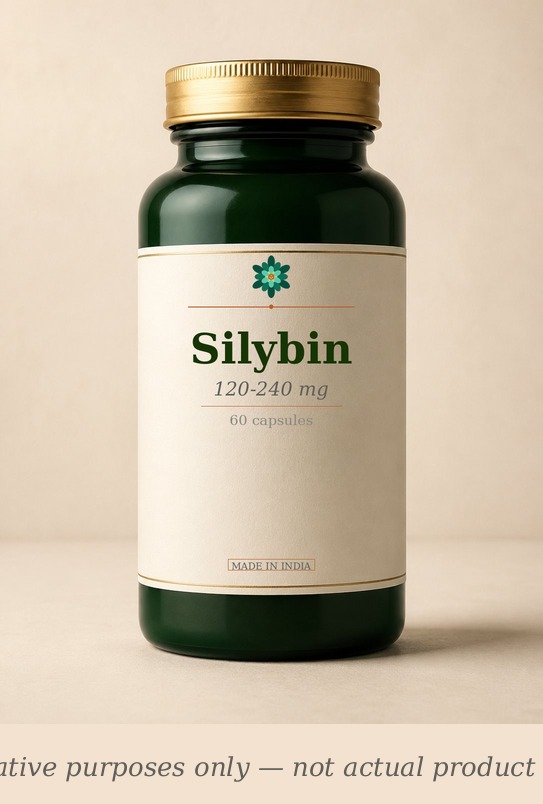
Practical guidance: If choosing a silybin supplement, prefer phosphatidylcholine-complexed forms (120-240 mg daily) over plain silybin (400-600 mg daily). Take with fat-containing meals to enhance absorption. Allow 8-12 weeks before checking liver enzymes to assess response. For NAFLD, combine with lifestyle modification (weight loss of 5-10%, reduced sugar and refined carbohydrate intake, increased physical activity to 150 minutes weekly) — silybin is not a substitute for addressing root metabolic causes. Store in a cool, dry place away from direct sunlight to preserve flavonolignan stability. If you are currently taking prescription medications for liver disease, do not discontinue them in favor of silybin without consulting your hepatologist.
Quality and selection criteria matter significantly for silybin products. Because bioavailability varies so dramatically between plain silybin and phosphatidylcholine-complexed forms, consumers should scrutinize labels carefully. Look for products that specify ‘silybin-phosphatidylcholine complex’ or list ‘Siliphos’ as an ingredient. Standardized silymarin extracts (70-80% silymarin) contain only a fraction as silybin, and plain silybin without complexation is unlikely to achieve therapeutic liver concentrations. Third-party testing for purity and standardization is valuable but not universal. In the Indian market, products combining silybin with other liver herbs (dandelion, artichoke) are common, which may provide synergistic choleretic benefits but makes it harder to isolate silybin’s specific contribution. Choose single-ingredient or transparently labeled combination products from reputable manufacturers.