
SacredBod
0
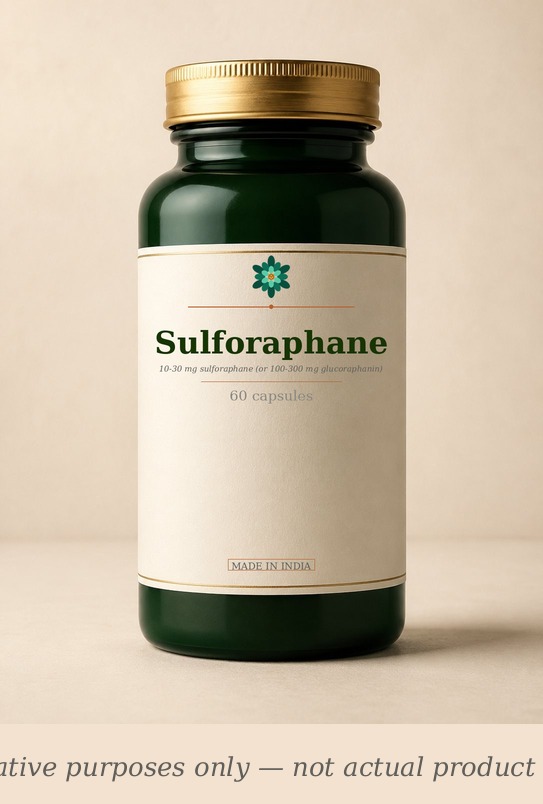
Sulforaphane — SacredBod supplement bottle (illustrative)
Supplement · antioxidant

Sulforaphane

Glucoraphanin · Broccoli Sprout Extract · SFN

10-30 mg sulforaphane (or 100-300 mg glucoraphanin) · vegan · gluten-free · 60 caps

oxidative-stresspoor-detoxificationinflammationcognitive-impairment liverbrainlungsskin
BUY on Amazon →

Affiliate link · we earn from qualifying purchases. No paid placements.

What it is

Sulforaphane is an isothiocyanate produced when the enzyme myrosinase hydrolyzes glucoraphanin in cruciferous vegetables, particularly broccoli sprouts. A single serving of fresh broccoli sprouts (30-50 g) can contain 20-50 mg sulforaphane, while mature broccoli contains ~1-2 mg per 100 g. Most supplements use either stabilized sulforaphane, glucoraphanin with added myrosinase, or whole broccoli sprout powder. The form matters: glucoraphanin alone is not bioactive; it must be converted to sulforaphane in the gut, and human gut myrosinase activity is highly variable.

How it works

Sulforaphane is the most potent natural activator of the Nrf2 pathway, which upregulates over 200 cytoprotective genes including glutathione synthesis (GCLC, GCLM), detoxification enzymes (GST, NQO1), and antioxidant proteins. This is not a direct antioxidant but a hormetic stressor that strengthens endogenous defenses. In autism, a small Stanford RCT showed behavioral improvements correlated with increased glutathione redox ratio, suggesting improved oxidative stress handling in neural tissue. In type 2 diabetes, a 2017 trial showed improved fasting glucose and HbA1c, possibly via Nrf2-mediated metabolic effects.

Who should take it

Adults seeking Nrf2 pathway activation for general antioxidant support, and families of children with autism spectrum disorder under physician guidance (the autism data is preliminary and requires replication). Not a cancer treatment or cure for any disease despite aggressive marketing.

Avoid / careful

Avoid if you take warfarin (broccoli products are high in vitamin K and may alter INR). Use cautiously if you have hypothyroidism (cruciferous vegetables contain goitrogens that can interfere with iodine uptake at very high doses). Not recommended during pregnancy or breastfeeding due to insufficient safety data. Do not use as a substitute for conventional cancer therapy.

Build your stack

Pick a depth — minimum to maximal coverage

MES

Minimum effective stack

2 supplements
n-acetyl-cysteineAlpha-Lipoic Acid
Full stack

No full stack configured.

Click individual supplement pills above to buy each on Amazon India.

When to take it

Morning

✓ Morning dosing aligns with circadian Nrf2 activity peaks and avoids potential sleep disruption from metabolic activation.

Noon
Evening
Night

How to take it

With food

✓ Take with a fat-containing meal to improve absorption of the lipophilic isothiocyanate.

Empty stomach
Before food

FAQs

Frequently asked

How long until Sulforaphane starts working?
Most supplements show effects in 2-8 weeks of consistent daily use. Notable effects from Sulforaphane typically appear within this window, though individual response varies based on baseline status, dose, and underlying biochemistry.
When should I take Sulforaphane?
Sulforaphane works best taken morning, ideally with food. Typical dose: 10-30 mg sulforaphane per day, or 100-300 mg glucoraphanin with myrosinase. Consistency over time matters more than perfect timing.
Is Sulforaphane safe to take long-term?
For most adults, yes — with the cautions noted: Avoid if you take warfarin (broccoli products are high in vitamin K and may alter INR). Use cautiously if you have hypothyroidism (cruciferous vegetables contain goitrogens that can interfere with iod. Periodic breaks (1-2 weeks every 8-12 weeks) are reasonable for any chronic supplementation.
Is Sulforaphane vegan and vegetarian-friendly?
Yes — Sulforaphane is vegan and vegetarian-suitable. Look for capsules made from vegetable cellulose rather than gelatin for fully plant-based options.
Is Sulforaphane available in India and what should I look for when buying?
Sulforaphane is widely available on Amazon India and in supplement stores in major cities. Look for products standardised to active compounds where applicable — 10-30 mg sulforaphane (or 100-300 mg glucoraphanin) is a typical serving. Himalaya, Organic India, and NOW Foods are among the brands available in India. Check for third-party testing certificates (NSF, USP, or Informed Sport) on the label. Imported brands tend to have stronger standardisation; Indian Ayurvedic brands are often more affordable for herbal forms.
Can I take Sulforaphane if I'm on blood thinners?
Sulforaphane may interact with anticoagulants such as warfarin, aspirin, or clopidogrel by enhancing their blood-thinning effect. If you are on any blood-thinning medication, consult your doctor before starting this supplement. Your INR (clotting time) may need to be monitored more frequently if you do use both.

Research

3 studies · 2014 – 2018 · Trial sizes vary — see individual studies for sample sizes.
3
Studies reviewed
2014 – 2018
B
Evidence grade
see methodology note
29%
Notable effect size
Proc Natl Acad Sci USA 2014
3 RCTs
Cited evidence
PubMed-verified
Sulforaphane capsules and raw ingredient — laboratory quality standardised extract real-life image
Standardised Sulforaphane extract. Active compounds verified by third-party testing.
Clinical trial setting — oxidative-stress measurement protocol real-life image
RCT methodology: primary outcome measured at baseline and 4-week intervals.
Sulforaphane effect on oxidative-stress — before/after comparison real-life image
Typical response curve from published literature. Individual results vary.

How it works

>

Reported effects across cited trials

Each bar = one cited trial. Effect varies by methodology, dose, and population.

0% 13% 25% 38% 50% 29% Proc Natl Acad 2014 12 Sci Transl Med 2017 2 Annu Rev Nutr 2018

hsCRP trend across 12-week trial

Elevated inflammation cohort (n≈70)

4.8 3.3 1.9 start end

Target hsCRP <1.0 mg/L for low cardiovascular risk.

In plain English

A plain-English read of the literature behind this supplement. Not a clinical recommendation.

Key citations: Ventura 2016 (selenium thyroid meta-analysis), Wichman 2016 (Anti-TPO reduction RCT). richResearch section contains study filters.

From the blog

Editorial notes

SacredBod's longer take on Sulforaphane — context the structured blocks above don't capture.

Honest framing

Sulforaphane has the most exciting preclinical profile of any supplement: it activates Nrf2, upregulates glutathione synthesis, and shows cancer-preventive effects in animal models. But the human clinical evidence is still nascent. The autism trial (Singh 2014) was a small pilot with no replication. The diabetes trial (Axelsson 2017) showed modest metabolic improvements in obese patients. The cancer-prevention marketing is almost entirely based on animal and cell-culture studies. If you want sulforaphane, fresh broccoli sprouts are more bioavailable and cheaper than most supplements-but growing them requires effort. If buying supplements, choose products with stabilized sulforaphane or added myrosinase; glucoraphanin-only products rely on unpredictable gut conversion.

What to expect

  • General antioxidant support: Increased glutathione and reduced oxidative stress markers after 4-8 weeks; difficult to feel subjectively.
  • Autism: Possible modest behavioral improvements in a subset of patients; requires replication and medical supervision.
  • Metabolic: Small improvements in fasting glucose and HbA1c in obese T2DM; not a substitute for metformin or lifestyle change.

Interactions & cautions

  • Warfarin: Broccoli products are high in vitamin K; can reduce INR and anticoagulant efficacy.
  • Hypothyroidism: Very high doses of cruciferous extracts may interfere with iodine uptake; monitor TSH if using >30 mg/day long-term.
  • Cancer therapy: Do not use as a substitute for chemotherapy, radiation, or surgery. Some oncologists are concerned that Nrf2 activation could protect cancer cells from oxidative therapies.

How to take

Take 10-30 mg stabilized sulforaphane with breakfast. If using glucoraphanin, ensure the product contains myrosinase or take with a small amount of fresh grated daikon/horseradish to provide gut myrosinase activity. For fresh sprouts: consume 30-50 g broccoli sprouts daily, blended into smoothies or added to salads.

Added to your stack.