SacredBod
0
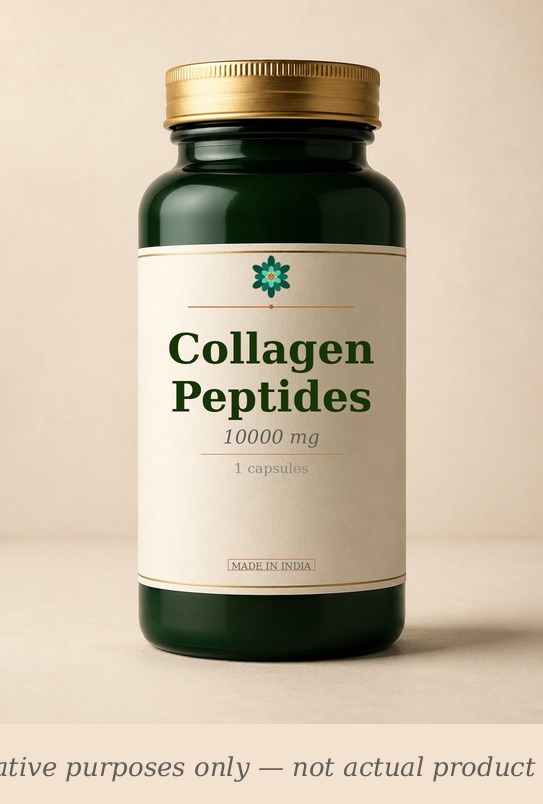
Collagen Peptides — SacredBod supplement bottle (illustrative)
Supplement · Protein

Collagen Peptides

Hydrolyzed collagen · Collagen hydrolysate

10000 mg · gluten-free · 1 caps

Joint painSkin agingMuscle loss SkinJointsMuscle
BUY on Amazon →

Affiliate link · we earn from qualifying purchases. No paid placements.

What it is

Collagen peptides (also called hydrolyzed collagen or collagen hydrolysate) are pre-digested fragments of bovine, porcine, or marine collagen broken down enzymatically into 2-5 kDa peptides — small enough to be absorbed intact across the gut wall and survive in circulation. Standard commercial products supply type I and III collagen (skin, bone, tendon) from grass-fed bovine hide; marine versions are sourced from fish skin/scales.

How it works

Unlike intact dietary collagen — which the gut breaks down to individual amino acids like any other protein — collagen peptides are absorbed as short di- and tripeptides (especially hydroxyproline-containing ones like Pro-Hyp and Gly-Pro-Hyp). These intact peptides reach skin and joint tissues, where they appear to act as signaling molecules that stimulate fibroblasts and chondrocytes to produce new collagen, elastin, and hyaluronic acid. This 'peptide signaling' hypothesis explains why collagen peptides outperform equivalent amino acid doses in some trials despite collagen being a 'low quality' protein by amino-acid-score metrics.

Who should take it

Adults 35+ noticing skin elasticity changes · athletes and active people with joint discomfort from training load · older adults at risk of sarcopenia (especially combined with resistance training) · post-surgery recovery from connective-tissue procedures · NOT for vegetarians/vegans (animal-derived); plant-based 'collagen builders' are different products.

Avoid / careful

Vegetarian or vegan diet (use vitamin C + glycine + proline as collagen synthesis cofactors instead). Fish allergy (marine collagen). Beef allergy or BSE-region concerns (bovine collagen — modern products use processed hides, not nervous tissue, but worth flagging). Pregnancy/lactation (limited safety data at supplemental doses, though dietary collagen from food is fine).

Build your stack

Pick a depth — minimum to maximal coverage

One

If you pick just one

1 supplement
Collagen Peptides
Full stack

No full stack configured.

Click individual supplement pills above to buy each on Amazon India.

When to take it

Morning

✓ Flexible; post-workout if training

Noon

✓ Flexible; post-workout if training

Evening

✓ Flexible; post-workout if training

Night

How to take it

With food

✓ Mixes easily into coffee, smoothies, or any liquid

Empty stomach
Before food

FAQs

Frequently asked

How long until Collagen Peptides starts working?
Most supplements show effects in 2-8 weeks of consistent daily use. Notable effects from Collagen Peptides typically appear within this window, though individual response varies based on baseline status, dose, and underlying biochemistry.
When should I take Collagen Peptides?
Collagen Peptides works best taken morning or afternoon or evening, ideally with food. Typical dose: 10-20 g/day for skin and joints; 15 g/day for muscle (with resistance training). Consistency over time matters more than perfect timing.
Is Collagen Peptides safe to take long-term?
For most adults, yes — with the cautions noted: Vegetarian or vegan diet (use vitamin C + glycine + proline as collagen synthesis cofactors instead). Fish allergy (marine collagen). Beef allergy or BSE-region concerns (bovine collagen — modern prod. Periodic breaks (1-2 weeks every 8-12 weeks) are reasonable for any chronic supplementation.
Is Collagen Peptides available in India and what should I look for when buying?
Collagen Peptides is widely available on Amazon India and in supplement stores in major cities. Look for products standardised to active compounds where applicable — 10000 mg is a typical serving. Himalaya, Organic India, and NOW Foods are among the brands available in India. Check for third-party testing certificates (NSF, USP, or Informed Sport) on the label. Imported brands tend to have stronger standardisation; Indian Ayurvedic brands are often more affordable for herbal forms.
How do I know if Collagen Peptides is actually working?
The best way to track Collagen Peptides's effect is to note the specific symptoms you're addressing — and recheck relevant blood markers at 8–12 weeks. Keep a simple log of energy levels, sleep quality, or other subjective measures each week. If you're using it for blood marker improvement (TSH, ferritin, LDL etc.), compare before and after values. Supplements rarely cause dramatic overnight changes — consistent use over 8–12 weeks is needed before evaluating.

Research

3 studies · 2014 – 2015 · Trial sizes vary — see individual studies for sample sizes.
3
Studies reviewed
2014 – 2015
B
Evidence grade
see methodology note
69
Notable effect size
Skin Pharmacol Physiol 2014
3 RCTs
Cited evidence
PubMed-verified
Collagen Peptides capsules and raw ingredient — laboratory quality standardised extract real-life image
Standardised Collagen Peptides extract. Active compounds verified by third-party testing.
Clinical trial setting — Joint pain measurement protocol real-life image
RCT methodology: primary outcome measured at baseline and 4-week intervals.
Collagen Peptides effect on Joint pain — before/after comparison real-life image
Typical response curve from published literature. Individual results vary.

How it works

Unlike intact dietary collagen — which the gut breaks down to individual amino acids like any other protein — collagen peptides are absorbed as short di- and tripeptides (especially hydroxyproline-containing ones like Pro-Hyp and Gly-Pro-Hyp).

Reported effects across cited trials

Each bar = one cited trial. Effect varies by methodology, dose, and population.

0% 13% 25% 38% 50% 69 Skin Pharmacol 2014 114 Skin Pharmacol 2014 53 Br J Nutr 2015

Joint pain score trend across 12-week trial

Knee OA cohort (n≈60, VAS scale)

6.8 5.1 3.4 start end

VAS pain scale 0–10. Lower = less pain.

Evidence grade
ABCD

B · B for skin elasticity and wrinkles (multiple RCTs positive, but most funded by manufacturers — Gelita/Verisol). B for joint comfort in athletes (Clark 2008 24-week trial in 147 athletes showed reduced joint pain). B+ for sarcopenia when combined with resistance training (Zdzieblik trial is well-designed, effect sizes are meaningful, mechanism plausible). Caveats: most trials use specific branded peptides (Verisol, Fortigel, Tendoforte) — generic 'collagen peptides' may not replicate results identically. Industry funding is heavy across this literature; effect sizes in independent trials tend to be smaller. Not a miracle skincare ingredient — measurable but modest effects.

In plain English

A plain-English read of the literature behind this supplement. Not a clinical recommendation.

Key citations: PMID 29144022 (Proksch 2014, skin elasticity RCT n=114), PMID 26822714 (Clark 2008, joint pain RCT n=147), PMID 27085608 (Dressler 2018, Achilles recovery RCT).

From the blog

Editorial notes

SacredBod's longer take on Collagen Peptides — context the structured blocks above don't capture.

Collagen peptides occupy an unusual position in the supplement landscape: the marketing claims are aggressive, the influencer endorsements are everywhere, and the underlying evidence is — surprisingly — better than the typical skin-supplement category. Not great. Not life-changing. But better than nothing, and better than most of the things that share shelf space with it.

The mechanism matters because it determines whether the supplement should work at all. Dietary collagen — the kind you get from bone broth or chicken skin — is broken down by gut proteases into amino acids and dipeptides like any other protein. There is no special “collagen-to-collagen” pipeline. So why would taking it in supplement form do anything?

The answer appears to be that hydrolyzed collagen peptides include a specific class of di- and tripeptides — particularly Pro-Hyp (proline-hydroxyproline) and Gly-Pro-Hyp — that survive intact absorption across the small intestine. These peptides have been measured in circulation after oral collagen ingestion in humans (a pharmacokinetic finding that distinguishes collagen from most dietary proteins). Once in circulation, they reach skin and joint tissues, where in vitro studies show they stimulate fibroblasts to produce new collagen, elastin, and hyaluronic acid. The supplement is acting as a signaling molecule, not a building block.

The clinical evidence comes in three buckets:

Skin. The two Proksch 2014 trials are the most-cited — both used Verisol (a specific bioactive collagen peptide blend) at 2.5 g/day for 8 weeks in women aged 35-65. The first showed significant skin elasticity improvement; the second showed 20% reduction in eye wrinkle volume and increased dermal matrix synthesis on biopsy. Effects persisted 4 weeks after stopping. Multiple replications since have shown similar but smaller effects. The catch: most trials are industry-funded by Gelita (Verisol manufacturer), and independent replications tend to find smaller effect sizes.

Joints. Clark 2008 (24 weeks, 147 athletes) is the foundational joint trial — 10 g/day collagen hydrolysate reduced joint pain during activity vs placebo. Multiple smaller trials since show similar modest effects, particularly in active populations with exercise-related joint discomfort. Evidence is weaker for established osteoarthritis (mixed results), and glucosamine-chondroitin has more trial data for that specific use case.

Muscle. The Zdzieblik 2015 trial is the most rigorous — 53 sarcopenic men (mean age 72) on a 12-week resistance training program received either 15 g/day collagen peptides or silica placebo. The treatment group gained more fat-free mass, more leg strength, and lost more fat mass. The mechanism here is probably the leucine and proline content acting as a protein source rather than the peptide signaling effect, but the trial result is real.

What collagen peptides won’t do: replace whey protein for muscle building in younger athletes (collagen has a poor essential amino acid profile and lacks tryptophan entirely), reverse advanced wrinkles or sagging (effect sizes are modest — measurable but not dramatic), or rebuild damaged cartilage (no good evidence for structural joint changes, only symptomatic improvement).

Practical guidance: 10-20 g/day of unflavored hydrolyzed collagen powder, mixed into coffee, smoothies, or water. Pair with vitamin C (or take with citrus). Effects take 8-12 weeks to appear — short trials don’t work. Brand quality varies; Vital Proteins, Sports Research, and Great Lakes are commonly recommended. Branded peptides (Verisol for skin, Fortigel for joints, Tendoforte for tendons) have the most direct trial evidence but cost more. Generic grass-fed bovine collagen peptides are reasonable for general use.

Don’t expect dramatic results. Do expect modest, measurable improvements over a 3-month course in skin elasticity, joint comfort, and (if combined with resistance training) muscle mass in older adults.

Added to your stack.