SacredBod's longer take on Horsetail — context the structured blocks above don't capture.
Horsetail is one of the oldest plants on Earth — a living fossil that dates back 350 million years — and it has been used medicinally since ancient Greek and Roman times. Its traditional uses include wound healing, kidney and bladder complaints, and strengthening hair and nails. The rationale for hair and nail benefits is its high silica content: horsetail contains 5–8% silicon dioxide by weight, making it one of the richest plant sources of this mineral. But here is the critical problem: the silica in horsetail is primarily insoluble silicon dioxide, which has extremely poor bioavailability in humans. Most of it passes through the digestive tract unabsorbed.
Carneiro’s 2012 trial in the Journal of Cosmetic Dermatology is one of the few modern clinical studies. In a small trial of 30 women with hair loss, horsetail extract showed modest improvements in nail strength and reduced hair shedding over 3 months compared to placebo. However, this was a very small study with methodological limitations, and the effects were modest. No large, well-controlled RCT has replicated these findings.
The honest framing is that horsetail is a traditional remedy with limited modern evidence. The silica it contains is not the bioavailable form (orthosilicic acid) that has been shown to improve bone and connective tissue in trials. If you want silicon supplementation for hair, skin, or bones, choline-stabilized orthosilicic acid (ch-OSA, BioSil) is a far superior choice with actual clinical trial evidence. Horsetail’s benefits, if any, are more likely due to its flavonoid content (quercetin, kaempferol) than its silica.
Safety requires explicit attention. Horsetail contains thiaminase, an enzyme that destroys vitamin B1 (thiamine). Long-term use can theoretically cause thiamine deficiency, though this is rare at moderate doses. More concerning is the potential for kidney toxicity. Horsetail accumulates heavy metals from soil, and some cases of kidney damage have been reported with long-term use of high doses or contaminated products. Horsetail is also a diuretic, which can cause electrolyte imbalances and dehydration if fluid intake is inadequate.
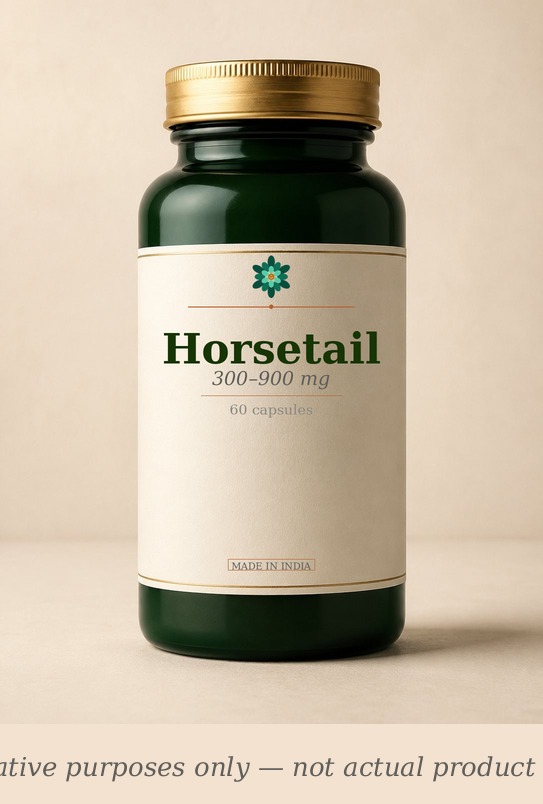
Practical guidance: If you choose to try horsetail, limit use to 2–3 months with breaks in between. The typical dose is 300–900 mg of dried herb daily. Take with food and plenty of water. Do not use if you have kidney disease, are pregnant or breastfeeding, or have low thiamine levels. For hair and nail support, biotin, collagen peptides, and ch-OSA are all better-evidenced options. In India, horsetail is available from Merlion Naturals, Healthvit, and other herbal supplement brands. Ensure the product is properly sourced and tested for heavy metals.