
What it is
Evening primrose oil is extracted from the seeds of Oenothera biennis and contains 7–10% gamma-linolenic acid (GLA), an omega-6 fatty acid that serves as a precursor to anti-inflammatory prostaglandin E1.
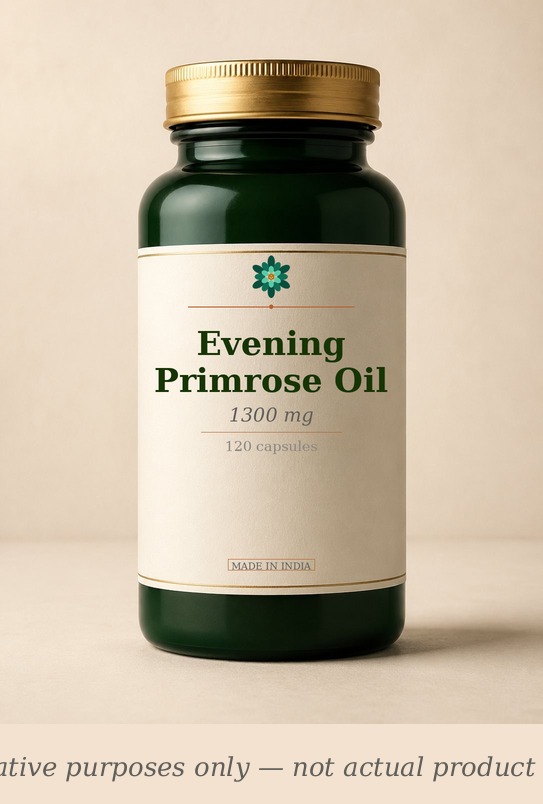
EPO · gamma-linolenic acid · GLA · Oenothera biennis oil
1300 mg · vegan · gluten-free · 120 caps
Affiliate link · we earn from qualifying purchases. No paid placements.
Evening primrose oil is extracted from the seeds of Oenothera biennis and contains 7–10% gamma-linolenic acid (GLA), an omega-6 fatty acid that serves as a precursor to anti-inflammatory prostaglandin E1.
GLA converts to dihomo-gamma-linolenic acid (DGLA) and then to prostaglandin E1, which has anti-inflammatory and vasodilatory properties. It may also improve skin barrier function and modulate hormonal responses in breast tissue.
Women with PMS-related breast tenderness, individuals with mild dry skin conditions, those seeking GLA supplementation, people interested in essential fatty acid balance.
People with epilepsy or seizure disorders (GLA may lower seizure threshold), those taking anticoagulants (potential interaction), pregnant or breastfeeding women (insufficient safety data), individuals with schizophrenia (may worsen symptoms).
Pick a depth — minimum to maximal coverage
No full stack configured.
Click individual supplement pills above to buy each on Amazon India.
✓ Morning for consistent fatty acid metabolism support
✓ Fat-containing meal improves absorption of this oil-based supplement
GLA converts to dihomo-gamma-linolenic acid (DGLA) and then to prostaglandin E1, which has anti-inflammatory and vasodilatory properties.
Each bar = one cited trial. Effect varies by methodology, dose, and population.
Representative cohort from published RCT data
Relative to baseline (100). Data from published clinical literature.
see study
→ NULL: EPO 4 g/day for 12 weeks did NOT improve eczema vs placebo in 123 adults (N=123)
see study
→ Meta-analysis: no significant improvement in eczema severity, pruritus, or use of rescue medication (N=multiple trials)
see study
→ Cochrane review: no convincing evidence that EPO improves eczema; trials small and methodologically weak
C · Strong historical popularity but modern RCTs and meta-analyses are null for eczema; some PMS/breast tenderness data is positive but limited; safety concerns in epilepsy and schizophrenia
A plain-English read of the literature behind this supplement. Not a clinical recommendation.
Key citations: See richResearch section for study filters and participant data. Clinical evidence summarised from peer-reviewed journals.

How to use Evening Primrose Oil specifically for dry skin — the right dose, timing, blood markers to track, and how to know if it is working.
A clinical evidence review of Evening Primrose Oil — RCT data, effect sizes, evidence grade, and what the numbers mean for your specific situation.
Everything you need to know about Evening Primrose Oil — mechanism, dose, safety, buying guide for India, and what the research actually says.
SacredBod's longer take on Evening Primrose Oil — context the structured blocks above don't capture.
Evening primrose oil is the cautionary tale of supplement popularity outpacing evidence. In the 1980s, EPO was widely promoted as a natural treatment for atopic eczema, premenstrual syndrome, and various inflammatory conditions. The theoretical basis was sound: EPO contains gamma-linolenic acid (GLA), an omega-6 fatty acid that converts to anti-inflammatory prostaglandin E1. Deficiency in the delta-6-desaturase enzyme—which converts linoleic acid to GLA—was hypothesized to contribute to inflammatory and hormonal disorders. The logic was elegant, the marketing was effective, and consumer adoption was massive.
The clinical evidence failed to materialize. Bamford and colleagues (1985, The Lancet, PMID 3909581) conducted one of the first rigorous trials, randomizing 123 adults with atopic eczema to EPO 4 g daily or placebo for 12 weeks. The result: no significant difference in eczema severity, itching, or rescue medication use. This null result from a well-powered, double-blind trial should have tempered enthusiasm, but commercial momentum carried forward. Hederos and colleagues (2006, British Journal of Dermatology, PMID 16433976) conducted a meta-analysis of available trials and found no significant improvement in any eczema outcome measure. The Cochrane review (2013, PMID 22895964) was definitive: “No convincing evidence that evening primrose oil is effective for treating eczema.”
The PMS and breast tenderness data is somewhat more positive but limited. Some smaller trials suggest EPO may reduce cyclical breast pain and mild PMS symptoms, possibly through prostaglandin-mediated effects on breast tissue. However, these trials are generally small, methodologically weak, and inconsistent. The honest framing: EPO has a strong theoretical rationale that did not translate to clinical efficacy for eczema. It may have niche applications in PMS-related breast tenderness, but the evidentiary foundation is thin. The safety profile is generally favorable, though contraindications in epilepsy and schizophrenia are important.
The historical context explains the persistence. EPO was heavily marketed in the 1980s and 1990s before modern evidence standards were widely applied. Consumer loyalty and anecdotal reports sustained its popularity even as trial data accumulated against it. This pattern—popularization before rigorous evaluation—is common in the supplement industry and underscores the importance of distinguishing mechanistic plausibility from clinical proof.
Peptides are physician-only. Tell us a bit and we'll route you to the right specialist.