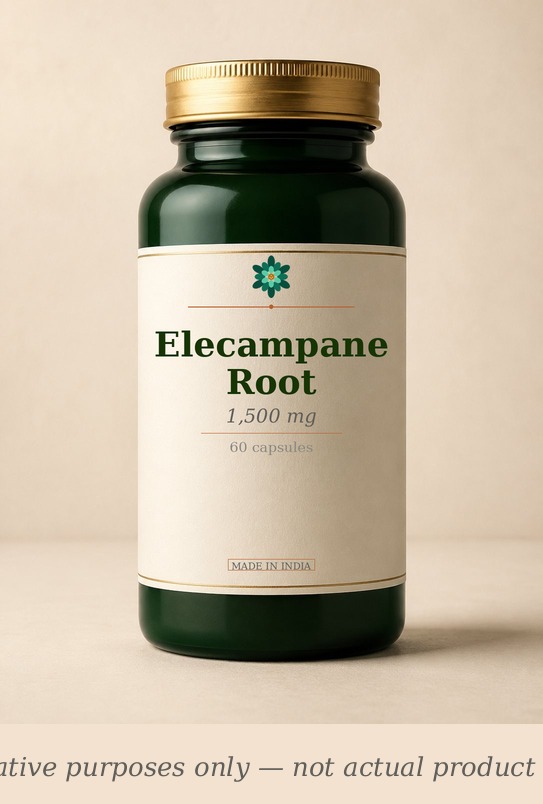
SacredBod's longer take on Elecampane Root — context the structured blocks above don't capture.
What Elecampane Root Is
Inula helenium, known as elecampane, horseheal, or elfdock, is a striking tall perennial with large yellow flowers native to Europe and temperate Asia. Its thick, aromatic root has been prized since antiquity — mentioned by Hippocrates and Pliny the Elder as a remedy for coughs, consumption (tuberculosis), and digestive ailments.
In medieval Irish medicine (circa 1415 A.D.), elecampane was prescribed for “coughs and consumption” by boiling the powdered root with barley water, liquorice, cinnamon, and sugar. The British Herbal Pharmacopoeia lists its actions as: antitussive, antiseptic expectorant, diaphoretic, and bactericidal — with indications for respiratory mucosal catarrh, bronchitis, whooping cough, and phthisis.
Modern research has identified the root’s sesquiterpene lactones — particularly alantolactone and isoalantolactone — as the primary antimicrobial compounds, with potent activity against MRSA and other gram-positive respiratory pathogens.
How It Works
- Antibacterial — Alantolactone and isoalantolactone inhibit Staphylococcus aureus (including MRSA/VRSA), Streptococcus pyogenes, and Listeria monocytogenes in vitro. This makes elecampane particularly relevant for recurrent chest infections where bacterial colonisation is a factor.
- Expectorant — Stimulates ciliary activity and promotes productive coughing, helping clear infected mucus from deep in the bronchi.
- Anti-inflammatory — Sesquiterpene lactones suppress NF-κB and COX pathways in respiratory tissues.
- Prebiotic immune support — The root contains up to 44% inulin, a prebiotic fibre that feeds beneficial gut bacteria. The gut-lung axis is increasingly recognised as important for respiratory immunity.
- Traditional antitussive — Reduces cough reflex sensitivity in chronic bronchitis.
Who Benefits Most
- Chronic bronchitis patients — Traditional use spans centuries for persistent productive cough.
- Recurrent chest infection sufferers — The antibacterial spectrum covers common respiratory pathogens.
- MRSA carriers — In vitro data suggests potential for reducing staphylococcal carriage (though human clinical data is needed).
- Gut-health conscious individuals — The high inulin content supports the gut-immune axis.
Dosage Guide
| Form | Dose | Duration |
|---|
| Dried root decoction | 1.5–3 g boiled in water, 3× daily | 4–6 weeks |
| Capsules (extract) | 500–1,000 mg 2–3× daily | 4–6 weeks |
| Liquid extract (1:1) | 1.5–4 mL 3× daily | 4–6 weeks |
Take with meals. The root has a strong bitter-camphor taste; capsules are preferred for palatability.
Safety & Interactions
- Asteraceae allergy: Avoid if allergic to daisy, ragweed, sunflower, or chamomile.
- Pregnancy/breastfeeding: Not recommended.
- Children: Not for use under 12 years.
- Diabetes: High inulin content may affect blood sugar; monitor if on hypoglycaemic medications.
- Sedatives: Traditional use includes mild sedative properties; may potentiate CNS depressants.
India-Specific Context
- Availability: Elecampane root powder and tablets are available on Amazon.in. SAI HERBS offers pure extract powder (B0GD8CD3LS, B0C3YW2M5G), and Bharat Herbal sells 60-tablet packs (B0CJSBX738). However, standardised sesquiterpene lactone content is not declared on any Indian product.
- Regulatory status: Sold as a dietary supplement and herbal powder. Not a Schedule H drug.
- Ayurvedic parallel: Elecampane is not in classical Ayurvedic texts (Charaka Samhita, Sushruta Samhita). The closest Ayurvedic equivalents for its indications are Vasa (Adhatoda vasica) and Kantakari (Solanum xanthocarpum) — both used for chronic cough and bronchitis. Elecampane can be viewed as a European “Vasa alternative” with distinct antibacterial properties.
- Import quality: European elecampane extracts (e.g., from British or German herbal suppliers) may offer better standardisation. Indian products are typically raw powders without active compound verification.
- Cost: SAI HERBS powder costs ₹500–800 for 100g. Bharat Herbal tablets cost ₹300–500 for 60 tablets.